What Makes a DeFi Strategy Actually Sustainable?
--
DeFi is full of yield.
New strategies launch every week.
APYs go up fast.
Capital flows in.
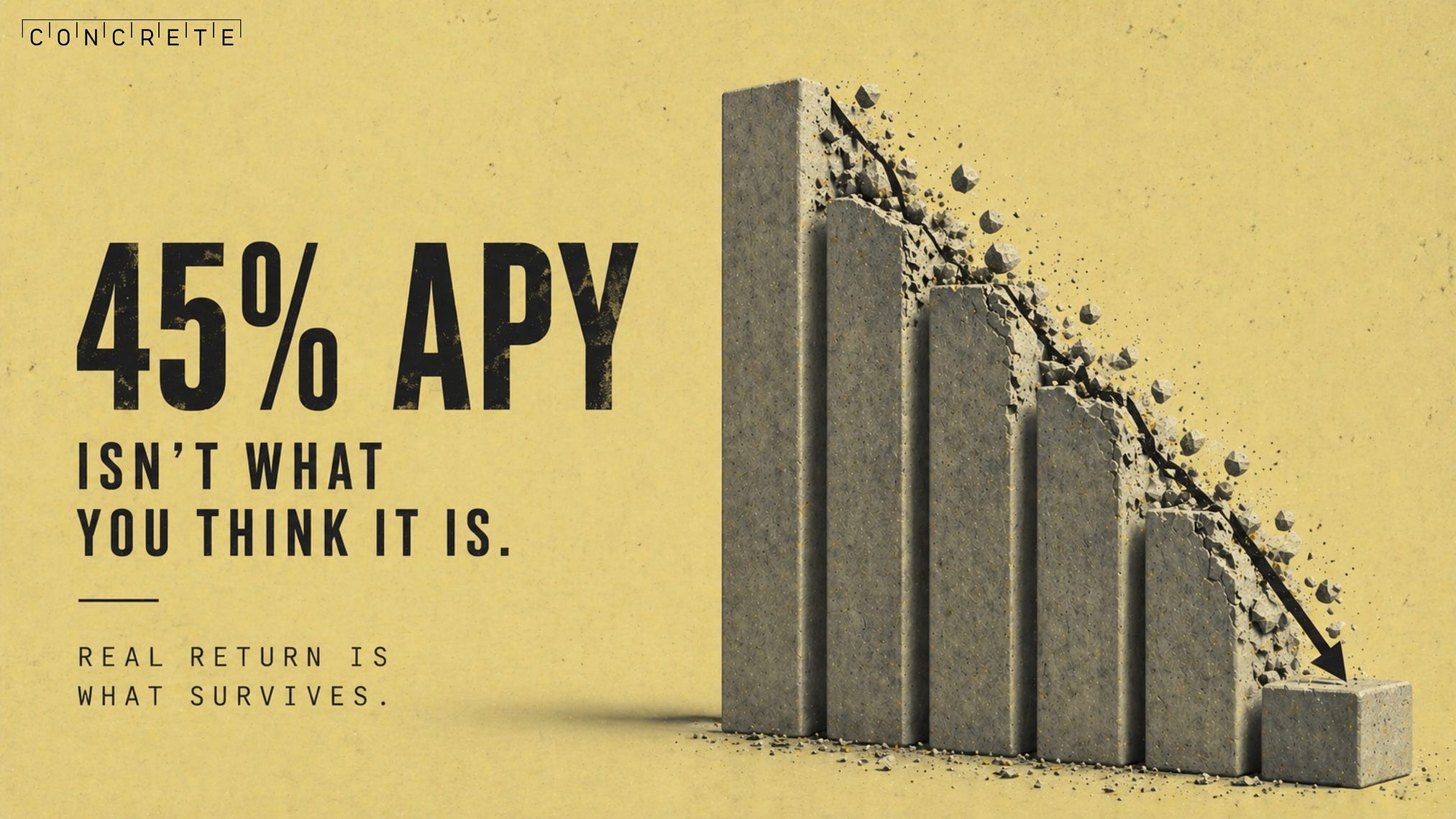
But most of these strategies don’t last.
Yields drop.
Liquidity leaves.
Opportunities disappear.
So the real question isn’t:
“What has the highest yield?”
It’s:
“What actually lasts?”
In traditional finance, the best strategies aren’t the ones that win for a week they’re the ones that survive different market cycles.
So what makes a DeFi strategy sustainable?
Why do some opportunities disappear while others stay?
And how should onchain capital think about long-term yield?
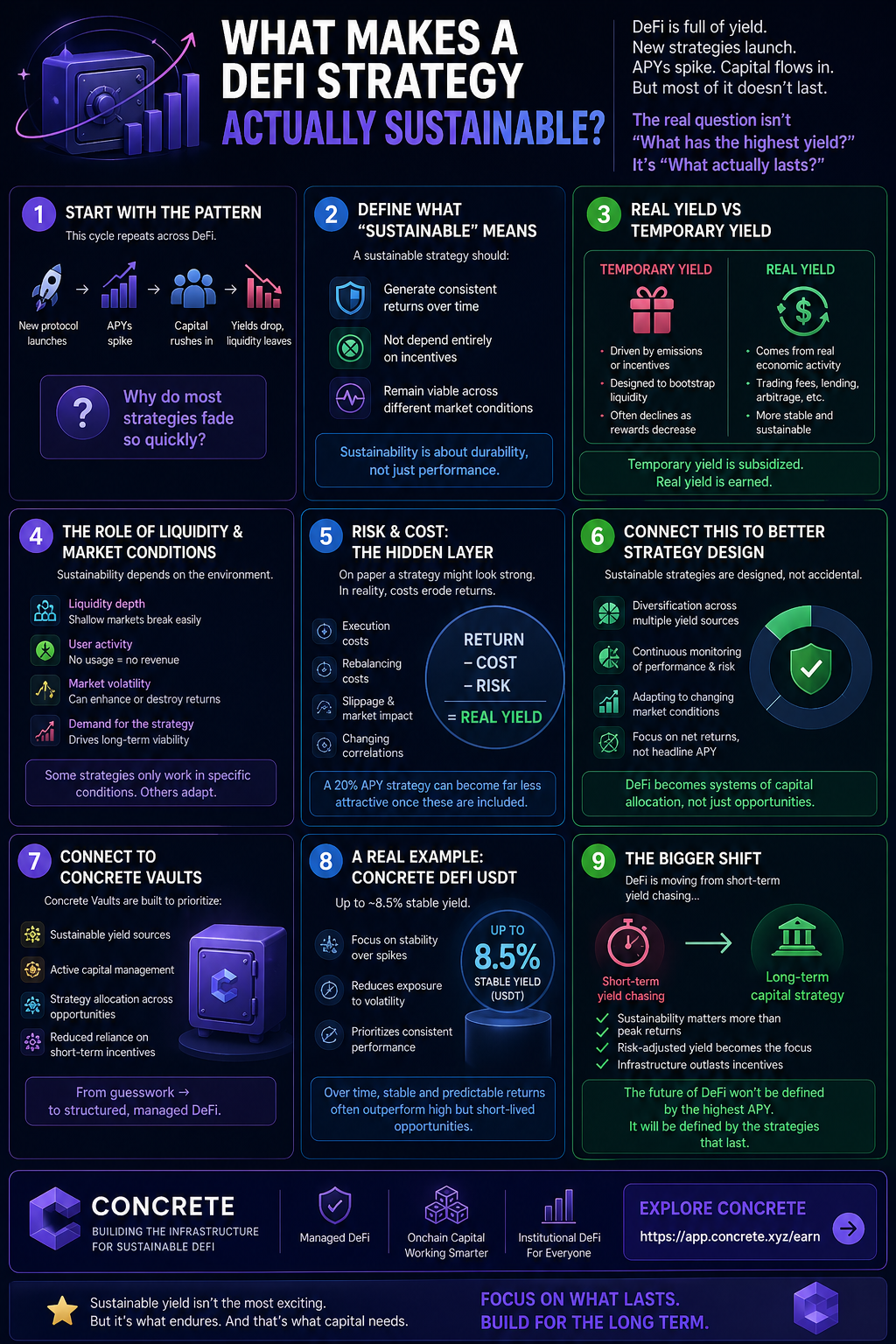
1️⃣ The Pattern We All See
We’ve all seen this happen:
- A new protocol launches with high APY
- Capital rushes in
- Yields start dropping
- Liquidity moves to the next opportunity
This cycle repeats again and again across DeFi strategies.
Why?
Because most of these strategies depend on short-term incentives.
Once those incentives slow down, the yield disappears.
2️⃣ What “Sustainable” Really Means
A sustainable strategy is simple:
- It gives consistent returns over time
- It doesn’t rely only on incentives
- It works in different market conditions
This is about durability, not just big numbers.
A lower but steady return is often better than a high return that doesn’t last.
That’s what sustainable yield really means.
3️⃣ Real Yield vs Temporary Yield
Not all yield is the same.
Temporary Yield
- Comes from token rewards or incentives
- Looks high at the start
- Usually drops over time
Real Yield
- Comes from real activity like trading or lending
- More stable and repeatable
Why this matters:
- Incentive-driven yield fades
- Real economic activity keeps generating value
So if you care about risk-adjusted yield, real yield matters more.
4️⃣ Liquidity & Market Conditions Matter
A strategy doesn’t exist alone — it depends on the market.
Things that affect sustainability:
- Liquidity depth
- User activity
- Market volatility
- Demand for the strategy
Some strategies only work in certain conditions.
Others can adjust and keep working.
The ones that adapt are more sustainable.
5️⃣ Risk & Costs Are Often Ignored
Many strategies look great on paper.
But in reality, returns get reduced by:
- Execution costs (gas, fees)
- Rebalancing
- Slippage
- Changing market behavior
So a high APY doesn’t always mean high real returns.
That’s why focusing on net yield is important.
6️⃣ How Better Strategies Are Built
Sustainable DeFi strategies are not about one opportunity.
They are built like systems.
They usually include:
- Diversification across multiple strategies
- Continuous monitoring
- Adjusting to market changes
- Focus on risk-adjusted yield, not just APY
This is where DeFi starts becoming managed DeFi, not just yield hunting.
7️⃣ Why DeFi Vaults Matter
This is where DeFi vaults come in.
Instead of users chasing yield, vaults do the work.
Good vaults aim to:
- Focus on sustainable yield sources
- Manage capital across strategies
- Adapt to changing markets
- Reduce dependence on incentives
Concrete vaults follow this idea.
They are built to prioritize long-term performance, not short-term spikes.
8️⃣ Example: Concrete DeFi USDT
A simple example:
Concrete DeFi USDT offers around ~8.5% stable yield.
It may not look flashy.
But over time:
- Stable returns compound
- Risk is lower
- Capital stays longer
This is why consistent yield often wins.
It attracts institutional DeFi participants who care about stability, not hype.
9️⃣ The Bigger Shift in DeFi
DeFi is changing.
From:
- Chasing the highest APY
- Short-term incentives
To:
- Long-term strategies
- Sustainable yield
- Better capital management
Because in the end:
The future of DeFi won’t be about the highest returns.
It will be about the strategies that last.
🚨 Explore Concrete at: https://app.concrete.xyz/earn 🚨