What Makes a DeFi Strategy Actually Sustainable?
 Zarra4 min read·Just now
--
DeFi has no shortage of yield.
Every week,new protocols launch with eye-catching APYs.Capital floods in, liquidity spikes and timelines fill with screenshots of massive returns. But after the excitement fades, the same pattern usually repeats:
-yields compress
-liquidity rotates elsewhere
-incentives dry up
-and the strategy loses momentum
This cycle has become one of the defining patterns of modern DeFi strategies
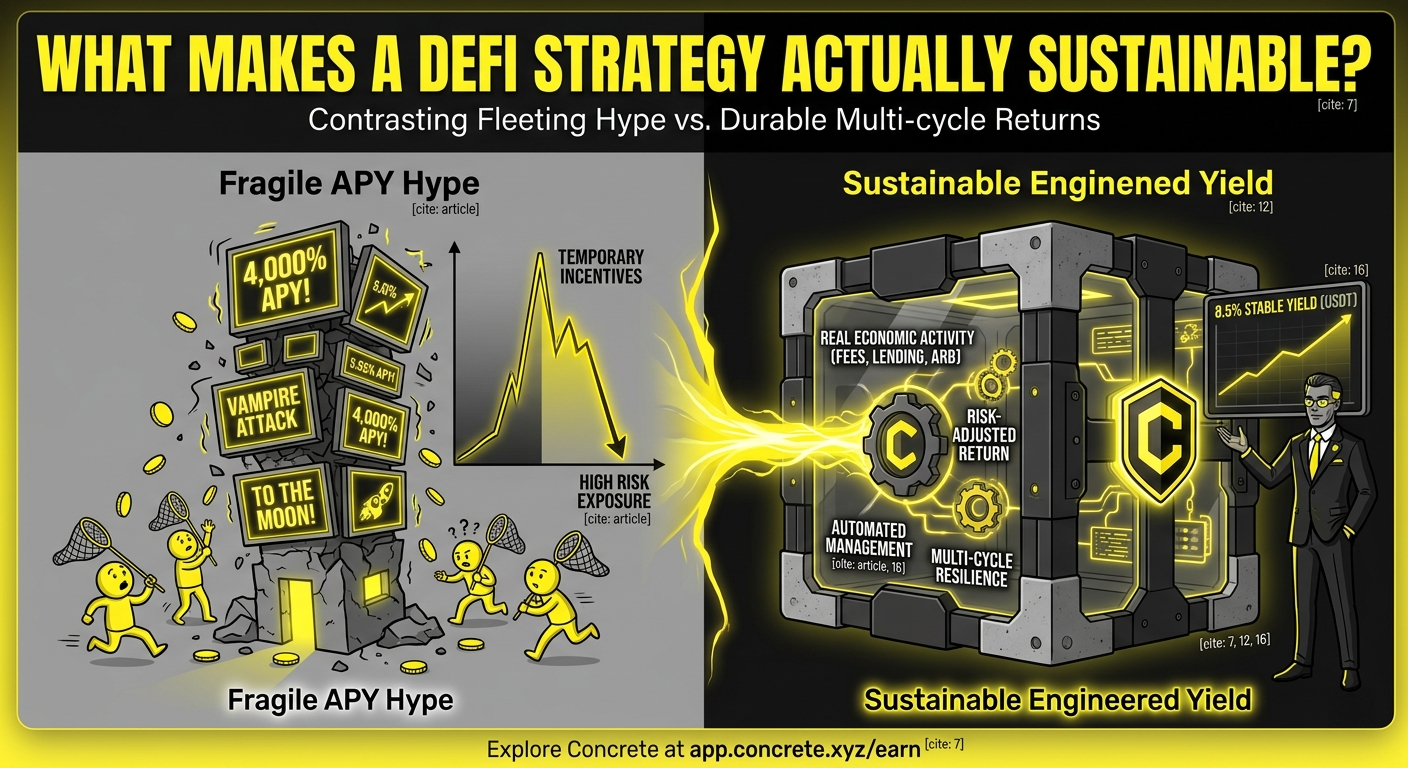
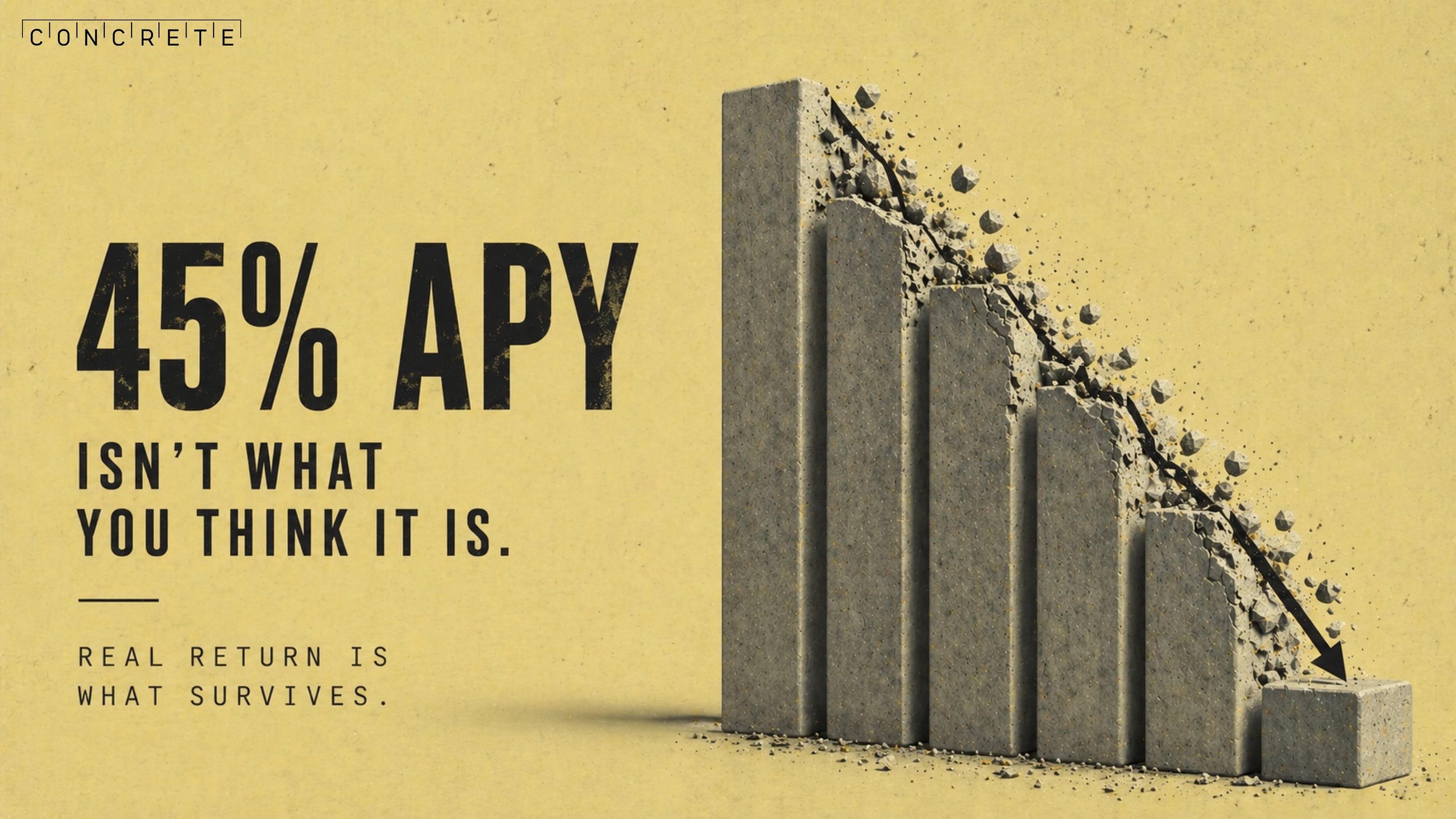
The problem is that many opportunities are designed to attract short-term capital, not sustain long-term value. High emissions can temporarily inflate returns, but once rewards decline, users move on to the next opportunity.
That raises a more important question for onchain capital:
What actually lasts?
Sustainable Yield Is About Durability
A sustainable yield strategy is not simply the strategy with the highest APY today.
It is a strategy capable of generating consistent, risk-adjusted yield across different market environments.
True sustainability in DeFi means:
-returns remain relatively stable over time
-the strategy is not entirely dependent on token incentives
-capital can stay productive across multiple market cycles
-risk is actively managed instead of ignored
In other words, sustainability is about durability, not temporary performance.
This distinction matters because DeFi is maturing. As institutional DeFi grows, capital increasingly prioritizes reliability and long-term efficiency over speculative spikes.
Real Yield vs Temporary Yield
Not all yield is created equal.
Some yield comes from genuine economic activity:
-trading fees
-lending demand
-arbitrage opportunities
-liquidity provisioning
-market making activity
This is often referred to as “real yield” because it is supported by actual usage inside the ecosystem.
Other forms of yield come primarily from emissions and incentives. Protocols distribute tokens to bootstrap liquidity and attract users. While this can accelerate growth, it is often temporary by design.
The issue is simple:
When emissions slow down, the yield usually falls with them.
That is why many high-APY opportunities disappear quickly. They rely on incentive programs rather than sustainable demand.
Meanwhile, strategies tied to real activity tend to be more stable because they are supported by ongoing market participation instead of constant token dilution.
Over time, sustainable yield tends to outperform temporary hype.
Liquidity and Market Conditions Matter
A strategy does not exist in isolation.
Its sustainability depends heavily on market structure and liquidity conditions.
Key factors include:
-liquidity depth
-trading volume
-volatility
-borrowing demand
-user participation
-market efficiency
Some strategies perform exceptionally well only during bullish conditions with high volatility and strong capital inflows. Others collapse when liquidity dries up or correlations shift unexpectedly.
Sustainable DeFi strategies are usually adaptive.
They can continue operating under changing conditions rather than depending on a single market environment.
This is one reason managed DeFi systems and DeFi vaults have become increasingly important. Instead of relying on static positioning, they actively monitor opportunities and adjust exposure as conditions evolve.
The Hidden Costs of Yield
Headline APY rarely tells the full story.
A strategy may appear profitable on paper while gradually degrading in practice due to hidden operational costs.
These include:
-slippage
-gas and execution costs
-rebalancing overhead
-liquidity fragmentation
-changing asset correlations
-volatility exposure
Without accounting for these factors, projected returns can become misleading.
This is where risk-adjusted yield becomes critical.
The best strategies are not simply the ones generating the highest raw numbers. They are the ones capable of preserving efficiency after costs, risk, and market changes are considered.
As DeFi matures, capital allocation increasingly resembles portfolio management rather than speculative farming.
Sustainable Strategies Require Better Design
Durable systems are intentionally designed.
Sustainable DeFi strategies often share several characteristics:
Diversification
Instead of relying on a single opportunity, capital is distributed across multiple strategies and yield sources.
Continuous Monitoring
Markets evolve rapidly. Sustainable systems adapt in real time rather than remaining static.
Focus on Net Returns
The goal is not maximizing headline APY, but maximizing long-term net performance after costs and risk.
Capital Efficiency
Efficient deployment allows strategies to remain competitive even when market conditions become less favorable.
This is where managed DeFi begins to resemble modern financial infrastructure instead of short-term speculation.
How Concrete Vaults Approach Sustainability
Concrete focuses on building DeFi vaults designed around durability rather than temporary incentives.
Instead of chasing unsustainable emissions, Concrete vaults aim to:
-prioritize sustainable yield sources
-manage capital dynamically across opportunities
-adapt exposure to changing market conditions
-reduce dependency on short-term incentive programs
-optimize risk-adjusted returns over time
This approach reflects a broader evolution happening across institutional DeFi.
The focus is shifting from “Where is the highest APY today?” toward “Which systems can preserve and grow capital consistently?”
That difference changes how vaults are structured, monitored, and managed.
Concrete DeFi USDT as a Practical Example
One example is Concrete DeFi USDT, which offers up to approximately 8.5% stable yield.
At first glance, this may appear less exciting than volatile triple-digit APYs seen elsewhere in DeFi.
But sustainability often looks less dramatic.
Stable, consistent returns can outperform highly volatile opportunities over longer periods because they reduce capital instability and avoid excessive dependence on speculative incentives.
For long-term participants, consistency matters.
Predictable performance attracts more durable liquidity, especially as institutional capital enters onchain markets seeking efficiency, transparency, and sustainable yield generation.
This is one reason stable managed vault systems are becoming increasingly important within the broader DeFi ecosystem.
The Future of DeFi Will Favor What Lasts
DeFi is evolving.
The industry is gradually moving away from short-term yield chasing and toward long-term capital strategy design.
As the market matures:
-sustainability will matter more than peak APY
-risk adjusted yield will become a core metric
-infrastructure will outlast incentives
-managed DeFi systems will play a larger role in capital allocation
The next phase of onchain finance will not be defined by the loudest yields.
It will be defined by the strategies capable of surviving across market cycles.
Because in the end, the strongest DeFi strategies are not the ones that spike for a week.
They are the ones that last