What Is P2P Crypto Trading and Why It Matters in Today’s Crypto Economy
 ARMUP5 min read·Just now
--
Crypto trading is no longer limited to centralized exchanges and traditional order books. As the industry matures, users are increasingly shifting toward models that offer greater control, flexibility, and accessibility.The cryptocurrency market has evolved far beyond simple buying and selling on centralized exchanges. As users become more aware of security, privacy, and control over their assets, new trading methods are gaining traction. One of the most notable among them is P2P crypto trading.
This shift is not happening in isolation. According to a 2025 report by Chainalysis, global crypto adoption has grown significantly over the past few years, with emerging markets leading the way. In many of these regions, peer-to-peer platforms play a critical role in enabling access to digital assets where traditional financial infrastructure is limited.
At the same time, the World Bank estimates that around 1.4 billion adults globally remain unbanked. for these individuals, peer to peer trading is not just an alternative. It is often the primary gateway into the digital financial system. As users become more aware of security, privacy, and control over their assets, new trading methods such as P2P crypto trading are gaining traction.
Peer-to-peer (P2P) trading is rapidly becoming a key part of the crypto economy, offering users a more flexible and user-controlled way to trade digital assets.
In this context, platforms like ARMUP are redefining crypto trading by combining direct user interaction with robust security frameworks and efficient systems, making P2P trading more accessible, reliable, and user-friendly for a global audience.
What Is P2P Crypto Trading
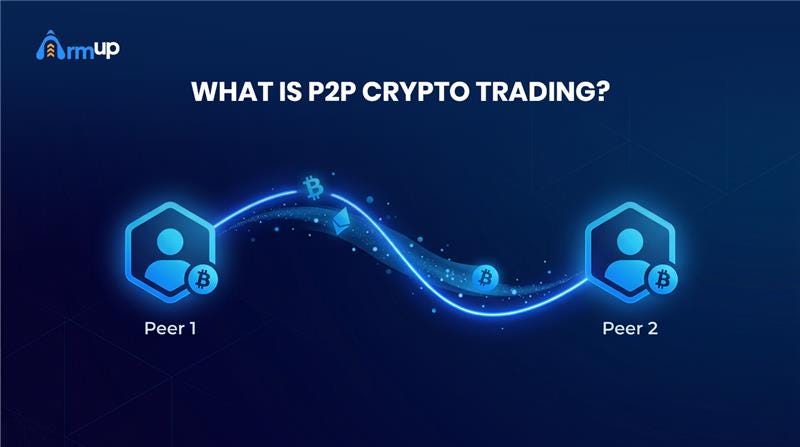
Peer to peer crypto trading is a method of buying and selling digital assets directly between users without relying on a centralized intermediary to execute the trade.
In traditional exchanges, the platform controls the transaction process by holding funds and matching orders. In contrast, P2P trading allows users to set their own terms, including price, payment method, and trade size. The platform’s role is limited to facilitating and securing the transaction.
This model gives users more autonomy while still benefiting from platform level protections. On ARMUP, for example, crypto assets are locked during the transaction process to ensure that both parties follow the agreed terms before the trade is completed.
How P2P Crypto Trading Works
Although the concept may seem technical, the process is straightforward.
Users begin by selecting a platform and completing account verification. Once inside the P2P marketplace, they can browse offers created by other users. These offers include key details such as asset type, pricing, payment methods, and limits.
When a buyer selects an offer, the platform temporarily locks the seller’s crypto. This step is essential because it ensures that the seller cannot withdraw the assets during the transaction.
The buyer then completes the payment using the chosen method. Once the seller confirms receipt, the platform releases the crypto to the buyer’s wallet.
This structure creates a balance between user control and transaction security, which is one of the main reasons P2P trading continues to grow.
Why P2P Trading Is Growing in Popularity
The rise of P2P trading is not accidental. It is driven by changing user expectations and the limitations of traditional exchanges.
Users today want more control over their assets and greater transparency in transactions. Centralized exchanges, while convenient, often require users to deposit funds and rely on the platform for execution and custody. This creates concerns around security and ownership.
P2P trading addresses these concerns by enabling direct interaction between users. It reduces dependency on centralized systems and gives traders more control over how transactions are executed.
Additionally, the demand for flexible payment options has contributed to its growth. P2P platforms support multiple local payment methods, making crypto more accessible across different regions.
There is also a cost factor. Research across major platforms shows that P2P trading fees can be significantly lower than traditional exchange fees, sometimes as low as zero for certain transaction types. This makes P2P trading an attractive option for both retail and high volume traders.
Benefits of P2P Crypto Trading
P2P trading offers several advantages that make it increasingly attractive to modern crypto users.
One of the biggest benefits is control. Users can set their own terms and interact directly with counterparties without relying entirely on the platform.
It also provides flexibility, allowing traders to choose from a wide range of payment methods, including bank transfers, digital wallets, and local payment systems.
Another important advantage is cost efficiency. Since there is no traditional order-matching system, fees are often lower compared to centralized exchanges.
P2P trading also enhances global accessibility, enabling users from different regions to participate in crypto markets regardless of local limitations.
Risks to Consider in P2P Trading
Despite its advantages, P2P trading comes with certain risks that users need to understand.
Counterparty risk remains one of the biggest challenges. Since transactions occur directly between individuals, there is always the possibility of disputes or fraudulent behavior. Fake payment confirmations and delayed releases are among the most common issues reported across P2P platforms.
Liquidity is another factor. Unlike centralized exchanges that process large volumes instantly, P2P markets depend on user availability. This can sometimes result in slower transactions or price variations.
These challenges highlight the importance of choosing platforms that prioritize security and provide structured transaction workflows.
How ARMUP Strengthens the P2P Trading Experience
ARMUP is designed to address many of the limitations associated with traditional P2P platforms by embedding security directly into the trading process.
One of its key features is internal asset locking, which ensures that crypto remains secure throughout the transaction. This reduces the risk of fraud and builds trust between trading parties.
The platform also focuses on usability. Its interface is designed to simplify complex processes, making it easier for both new and experienced users to navigate P2P trading.
In addition, ARMUP offers a competitive fee structure, including a low maker fee and zero taker fee in many cases. This aligns with the growing demand for cost efficient trading solutions.
More importantly, ARMUP operates within a broader ecosystem that emphasizes security, ensuring that users do not have to compromise between control and protection.
The Future of P2P Crypto Trading
The role of P2P trading in the crypto ecosystem is expected to expand significantly in the coming years.
As adoption increases and regulatory frameworks evolve, more users will look for flexible trading options that align with decentralized principles. At the same time, platforms will need to enhance security and user experience to maintain trust.
Industry reports suggest that the next phase of crypto growth will be driven by infrastructure rather than speculation. In this environment, P2P trading will likely become a core component of how digital assets are exchanged globally.
Conclusion
P2P crypto trading represents a meaningful shift in how digital assets are bought and sold. It offers a model that prioritizes user control, accessibility, and flexibility while still maintaining a level of security through platform support.
However, the effectiveness of this model depends heavily on the platform being used. Security, usability, and trust are critical factors that determine the overall experience.
ARMUP brings these elements together by offering a structured and secure P2P environment designed for modern users. As the crypto industry continues to evolve, platforms like ARMUP are helping shape a future where trading is not only efficient, but also more user driven and inclusive