What I Saw on a Trading Floor Internship
 TheBeyondHub5 min read·Just now
--
… and what I wish I didn’t.
Before I begin this story, I have made it deliberately vague, for … well you know why.
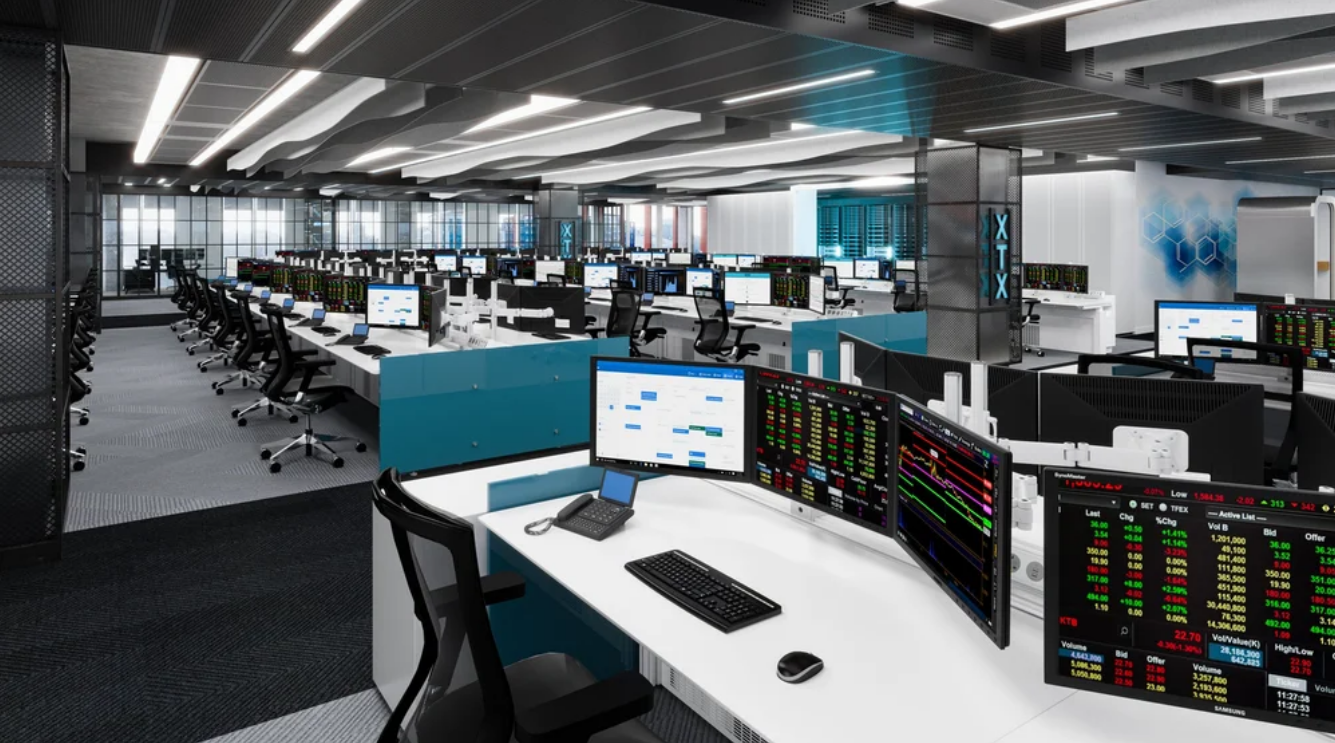
In the heart of the capital sits the office I visited each day for my trading internship. Each day I walked into this office, I felt a small piece of me detach and flutter away, never to be seen again. It felt intentional. Not just the work, but the environment itself. Grey walls, grey tables, grey chairs. Even the artwork was various shades of grey, carefully curated. Along the length of the room hung an uncountable number of TV screens. At least they had colour on them.
At the time, I didn’t think much of it, but looking back, it felt like an introduction.
Not necessarily to trading but to the psychological pressure we would have to endure.
Each day, alongside an extensive and time-restricted workload, there were smaller, less visible challenges. Conversations that felt slightly off. Moments where you were being tested, though it wasn’t always clear how, or why.
Some of my fellow interns seemed to navigate this easily. Others didn’t. The difference, from what I observed, was rarely technical ability.
My first real introduction to this came from one of the most well-known and friendliest employees on the trading desk.
We had been discussing something technical, maybe market conditions, microeconomics, before the conversation drifted into something more casual. He seemed unusually animated, smiling in a way that didn’t quite match the conversation. Then he mentioned, almost casually, that some illicit substance had featured in his weekend. He used the word “coke.”
Something about the delivery felt … off. I followed my instinct and pretended to misunderstand, responding as if he meant the drink instead.
He paused. The smile faded slightly. Then a smirk.
“Well played, good job.”
And just like that, the conversation ended.
It may have meant nothing. But it felt like a test, less about the topic necessarily, but more about my attitude to unexpectedness. What I would acknowledge, what I would ignore, and how quickly I would adapt.
At the end of the first week, one of my fellow interns and I were close to finishing a project. We had a few final questions and decided to approach the managing director.
We had spent the morning quietly observing his mood before deciding it was a safe moment to ask.
He listened. Opened a thesaurus. Then responded with single-word answers.
My peer asked for clarification.
“That will do.”
We left.
Confused, but not deterred, I went home that evening, arriving around 8:30pm after leaving at 5am, and thought about the problem for hours until something clicked. The next day, we returned, implemented the idea, and completed the project.
We prepared a PowerPoint, paying attention to every detail, down to matching the shade of blue to the wallpaper of his favourite restaurant (an idea of my peer).
We presented it.
Halfway through, he stopped us.
“Oh, I didn’t expect you to actually do it. I wanted you to give up.”
Then he assigned us something else.
That was my first rotation.
At the time, I thought it might be an isolated experience. It wasn’t. Similar interactions continued throughout the internship.
What I took from this shifted my understanding of how power influences interactions and how we were really being assessed on this internship. Completion of a task wasn’t always the objective. Sometimes, persistence itself was being evaluated.
On another rotation, an associate insisted that my fellow intern and I work separately. We were placed in small cubicles, slightly removed from the rest of the floor, and told to complete our tasks independently.
I finished mine.
My peer didn’t.
After that, she was spoken to less, given fewer tasks and gradually less included.
She expressed her disappointment to me and I wanted to help but I didn’t know how. I was so confused and frankly quite perturbed.
It’s like everybody could smell that she had failed at something.
It was one of the clearer examples of how quickly visibility and invisibility could change on the trading floor.
There was also a recurring interaction each morning.
At around 6:30am, a few of us would gather in the kitchen for coffee before the day began. Almost every day, an employee would walk in and ask:
“Who are you guys gossiping about?”
Most of the time, we weren’t, so it was easy to deflect.
But on one occasion, when I wasn’t there, two interns actually had been gossiping. They initially denied it, but after some persistence, admitted what they had said: criticising an analyst who had given contradictory instructions.
The next day, they were warned formally that this behaviour could result in removal from the internship.
After that, everyone was more careful.
From that day on I was reminded that informal spaces weren’t always informal.
Other than that, there was a constant sense of being observed, which was enough to change how you behaved, and how you think you behaved.
Over time, I adapted. You learn quickly in those environments. What to say, what not to say, when to speak, when to stay quiet.
And when none of that worked, I found small ways to create distance. Brief moments, closing my eyes for a second longer than necessary, where I could step away mentally, even if only for a few seconds.
It sounds trivial, but that really kept me sane.
The breaking point came near the end of the internship.
I had completed my final presentation to the trading floor. It had gone well, better than expected. There were follow-up discussions, and I was asked to explain my thinking in more detail to a group of senior employees.
They listened.
Then the first question:
“What university do you go to?”
I told them.
(It wasn’t Oxford or Cambridge.)
They exchanged a quick glance and laughed slightly.
“We are both from Cambridge …” one said.
I paused. Then asked for feedback on my work.
“I’m afraid this won’t work out. Thanks for your effort though.”
That was the feedback.
Despite that interaction, and many others of a similar calibre, I was given a return offer at the end of the internship.
But by that point, the decision was already made.
I had seen enough to understand what the offer really was.
The offer was an opportunity to continue to navigate ambiguity, pressure, subtle mind games, and how comfortable you were playing along with them.
Some people thrive in those environments, I guess.
I can’t imagine what that person may be like.
But it certainly wasn’t me.