Web2 has your data. Web3 has your keys. Neither have you yet.
 RVwv.B6 min read·Just now
--
The compromise both sides are afraid to make
Every time I open my phone, I live in two worlds.
In one, I tap an icon, and I’m in. Email, photos, banking, work. The phone remembers who I am. The companies remember who I am. If I lose the phone, I get a new one, log in, and everything’s there. The friction is invisible because it is somebody else’s.
In the other world, I have to remember things. A seed phrase I wrote on paper three years ago. A password I picked when I was sleepy. A wallet I bridged from a chain I no longer use. Sovereignty is real; these are my keys, my funds, and the operational cost is a daily tax on my attention.
This is the lived experience of Web2 vs Web3. Both sides have something the other doesn’t. Both have been afraid to admit they need each other.
Web2’s offer
Web2 is a magnificent product on top of a quietly dystopian deal. The product is: we’ll remember everything for you. The deal is: we own everything we remember.
Most people accept this without thinking about it. The trade is invisible until something breaks the trust. Apple locks your account because of a billing dispute, Gmail shadow-deletes a conversation because of a content rule, and your bank freezes you because of an algorithmic flag. Then you realize the operating system you’ve been living in is rented.
But these breakages are rare. For 99.9% of moments, Web2 just works. Click “forgot password,” get an email, and you’re back in. Convenience compounds. Every product you use saves you a few seconds. Multiplied across a billion users and a million sessions, it’s the most powerful gravitational force in software.
Web3’s offer
Web3 inverted the deal. You own everything. Nobody else gets to lock you out, ever.
The implementation is brutal but cryptographically honest: a 12-word seed phrase. The words are the account. There’s no provider, no support team, no reset button. Lose the words, lose everything.
This is the only way to be genuinely sovereign. There’s no shortcut. If a recovery process exists that someone else can run on your behalf, then by definition, someone else can be coerced or compromised into running it. Sovereignty has to hurt, or it isn’t sovereignty.
The cost: most users can’t actually live this way. The crypto industry has spent a decade training people to write 12 words on paper, and a decade watching them lose those papers. The users who survive are a self-selected technical minority. The mass market never showed up, and not because they don’t want to own their data, but because Web3’s UX punishes the smallest mistake with permanent loss.
Why neither is winning
Web2 is winning on usage but losing on trust. Every year, the social contract gets a little thinner. Account suspensions, content rules, surveillance scandals. Most users notice but don’t have a good alternative.
Web3 is winning on principle but losing on adoption. Every year, more institutions accept it as legitimate, more infrastructure ships are built, and the daily-active user base outside DeFi traders barely moves. Most users hear “you are your own bank” and choose not to be.
The two camps have a habit of yelling past each other. Web2 builders see Web3 as ideologically pure and operationally cruel. Web3 builders see Web2 as ergonomically slick and morally bankrupt. Both are right. Neither is helpful.
The compromise that’s starting to ship
Something is shifting. A new generation of products is making honest tradeoffs instead of choosing one of the cliffs.
Not “Web3 with Web2 onboarding” (the marketing line for the last three years, mostly empty). Not “Web2 with crypto rails” (the trick exchanges have been running since 2013). Something else: products that pick a clear sovereignty boundary, accept a small dependency on the other side, and tell users honestly what was traded for what.
Three examples that hit the same compromise from different angles:
1. Recovery
The classic Web3 answer is the seed phrase. The classic Web2 answer is “click forgot password.” Both lose.
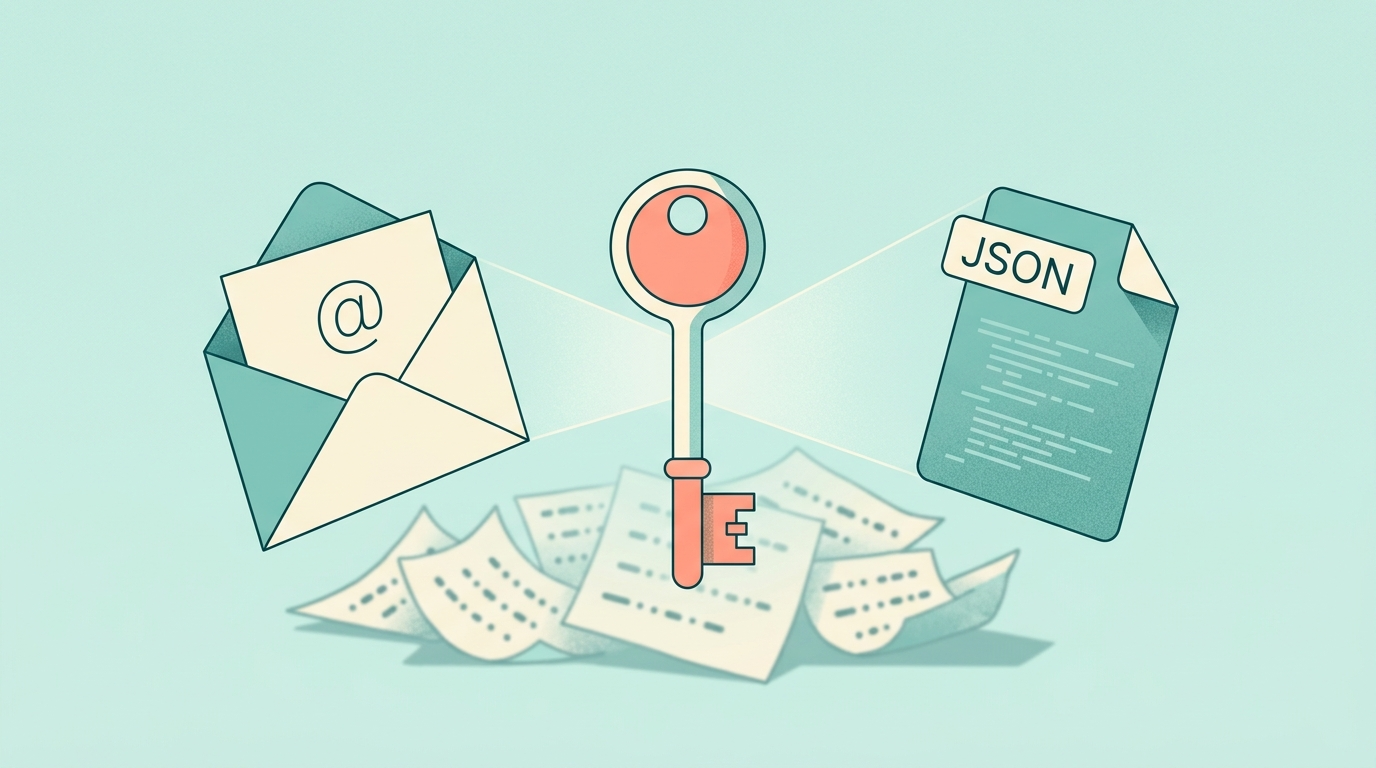
The compromise: encrypt the user’s key with something they always remember (an email address) and let them keep the encrypted file wherever they want. The recovery channel goes to that email. The provider has the codes for 10 minutes, then forgets them. The provider never has the key. The user never writes 12 words on paper.
The cost: a small dependency on an email service. The win: a recovery flow that mainstream users actually survive.
2. Identity
The classic Web3 answer is a 42-character hex address. The classic Web2 answer is your real name and phone number, sold to advertisers.
The compromise: a human-readable name (ano.base.eth) that you control, but resolves to your wallet address everywhere. Cross-app, cross-chain, portable. ENS and Basenames did this years ago, but it took the new generation of consumer products to make it the default in onboarding.
The cost: a small DNS-like dependency on the name registry. The win: identity that’s yours and that other humans can actually type.
3. Communication
The classic Web3 answer is “we have on-chain messaging now” (mostly hand-waving). The classic Web2 answer is Telegram, where every crypto deal already happens.
The compromise: a messenger where the conversation and the transaction are the same artifact. End-to-end encrypted, identity is your wallet, payments are inline. Not custodial like Telegram. Not feature-poor like XMTP demos. The message and the money travel together, with the same trust boundary.
The cost: more on-chain plumbing than a pure Web2 messenger. The win: a chat layer that the on-chain economy can actually live in.
What do all these have in common
Each one accepts a specific, named dependency to lower the cost of self-custody:
- An email server (recovery)
- A name registry (identity)
- A messaging contract (communication)
In exchange, they delete the failure modes that block mainstream adoption:
- Lost seed phrases
- Hex address copy-paste mistakes
- Off-chain Telegram deals are losing context
This is not Web2 winning, nor is it Web3 winning. It is the recognition that pure ideology in either direction has cost users a decade of progress, and that the next phase will be built by people willing to make honest trade-offs instead of pretending they’re free.
What we’re building
ANO is one of the products betting on this thesis. A self-custody, end-to-end encrypted messenger on Base, where:
- Recovery is a file plus an email, not a seed phrase
- Identity is a Basename, not a hex address
- Communication is the conversation and the transaction together, in one app, with one trust model
We don’t pretend it’s free. We tell users what we depend on (an email server for recovery codes, a chain for settlement, a CDN for media). We tell them what we never see (their messages, their keys, their passwords). We let them choose how much of their life lives on-chain. Most users will start with messaging and stay there, and that’s fine.
The promise of Web3 was never “everything must be on-chain.” It was “the things that matter to you should be yours.” That’s a smaller, more achievable bar than the maximalist version. It’s also the bar most users would actually pay for, if anyone built it well.
We think enough of the puzzle pieces are now in place: Account Abstraction, Basenames, modern push channels, fast, cheap chains, to ship apps that earn the third compromise. Not Web2. Not Web3 in the painful 2018 sense. Something the user actually picks because it’s better.
That’s the version of self-custody we want to live in. Wallets grew up as vaults. Deals are still social. Recovery should not be a cliff. Identity should not be a hex string. Conversations should not live on a centralized chat app that a regulator can shut down with a phone call.
We don’t need less Web3. We need fewer cliffs.
ANO. ano.ww8.io. Self-custody messenger built on Base.