
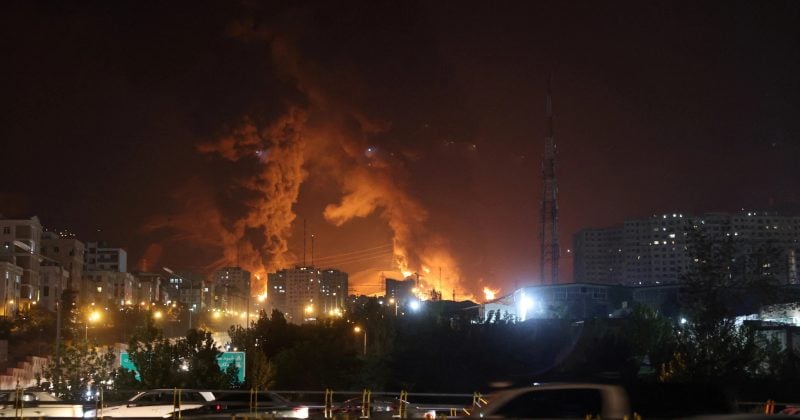
US military strikes Iranian sites, Iran retaliates with missiles into Kuwait as crypto markets react in real time
Bitcoin held near $73K and gold-backed tokens surged as traditional markets sat closed during a weekend of escalating Middle East conflict.
Share
Add us on Google by Editorial Team Jun. 1, 2026The US military launched strikes against Iranian military infrastructure in southern Iran over the weekend of May 30-31, and Iran fired back. Missiles and drones targeted Kuwaiti territory on June 1, with Iran’s Revolutionary Guards claiming the strikes were aimed at US-operated bases inside the country.
Kuwait activated air raid sirens in response. Its air defenses successfully intercepted the incoming fire.
What happened on the ground
US Central Command described the strikes as “self-defense” operations targeting radar and drone command facilities in Goruk and on Qeshm Island. The prompt was Iran’s earlier shootdown of a US MQ-1 drone.
Iran’s retaliation came roughly a day later. The Revolutionary Guards framed their missile and drone attacks on Kuwait as a direct response, specifically targeting what they identified as US military installations on Kuwaiti soil.
AdvertisementPresident Trump’s diplomatic team has reportedly been working toward an interim peace deal with Iran. Those discussions are described as “very close” to producing results, potentially including a ceasefire and the lifting of blockades in the Strait of Hormuz, a narrow chokepoint through which roughly a fifth of the world’s oil supply passes daily.
Crypto stepped in where traditional markets couldn’t
The strikes landed over a weekend, which meant traditional equity and commodity markets were closed. Hyperliquid, a decentralized perpetual futures platform, reported significant spikes in trading volumes for oil and gold-linked contracts.
Bitcoin was trading around $73,068 during the period of peak tension. Ethereum exceeded $2,000.
Tether’s XAUT, a token pegged to the price of physical gold, recorded trading volumes surpassing $300 million amid the volatility.
What this means for investors
The volume spikes on Hyperliquid were traders actively positioning around oil supply disruption risk, gold price moves, and flight-to-safety trades, all denominated in crypto because it was the only game in town.
The XAUT volume is a structural signal worth noting. Gold-backed tokens crossing $300 million in trading volume during a single volatility event suggests that tokenized commodities are carving out a genuine niche for investors who want commodity exposure without dealing with futures roll costs, storage logistics, or weekend market closures.
A deal that reopens the Strait and produces a ceasefire would likely send oil prices lower and reduce the fear premium currently baked into gold and gold-adjacent assets like XAUT.
Disclosure: This article was edited by Editorial Team. For more information on how we create and review content, see our Editorial Policy.