US military launches strikes on Iran after Apache helicopter downing near Strait of Hormuz
The escalation between Washington and Tehran is rattling global markets, and crypto traders should be paying close attention to what happens next.
Share
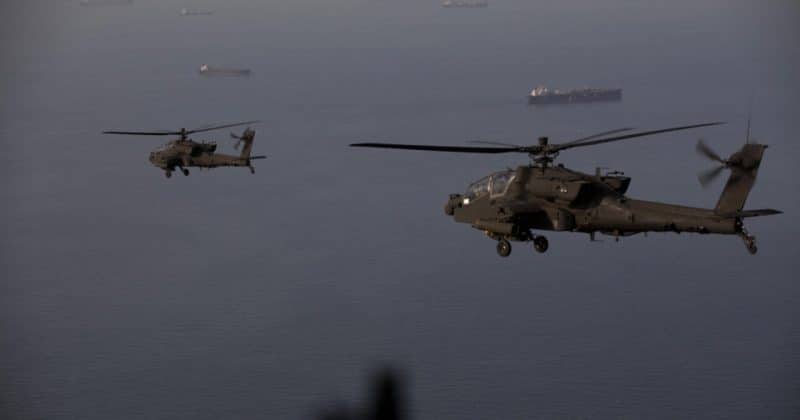
Add us on Google by Editorial Team Jun. 9, 2026The US Central Command launched retaliatory strikes against Iranian military positions on June 9, following the downing of a US Army AH-64 Apache helicopter near the Strait of Hormuz the previous day. The helicopter’s crew was rescued unharmed, but the geopolitical fallout is anything but contained.
What happened
On June 8, a US Army Apache attack helicopter went down near the Strait of Hormuz. The downing was attributed to Iranian aggression.
The crew’s rescue was remarkable in its own right. An unmanned drone boat pulled both crew members from the water uninjured, marking what appears to be the first known sea rescue conducted entirely by an autonomous vessel.
By 5 p.m. ET on June 9, US Central Command had initiated what it described as self-defense strikes against Iranian military positions. President Donald Trump characterized the planned US response as “very strong, very powerful.”
AdvertisementIran didn’t wait to respond. The IRGC acknowledged launching missiles and drones toward US targets in the region on the same day.
As of June 10, specific details about targets struck, casualties sustained, or the scope of either side’s operations remain unclear.
Why the Strait of Hormuz matters for everything
Roughly 20% of the world’s oil supply passes through the Strait of Hormuz on any given day. Any sustained military conflict in or around it threatens to disrupt energy supplies at scale. Energy prices ripple into inflation expectations, which ripple into central bank policy, which ripple into risk asset pricing.
When tensions between the US and Iran escalated in early 2020 following the killing of Iranian General Qasem Soleimani, Bitcoin experienced notable price swings as traders recalibrated their risk models.
What this means for crypto investors
No specific cryptocurrency tokens or projects have been directly referenced in connection with the military action. That absence could suggest that crypto markets have matured enough to avoid knee-jerk panic selling on geopolitical headlines, or it could mean the real volatility hasn’t arrived yet.
Three specific risks are worth monitoring. First, if the conflict disrupts shipping through the Strait of Hormuz for any sustained period, energy prices could spike, creating inflationary pressure that tends to make central banks hawkish. Second, crypto has shown persistent correlation with equities during periods of macro stress. Third, military conflict often strengthens the US dollar, which has historically created headwinds for Bitcoin and other digital assets priced in dollars.
Crypto trades 24/7, which means it often absorbs the impact of geopolitical shocks when traditional markets are closed, creating outsized moves that get corrected when equity trading resumes.
Disclosure: This article was edited by Editorial Team. For more information on how we create and review content, see our Editorial Policy.