US imposes sanctions on Cuban President Miguel Diaz-Canel, but crypto gets a curious pass
Treasury's latest Cuba sanctions target the island's top leadership and military-run economy, yet make zero mention of digital assets, a gap that could accelerate crypto adoption in one of the Western Hemisphere's most financially isolated nations.
Share
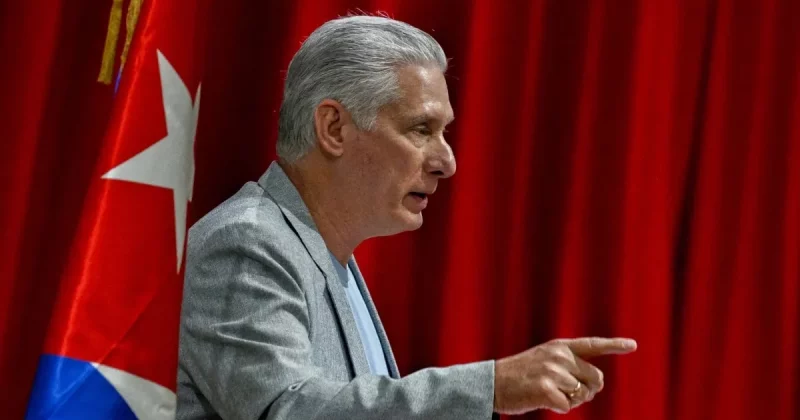
Add us on Google by Editorial Team Jun. 5, 2026The US Treasury Department dropped sanctions on Cuban President Miguel Diaz-Canel, his wife Lis Cuesta Peraza, and a roster of senior officials on June 5, freezing their assets and barring any transactions with US persons. President Trump said the US wants Cuba to be a “well-run country,” which is a polite way of saying Washington thinks it currently isn’t.
But here’s the thing. Buried in what didn’t make the sanctions list is something crypto investors should pay attention to: there is no mention of digital assets, blockchain technology, or cryptocurrency anywhere in the filing. In a country where over 100,000 people had already adopted Bitcoin by mid-2022, that omission reads less like an oversight and more like a policy gap big enough to drive a blockchain through.
What the sanctions actually do
The OFAC filing targets Cuba’s highest levels of political power and the economic machinery that keeps them there. The centerpiece is GAESA, or Grupo de Administracion Empresarial S.A., a military-run conglomerate estimated to control between 40% and 70% of Cuba’s entire economy. That’s not a typo. A single entity tied to the armed forces runs somewhere between two-fifths and seven-tenths of the island’s economic output.
AdvertisementThe sanctions freeze any assets these individuals and entities hold within US jurisdiction. They also prohibit American citizens and companies from conducting business with any of the named parties. Secondary sanctions extend the reach further, meaning foreign companies dealing with GAESA or the sanctioned officials could also face consequences from Washington.
These measures follow Executive Order 14404, signed on May 1, 2026, which laid the groundwork for this expanded pressure campaign. That order initiated a significant broadening of secondary sanctions related to Cuba, signaling that the June 5 announcement was less a surprise and more the next chapter in a deliberate escalation.
The crypto-shaped hole in the sanctions
Neither the June 5 sanctions nor the May 2026 executive order contain specific provisions addressing cryptocurrencies or decentralized finance. This is notable because Cuba isn’t some crypto backwater. The Cuban central bank formalized a regulatory framework for digital assets back in August 2021 through Resolution 215. By 2022, the central bank had begun licensing virtual asset service providers on the island.
More than 100,000 Cubans had adopted Bitcoin and other cryptocurrencies by mid-2022, primarily as a workaround for the island’s severe banking limitations. Remittances, which represent a lifeline for many Cuban families, have increasingly flowed through crypto rails rather than traditional wire services that charge steep fees or simply refuse Cuba-bound transfers.
What this means for investors
The absence of crypto-specific restrictions in this sanctions package creates an interesting dynamic. Decentralized protocols, by their nature, don’t have a compliance department that can be served with an OFAC notice. While US-based exchanges are required to screen for sanctioned entities, peer-to-peer transactions and decentralized exchanges operate in a regulatory gray zone that these sanctions don’t appear to address.
For the broader market, traders should watch whether this policy gap drives measurable increases in on-chain activity tied to Cuban IP addresses or known remittance corridors. If it does, it could become a catalyst for Treasury to eventually close the loophole, which would mean new regulatory action targeting crypto’s role in sanctions evasion.
Disclosure: This article was edited by Editorial Team. For more information on how we create and review content, see our Editorial Policy.