US government works to release energy reserves, boost gas sales to ASEAN
Deputy Secretary of State Christopher Landau outlined plans at the ASEAN Future Forum to expand LNG and LPG exports to Southeast Asia amid Middle East supply disruptions.
Share
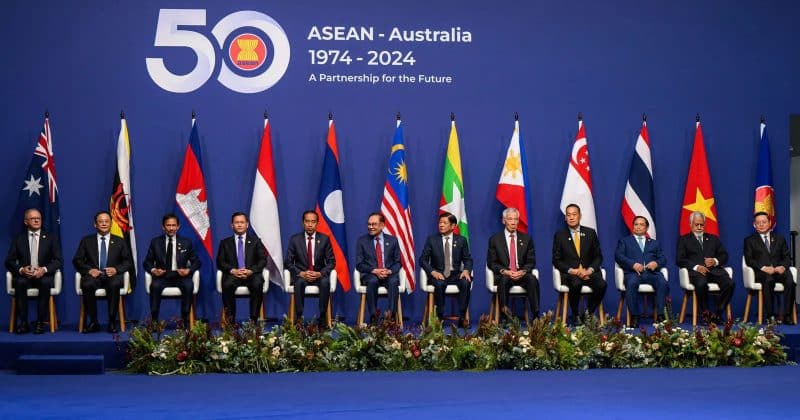
Add us on Google by Editorial Team Jun. 10, 2026The US is tapping its strategic energy reserves and pitching itself as the gas station of choice for Southeast Asia. Deputy Secretary of State Christopher Landau announced the twin initiatives at the ASEAN Future Forum in Hanoi on June 10, framing them as a direct response to supply disruptions that have rattled global energy markets since late February.
What’s actually happening
The plan has two main components. First, the US is releasing barrels from the Strategic Petroleum Reserve, the country’s emergency oil stockpile stored in underground salt caverns along the Gulf Coast. The Trump administration authorized a drawdown of 172 million barrels back in March 2026 as part of a broader International Energy Agency coordinated effort to release 400 million barrels globally.
Second, the US is actively expanding its liquefied natural gas and liquefied petroleum gas exports to ASEAN member states. This isn’t just about emergency relief. It’s a long-term play to rewrite the energy supply map for a region of roughly 680 million people whose economies are growing fast and whose power grids are hungry for fuel.
AdvertisementThe energy supply disruptions driving all of this trace back to escalating conflicts in the Middle East that intensified in late February 2026. The Strait of Hormuz, the narrow waterway through which a massive share of global oil and gas shipments pass, has become a pressure point. Many ASEAN nations rely heavily on imports routed through that chokepoint, making them acutely vulnerable when tensions flare.
Why ASEAN, why now
Southeast Asia’s energy appetite is growing at a pace that makes it one of the most strategically important markets for any major exporter. Natural gas demand across the region has been climbing steadily, driven by both power generation and industrial expansion. Countries like Vietnam, Thailand, Indonesia, and the Philippines are all building out infrastructure that requires reliable, affordable fuel inputs.
Landau’s remarks at the forum also touched on the ASEAN Power Grid, a long-discussed initiative to connect the electricity networks of Southeast Asian nations. A separate US-ASEAN dialogue reinforced commitments to energy cooperation and infrastructure development, signaling that Washington’s interest goes beyond simply selling fuel.
What this means for investors
The immediate market impact of SPR releases is typically a modest softening of crude oil prices. Dumping 172 million barrels from US reserves, as part of a globally coordinated 400-million-barrel release, is designed to take the edge off supply-driven price spikes.
For US LNG producers and the companies that own export terminal capacity, this pivot toward ASEAN represents a significant growth market. Investors watching companies with exposure to LNG shipping, regasification infrastructure, and long-term supply agreements in Southeast Asia may find this a tailwind worth tracking.
Expanding the ASEAN Power Grid and building out regasification terminals across the region will require billions in capital investment. That creates opportunities for engineering firms, project finance, and the renewable energy companies that will inevitably be part of any comprehensive regional energy strategy.
Investors should watch Strait of Hormuz shipping data and IEA monthly reports for signals on which direction the wind is blowing.
Disclosure: This article was edited by Editorial Team. For more information on how we create and review content, see our Editorial Policy.