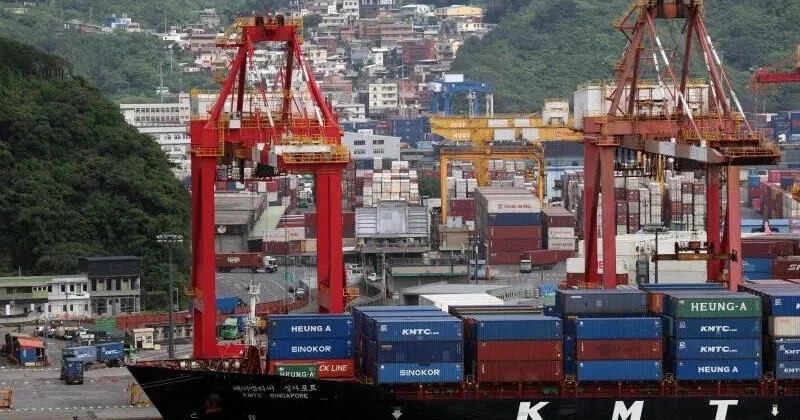
US eases tariffs on Taiwan to formalize trade agreement
Washington cuts tariffs on Taiwanese imports from 20% to 15% as Taipei opens its markets to nearly all US exports.
Share
Add us on Google by Editorial Team May. 27, 2026The Trump administration just inked a reciprocal trade deal with Taiwan, lowering US tariffs on most Taiwanese goods from roughly 20% to 15%. In return, Taiwan agreed to eliminate or slash tariffs on 99% of US industrial and agricultural exports.
The agreement, formally announced on February 12-13, 2026, makes Taiwan the seventh country to secure a reciprocal trade deal under the current administration. Negotiations kicked off in January, meaning the whole thing came together in about a month.
What’s in the deal
Taiwan’s side of the bargain is arguably more aggressive. Taipei committed to opening its doors to nearly all American exports, with a focus on industrial and agricultural products. That means US beef, dairy, and automobiles will face significantly lower barriers entering the Taiwanese market.
Taiwan also pledged to address non-tariff barriers, the regulatory and bureaucratic hurdles that can be just as effective at keeping foreign goods out as any duty.
AdvertisementThen there’s the investment component. Taiwanese firms, led by TSMC, committed $250 billion toward semiconductor investments. The deal also includes $44.4 billion in commitments for US liquefied natural gas and crude oil purchases, along with additional equipment buys.
The strategic backdrop
The agreement aligns Taiwan’s tariff treatment with US allies like Japan and South Korea, effectively pulling Taipei into the same trade tier as America’s closest economic partners in the region.
Taiwan is an energy-poor island that imports virtually all of its oil and gas. Pledging $44.4 billion in US LNG and crude oil purchases gives Taipei a more diversified, geopolitically friendlier energy supply chain while helping narrow the US trade deficit with Taiwan.
What this means for investors
The tariff reduction from 20% to 15% will lower input costs for US firms that import Taiwanese components, particularly in the electronics and technology sectors.
The $250 billion semiconductor investment commitment, if even a fraction flows into new US-based fabrication facilities, could reshape the domestic chip manufacturing landscape over the next decade.
For the agricultural sector, the opening of Taiwan’s market to 99% of US exports could provide a meaningful boost. Taiwan is a wealthy, import-dependent economy that consumes significant quantities of foreign food products, including beef and dairy.
The non-tariff barrier commitments will be the hardest to verify and enforce, and investors should pay attention to whether Taiwan follows through on regulatory changes, not just the tariff reductions that are easier to measure.
Disclosure: This article was edited by Editorial Team. For more information on how we create and review content, see our Editorial Policy.