US draft resolution at IAEA demands Iran disclose nuclear sites and uranium stocks
The resolution stops short of a UN Security Council referral, but ratchets up pressure on Tehran during a delicate window of bilateral talks.
Share
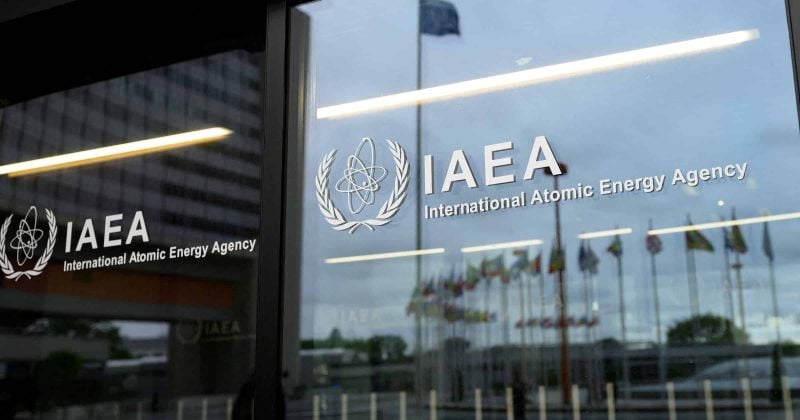
Add us on Google by Editorial Team Jun. 8, 2026The United States has circulated a draft resolution at the International Atomic Energy Agency’s Board of Governors demanding that Iran hand over detailed information about its nuclear sites and enriched uranium stockpiles. The move comes as the IAEA continues to struggle with verifying where Iran’s nuclear material ended up after strikes on Iranian facilities in 2025.
Washington chose not to push for a referral to the UN Security Council, a step that would have significantly escalated the standoff. Instead, the draft keeps the confrontation within the IAEA’s diplomatic framework.
What the resolution actually asks for
The draft, circulated between June 5 and 7, calls on Iran to provide precise accounting of its nuclear materials and grant access to its safeguarded facilities. The language describes these requests as “urgent and essential.”
AdvertisementAt the center of the demand is a specific concern: the status of nuclear sites that were hit during strikes and the enriched uranium associated with those locations. US officials under the Trump administration flagged approximately 440.9 kg of uranium enriched up to 60% as a significant point of concern. Uranium enriched to 60% is a short technical hop from the 90% threshold needed for weapons-grade material.
The IAEA has reported increasing difficulty in tracking where that uranium is now. The agency needs Iran’s cooperation to reconstruct what happened to those stockpiles.
The diplomatic backdrop
This resolution follows a similar measure passed in November 2025, when the US partnered with the E3 group (Britain, France, and Germany) to push through a resolution addressing earlier concerns about Iran’s nuclear program. That vote faced opposition from Russia, China, and Niger.
The US and Iran have been engaged in discussions that reportedly include potential ceasefire negotiations, making the resolution a tightrope walk. Russia and China, both of which opposed the November 2025 resolution, remain wildcards. Their positions on the current draft could determine whether the resolution passes with broad consensus or squeaks through as a politically divisive vote.
What this means for markets and investors
The resolution itself doesn’t change the sanctions landscape overnight, but it sets the stage for potential tightening if Iran refuses to comply. The fact that Washington stopped short of a Security Council referral preserves optionality: it can escalate later if needed, but for now it is applying pressure without a referral that would open the door to multilateral sanctions expansion.
The key variable is whether Iran engages with the IAEA’s requests or stonewalls. Cooperation, even partial, could create space for sanctions relief discussions. Refusal or obstruction would almost certainly bring the Security Council referral back onto the table.
Disclosure: This article was edited by Editorial Team. For more information on how we create and review content, see our Editorial Policy.