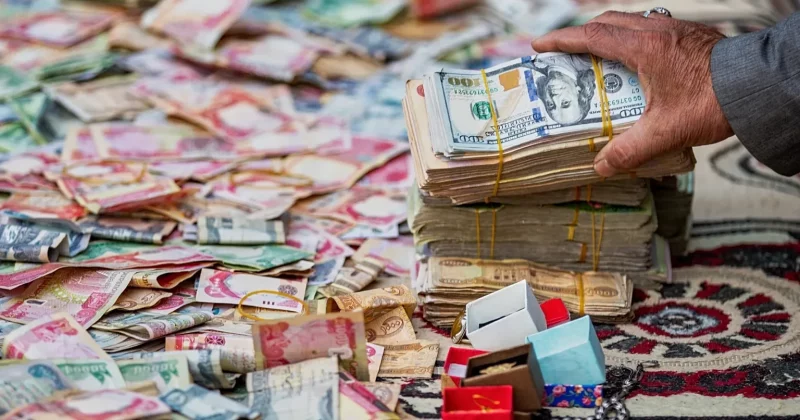
United States plans to redirect frozen Iranian assets to Gulf allies for damages and rebuilding
The US Treasury is exploring ways to channel Iran's frozen funds to Saudi Arabia, the UAE, Kuwait, and Bahrain, potentially reshaping Middle East geopolitics and energy markets.
Share
Add us on Google by Editorial Team Jun. 8, 2026The US Treasury Department is weighing a plan to take frozen Iranian assets and hand them to Gulf allies to cover damages caused by Iranian military strikes.
Treasury Secretary Scott Bessent is reportedly leading the effort to assess the costs that Iranian missile and drone attacks have inflicted on regional energy infrastructure across Saudi Arabia, the UAE, Kuwait, and Bahrain. Those repair costs have been estimated at $58 billion.
The numbers behind the standoff
Iran has somewhere between $100 billion and $120 billion in assets frozen globally, a consequence of decades of sanctions and geopolitical isolation. Of that total, roughly $2 billion sits within US jurisdiction.
AdvertisementThe $2 billion the US directly controls is a fraction of the estimated $58 billion in damages. That means Washington would either need to coordinate with other jurisdictions holding Iranian funds, or the initiative stays largely symbolic in dollar terms.
Iran, predictably, is not on board. Deputy Foreign Minister Kazem Gharibabadi responded on June 7, calling any potential asset seizure or reallocation without Tehran’s consent a “wrongful act.” He argued that regional governments have no standing to demand reparations and that Iranian assets are not a resource pool for US allies to dip into.
A delicate balancing act with ceasefire talks
The timing is loaded. The US and Iran are in the middle of ceasefire negotiations, and Tehran has directly linked any peace deal to the release of approximately $24 billion in frozen assets. Redirecting those same assets to Iran’s regional rivals is, diplomatically speaking, the opposite of a goodwill gesture.
The $58 billion damage estimate reflects the cumulative toll of Iranian strikes on energy facilities, desalination plants, and critical infrastructure across Gulf states.
What this means for markets and investors
Energy markets are the most obvious pressure point. The $58 billion in estimated damages is concentrated in energy infrastructure, which means the underlying dispute is fundamentally about who controls and profits from the region’s hydrocarbons.
The precedent set by redirecting frozen Russian assets toward Ukraine reconstruction is clearly informing this Iran strategy. If it becomes standard practice to seize and redistribute frozen sovereign funds to allies, the long-term effect could be a slow migration of state reserves toward assets that can’t be frozen by foreign governments, whether that’s gold, Bitcoin, or other non-custodial stores of value.
Disclosure: This article was edited by Editorial Team. For more information on how we create and review content, see our Editorial Policy.