Understanding Digital Assets: Non-Fungible Tokens (NFTs)
 0xR2R4 min read·Just now
--
When people first hear about NFTs, the conversation usually starts with hype.
Expensive JPEGs. Viral collections. Stories of assets selling for thousands — or even millions — of dollars.
But that phase has passed.
Today, the conversation around NFTs is becoming more grounded. The focus is shifting away from speculation and toward something more fundamental.
To understand where NFTs are going, we need to go back to a simpler idea:
What makes something unique?
From Interchangeable to Unique
Some things are interchangeable.
If you have one Bitcoin and I give you another Bitcoin, nothing really changes. They hold the same value and can replace each other. These are called fungible assets.
But not everything works that way.
If you own a specific piece of art, a concert ticket, or a rare collectible, you can’t simply swap it for something similar. It has its own identity, its own history, and its own value.
This is what non-fungible means.
NFTs bring this idea into the digital world. They are unique digital assets recorded on a blockchain, where each one can be verified as distinct and cannot be replaced by another.
Before NFTs, digital content could be copied endlessly. Ownership was unclear, and scarcity didn’t exist. NFTs changed that by introducing a way to prove ownership of something digital in a secure and verifiable way.
More importantly, they introduced the idea of programmable ownership — where rules, access, and rights can be embedded directly into the asset itself.
From Hype to Utility
In the early days, NFTs were mostly associated with art and collectibles. That use case still exists, but it no longer defines the space.
What we’re seeing now is a shift toward utility.
Projects are no longer just asking how to create demand, but what these assets actually enable. This is a natural progression for any new technology. Early attention brings experimentation, and over time, the focus shifts toward real use.
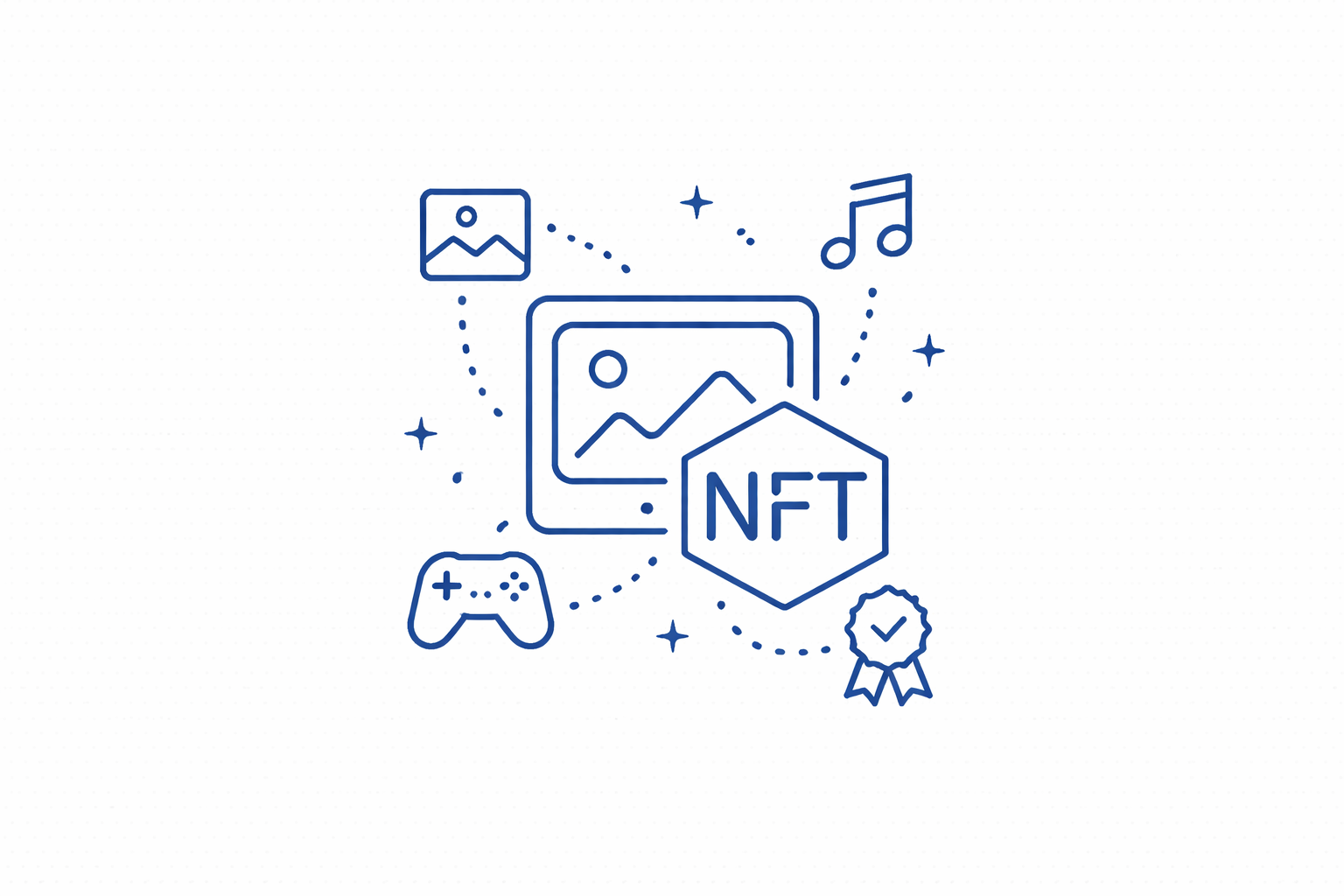
Today, NFTs are being explored in areas like identity, access, gaming, and real-world verification. In many cases, they act less like collectibles and more like digital keys — unlocking experiences, communities, or services.
In gaming, for example, NFTs allow players to own in-game assets such as characters, items, or land. Earlier models focused heavily on earning, but the current direction is moving toward more sustainable economies and better player experiences.
For creators, NFTs offer a new way to connect directly with audiences. Instead of relying entirely on platforms, creators can distribute their work, build communities, and engage supporters in ways that were not previously possible.
We’re also starting to see NFTs used in more practical ways, such as tickets, certificates, and credentials. In these cases, the value is not in speculation, but in verification and ownership.
Why Ownership Matters
The idea of owning something digital may seem abstract at first. But as more of our lives move online, it becomes more relevant.
People spend time building identities, relationships, and value in digital environments. NFTs provide a way to represent ownership in those environments — whether it’s an asset, access to a community, or proof of participation.
This is why NFTs are often tied to identity. They are not just things you hold, but signals of what you’re part of.
At the same time, they create new ways for value to flow. Instead of ownership being controlled entirely by platforms, individuals can hold and transfer assets directly. This changes how creators earn, how communities form, and how users participate in digital ecosystems.
Where This Is Going
NFTs are also becoming part of a larger shift in how the Internet is evolving.
In more immersive and interconnected digital environments, users will need ways to prove ownership, carry identity, and move assets across platforms. NFTs provide a foundation for this.
Not as standalone products, but as part of the infrastructure that enables digital ownership.
What’s changing today is not just the technology, but the mindset around it.
NFTs are moving from:
- speculation to utility
- hype to infrastructure
- collectibles to ownership systems
This phase may feel quieter compared to the early surge of attention, but it is also where more meaningful development happens.
Looking Ahead
NFTs are still evolving, and not every use case will succeed. Some ideas will fade, while others will become part of everyday systems that people use without even noticing.
But the core idea remains:
digital ownership is now possible — and programmable.
That alone represents a meaningful shift in how we interact with the Internet.
Because in the end, NFTs are not just about what we can buy or sell.
They are about what we can own, and how that ownership changes participation in digital systems.
And we are still early in understanding what that truly enables.
— 0xR2R
Simplifying Web3, one post at a time.