Understanding DeFi Risks and the Security Measures Protecting Users
 Codearies3 min read·Just now
--
Decentralized finance, or DeFi, has really changed the game by giving people access to lending, trading, and earning opportunities without needing traditional banks. However, this newfound freedom comes with its own set of serious risks. Users are now directly interacting with smart contracts, wallets, and blockchain protocols instead of relying on a central institution.
The silver lining is that DeFi security has made strides thanks to audits, monitoring, insurance, and improved user practices. While these measures don’t eliminate risk entirely, they certainly help make the ecosystem safer and more resilient.
Main DeFi Risks
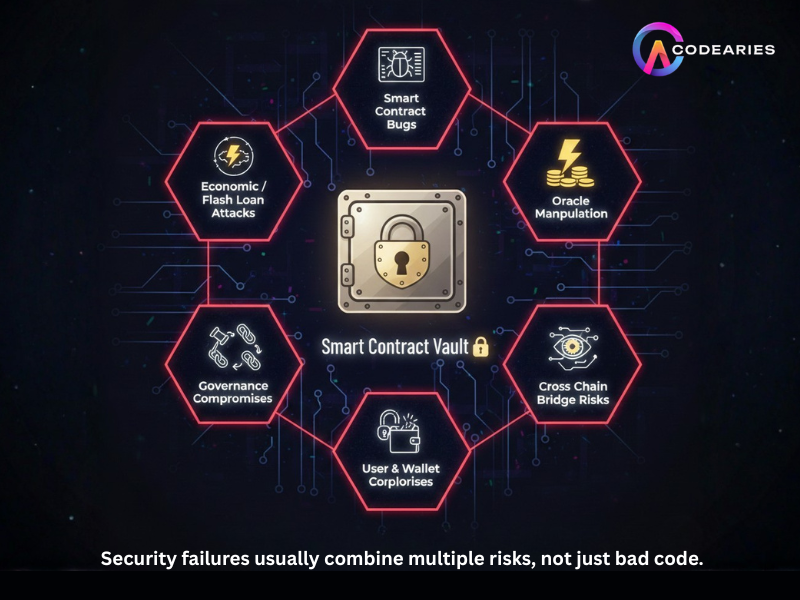
One of the biggest threats in DeFi is smart contract risk. A simple bug in the code can allow attackers to drain funds, and since blockchain records are tough to alter, these mistakes can be incredibly costly once a protocol goes live.
Market risk is another significant concern. Prices in DeFi can fluctuate rapidly, and sharp swings might lead to liquidations or losses for users who have borrowed against volatile assets.
Governance risk is also something to keep an eye on. If voting power is concentrated or governance systems are poorly designed, it can lead to bad decisions or attacks that impact the entire protocol.
How Protocols Protect Users
One of the best defenses against these risks is code auditing. Independent security reviews can help identify bugs before a launch, reducing the chances of an exploit. However, audits are just a snapshot in time, so they need to be complemented with ongoing monitoring.
Real time monitoring has become a crucial layer of protection. Protocols can keep an eye out for suspicious activities, like unusual withdrawals or attack patterns, and respond quickly to prevent further losses.
Circuit breakers are another handy safeguard. These systems can pause certain functions during an active attack, limiting damage while the situation is being investigated.
Role of Insurance and Safety Nets
DeFi insurance is on the rise, providing an extra layer of protection for users. It can help individuals recover some of their losses if a smart contract goes awry or if a stable asset loses its value.
This is crucial because DeFi lacks the built-in safety nets that traditional banking offers. Users often bear more responsibility, so having optional coverage can really help lessen the blow of significant failures.
User Side Security Habits
Users have a big part to play in their own safety. One of the best practices is to regularly check token approvals and revoke any permissions that are no longer necessary.
It’s also wise to stick with trusted wallets, steer clear of unknown protocols, and limit your exposure to only what you can afford to lose. While DeFi presents exciting opportunities, careless actions can lead to mistakes that are hard to undo.
Why Security Keeps Evolving
DeFi protocols are interconnected, meaning that a vulnerability in one project can ripple out and impact others. This makes security a collective responsibility rather than just a feature that gets added at launch.
As DeFi continues to expand, attackers are becoming more sophisticated. That’s why effective risk management involves a combination of code reviews, monitoring, insurance, and user education, rather than relying on a single line of defense.
Conclusion
Grasping the risks associated with DeFi is vital for anyone engaging with decentralized finance. Issues like smart contract bugs, market volatility, governance weaknesses, and user errors can all lead to financial losses.
On the bright side, stronger security measures are making DeFi more reliable. Audits, monitoring, circuit breakers, insurance, and careful user practices all work together to create a much safer environment for participation.