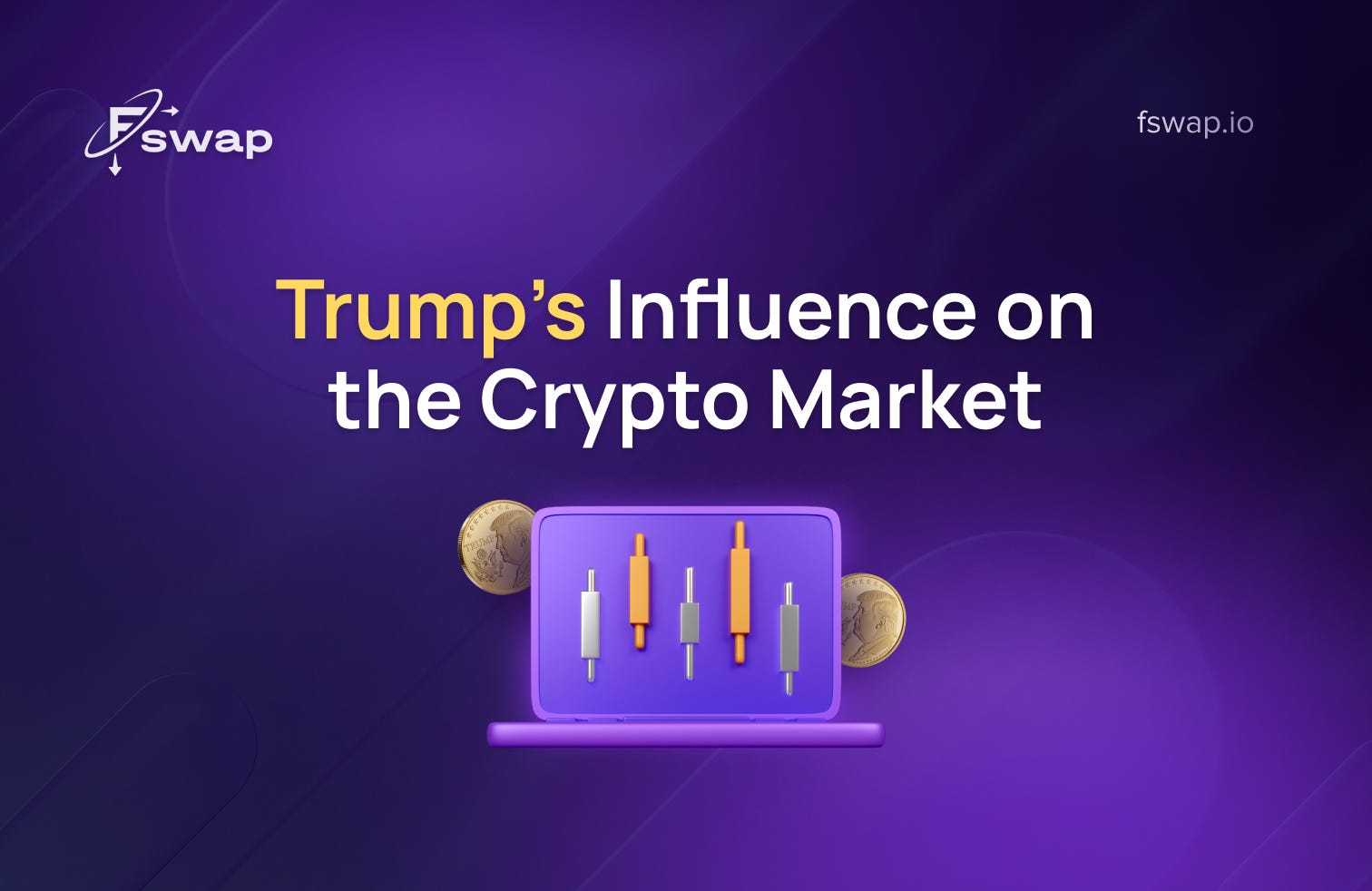
Trump’s Influence on the Crypto Market
 Fswap10 min read·Just now
--
If you’ve heard “Trump” and “crypto” in the same sentence, you’re not alone in wondering what it means. The collision of politics and digital currency can feel overwhelming, especially with official “Trump digital trading cards” and unofficial “MAGA coins” appearing in the news. The primary source of confusion is this mix of official products and fan-made tokens.
This guide breaks down the crucial difference between Donald Trump’s official digital products and the unofficial tokens created by fans or speculators. The goal is to provide clarity on why people spend real money on these assets, allowing you to follow news on this topic without feeling lost. The evolving relationship between public figures and digital assets shows a new kind of political influence on cryptocurrency, starting with what these official “Trump NFTs” actually are.
What Are Trump’s Digital Trading Cards, Really?
You’ve likely seen the images: Donald Trump depicted as a superhero, an astronaut, or a cowboy. These are part of his official “Digital Trading Card” collections. The easiest way to understand them is to think of limited-edition baseball cards, but for the digital age. Each card is a Non-Fungible Token (NFT) — -a technical term for a unique digital certificate that proves you own the original version of that specific image, much like a serial number for a collectible.
This public proof of ownership is what separates an NFT from a simple picture you might save to your computer. When you own the Trump NFT, your ownership is permanently logged on a secure digital record book called a blockchain. Think of the blockchain as a global, unchangeable database that lists you as the verified owner, similar to how a deed proves you own a house. These collections are official products released by a company that has licensed Donald Trump’s name and image.
While anyone can look at or even screenshot the image, only one person can be the official owner of the NFT for that specific card. This brings up the biggest question most people have: why would anyone pay for it?
Why Pay for a Digital Image You Can Screenshot?
It’s a fair question, and the answer lies in the difference between owning a copy and owning an original. While anyone can right-click and save the image of a Trump Digital Trading Card, owning the NFT is like owning the original Mona Lisa while everyone else just has a postcard. The postcard is a nice copy, but only the museum has the authentic, valuable masterpiece. The NFT is digital proof of authenticity.
This proof of ownership isn’t just a simple claim; it’s publicly recorded. The blockchain acts as a global, unchangeable record book that everyone can see. When someone buys an official Trump NFT, their ownership is added to this digital ledger, creating a permanent and verifiable public record. You don’t just own the file; you own the title to the file, and everyone can see that title is in your name.
With this in mind, the motivations for buying these NFTs generally fall into three main categories:
- As a Collector: Just like people collect stamps, art, or physical trading cards, some buy these for the novelty and scarcity of owning an official digital item.
- As a Supporter: For some, purchasing an official product is a way to show political support or feel connected to a public figure they admire.
- As a Speculator: Others buy with the hope that the value of the limited-edition NFT will increase over time, allowing them to sell it for a profit later.
Whether for collecting, support, or financial speculation, the value comes from this concept of provable digital scarcity. However, this new digital landscape has also created a lot of confusion. These official NFTs are completely different from the many unofficial “Trump coins” you might hear about, which carry an entirely different set of risks.
Warning: How to Spot Unofficial “Trump Coins”
Beyond the official digital trading cards, you’ve likely heard about cryptocurrencies with names like TRUMP or MAGA. These “meme coins” are not affiliated with Donald Trump, his campaign, or his official brand. Anyone can create a new cryptocurrency and name it after a public figure or a popular trend to attract attention, and that appears to be the case here.
So what exactly is a meme coin? Think of it as a type of digital token whose value is based almost entirely on social media hype and community interest, rather than any underlying technology or business purpose. They are often created as a joke or to cash in on a cultural moment. These coins are completely separate from the official Trump NFTs, which are sold as digital collectibles through a verified website.
The value of these unofficial coins is driven by pure speculation. People buy them hoping that online buzz will drive the price up, allowing them to sell to the next person for a profit. It functions like a massive game of digital hot potato, where the value can skyrocket or plummet in a matter of hours based on rumors and group psychology. This makes them exceptionally high-risk.
Because these tokens are created and traded independently of any official campaign, they usually circulate on open crypto markets, where users swap one digital asset for another rather than using traditional payment systems. In practice, this means participants rely on crypto-to-crypto exchange platforms such as Fswap , which facilitate fast, non-custodial swaps between thousands of digital assets, allowing users to react quickly in highly volatile environments.
In short, while the official NFTs are limited-edition collectibles from a verified source, these meme coins are unaffiliated, highly speculative bets on public attention. This distinction is crucial for understanding the different risks involved. But it also raises a bigger question: What does Trump himself actually think about Bitcoin and the wider crypto world?
Is Trump Pro-Bitcoin? What His Wallet and Words Reveal
For years, Donald Trump was a vocal crypto skeptic, once calling Bitcoin a “scam” that was “based on thin air.” This makes his recent dive into digital assets all the more surprising. While he hasn’t publicly reversed his opinion on Bitcoin itself, his actions tell a new story. Public financial disclosures have revealed that he holds a significant amount of cryptocurrency, valued at times in the millions of dollars, creating a clear contradiction between his past words and his current digital wealth.
So, how did a crypto critic end up with a crypto fortune? The answer lies in his NFT sales. Instead of buying digital currency on the open market, Trump received it as his share of the revenue from his trading card collections. This money was automatically deposited into his crypto wallet — -which works like a digital bank account — -in the form of Ethereum. Most NFT projects, including Trump’s, are built on the Ethereum network, so payments and royalties are often handled in its native currency. He didn’t go to crypto; crypto came to him as a byproduct of a successful business venture.
This shift from public critic to quiet beneficiary suggests his stance has become more practical than ideological. His involvement seems less about a newfound belief in decentralized finance and more about using a popular technology for business, fundraising, and engaging with his supporters.
The Hidden Risks of Mixing Politics and Crypto
While the idea of a political collectible might seem intriguing, it’s like strapping your money to a digital rollercoaster. The value of these assets is extremely volatile — -meaning prices can swing dramatically with little warning. For tokens tied to a political figure, their worth can soar or collapse based on daily news, poll numbers, or even a single tweet. What looks like a promising gain one morning can evaporate by evening, making them far riskier than traditional collectibles.
Beyond the official projects, a minefield of unofficial “meme coins” uses Trump’s name and likeness to attract buyers. Many of these are created by anonymous developers who have no connection to the campaign. This environment is ripe for a common scam known as a “rug pull.” In this scenario, the creators hype up the coin online, wait for people to invest their money, and then disappear — -withdrawing all the funds and leaving investors with a worthless digital token.
In highly volatile meme coin environments, speed often becomes part of the strategy. Traders move rapidly between assets, swapping one token for another within minutes as sentiment shifts. This is why many participants rely on streamlined crypto-to-crypto platforms such as Fswap , which enable direct asset swaps without requiring long-term custodial deposits. While such tools provide flexibility in fast-moving markets, they do not eliminate the underlying risk — price volatility and project legitimacy still depend entirely on market dynamics and due diligence.
Ultimately, the value of any celebrity-endorsed token, whether official or not, is tied directly to one person’s reputation. Any change in Donald Trump’s public standing, health, or legal situation can have an immediate and powerful impact on the price of his NFTs and any coins bearing his name. This “key person risk” means that owners are not just speculating on a digital asset; they are betting on the ongoing popularity and stability of a single, highly public individual.
Beyond Trump: The New Frontier of Political Collectibles
While Donald Trump’s digital trading cards have captured the most headlines, they aren’t an isolated event. They represent a prominent example of a growing trend at the intersection of politics and technology. Public figures are discovering that digital assets offer a novel way to engage with their base, raise funds, and create a modern form of memorabilia. This approach digitizes the classic campaign button or signed poster but adds a layer of provable ownership and speculative potential.
This new model blurs the lines between making a political donation, collecting a piece of history, and financial speculation. For supporters, buying a politician’s NFT can feel like a direct way to show loyalty, similar to buying merchandise. However, unlike a t-shirt, these digital tokens have a fluctuating market value. This creates a hybrid product that is part collectible and part financial asset, changing how supporters interact with and invest in a political brand.
We are likely only seeing the beginning of this trend. Other political figures and their families have already started to experiment in this space, such as Melania Trump’s own NFT projects. As technology becomes more mainstream, more campaigns and public figures will likely explore digital assets as a tool for fundraising and engagement, bringing with them all the risks and volatility native to the crypto world.
Conclusion: A New Political and Digital Landscape
The world of “Trump crypto” reveals two distinct territories. The first is the official collectible: digital trading cards released as modern-day memorabilia, functioning as a way to show support or own a piece of a political brand. The second is the wild west of unaffiliated “meme coins,” which use his name but are driven purely by hype and speculation — -a much riskier game of digital hot potato.
Understanding this distinction clarifies the motivations driving the market. Whether someone is buying an official NFT as a collector, supporting a public figure, or betting on a meme coin’s buzz, the value is tied directly to these human drivers. This phenomenon highlights a broader shift where politics, finance, and technology are merging.
As you encounter news about new digital assets tied to political figures, the key question remains: Is this an official collectible from a verified source, or an unaffiliated, speculative token built on hype? Answering that question is the first step in navigating this new and volatile frontier.
Q&A
Question: What exactly are Trump’s “Digital Trading Cards”?
Short answer: They are official, licensed NFTs — unique digital collectibles similar to limited-edition baseball cards. Each card’s ownership is recorded on a blockchain, creating a public, tamper-resistant proof that you own that specific tokenized image. While anyone can view or screenshot the art, only the NFT owner holds the on-chain “title” to the original. These collections are released by a company that has licensed Donald Trump’s name and image and are sold as verified, limited-edition memorabilia.
Question: Why would someone pay for an image they can just screenshot?
Short answer: The value comes from provable ownership and scarcity, not from file access. Think of it like the difference between owning the original painting and owning a postcard — the picture looks the same, but only one proves authentic ownership. With NFTs, the blockchain publicly records who owns the “original,” which matters to collectors, supporters, and speculators who value verifiable scarcity and provenance.
Question: How are unofficial “MAGA” or “TRUMP” coins different from the official NFTs?
Short answer: Unofficial “TRUMP”/“MAGA” meme coins are unaffiliated with Donald Trump, his campaign, or his brand. They’re typically created by third parties to ride social media hype and have no built-in utility or official licensing. Their prices are driven mostly by speculation and sentiment and can rise or crash quickly. By contrast, the official Trump products described here are licensed NFTs sold as digital collectibles via a verified source.
Question: If Trump used to criticize Bitcoin, why does he hold cryptocurrency now?
Short answer: His crypto holdings largely came as revenue from his NFT collections, not from buying coins on the open market. Proceeds and royalties were paid into his crypto wallet — often in Ethereum, since the NFTs were issued on the Ethereum network. In effect, crypto came to him through a business venture, reflecting a pragmatic use of the technology rather than a clear ideological shift on Bitcoin itself.
Question: What are the main risks of buying political NFTs or Trump-themed meme coins?
Short answer: They’re highly volatile and can swing with polls, headlines, or a single post. Additional risks include:
- Key person risk: prices are tied to one public figure’s fortunes.
- Scam risk with unaffiliated meme coins (e.g., “rug pulls” by anonymous creators).
- Hype-driven speculation: values can spike or collapse in hours.
Understanding whether an asset is an official, licensed collectible or an unaffiliated, speculative token is the first step to navigating these risks.