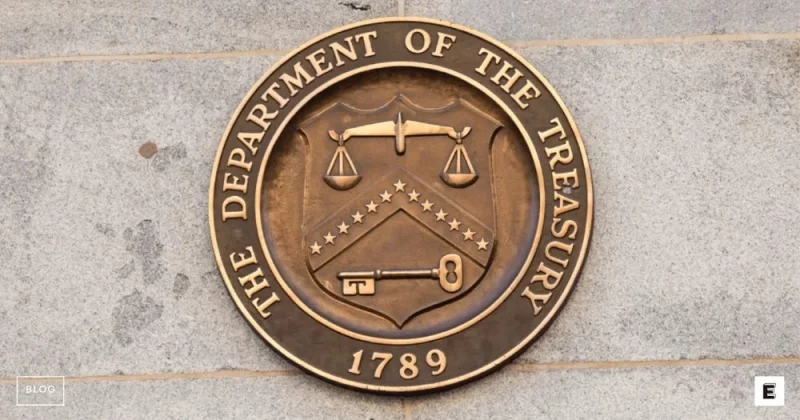
Treasury Department sanctions Nobitex for facilitating terror finance and sanctions evasion
Iran's largest crypto exchange, with over 11 million users and billions in transaction volume, becomes the first Iran-incorporated platform directly designated under US sanctions.
Share
Add us on Google by Editorial Team Jun. 2, 2026The US Treasury Department just dropped the hammer on Iran’s biggest crypto exchange. On June 2, the Office of Foreign Assets Control (OFAC) designated Nobitex, along with associated individuals and entities, for its role in facilitating sanctions evasion and financing terrorist activities tied to the Islamic Revolutionary Guard Corps (IRGC).
This marks the first time the US has directly targeted an Iran-incorporated cryptocurrency platform under its sanctions program. For an exchange that processed an estimated $11.4 billion in crypto transactions in 2024 and $10 billion in 2025, according to blockchain analytics firm TRM Labs, that distinction carries enormous weight.
Inside Nobitex’s operation
Nobitex was founded in 2018 by brothers from the influential Kharrazi family. The platform grew rapidly into Iran’s dominant domestic crypto exchange, amassing over 11 million registered users and becoming a central hub for the country’s on-chain economy.
The exchange operated with minimal Know Your Customer (KYC) compliance, which effectively opened a door for Iranian users to access global crypto markets while sidestepping US sanctions.
AdvertisementA Reuters investigation published on May 1 linked Nobitex to shadow banking activities and drew connections to previously designated crypto exchanges associated with the IRGC. The platform had been on the radar, but until now, it hadn’t been placed directly on the Specially Designated Nationals (SDN) List, instead facing what amounted to de facto sanctions risks under Executive Order 13599.
The new designation removes any ambiguity. US persons are now explicitly prohibited from transacting with Nobitex, and any assets the exchange holds within US jurisdiction are frozen.
A pattern of IRGC-linked crypto enforcement
In January 2026, OFAC sanctioned two other exchanges, Zedcex and Zedxion, for their connections to the IRGC. Those platforms were linked to over $1 billion in transactions.
A previous investor in Nobitex had ties to a company sanctioned in 2022 for drone-related activities, further intertwining the exchange with Iran’s sanctioned military-industrial apparatus. The IRGC itself is designated as a Foreign Terrorist Organization by the US.
In June 2025, the platform suffered a $90 million hack attributed to a pro-Israel hacking group, raising serious questions about the exchange’s security infrastructure and operational integrity.
What this means for crypto investors and the broader market
The immediate practical impact is straightforward: any platform, wallet provider, or counterparty that processes transactions involving Nobitex now risks secondary sanctions exposure.
For traders, the practical concern is counterparty risk. Funds that have passed through Nobitex at any point could be flagged in blockchain analytics tools, potentially complicating withdrawals or conversions on compliant exchanges. TRM Labs and similar firms will almost certainly update their risk scoring models to reflect the designation, which means downstream effects could ripple through DeFi protocols and centralized exchanges alike.
Disclosure: This article was edited by Editorial Team. For more information on how we create and review content, see our Editorial Policy.