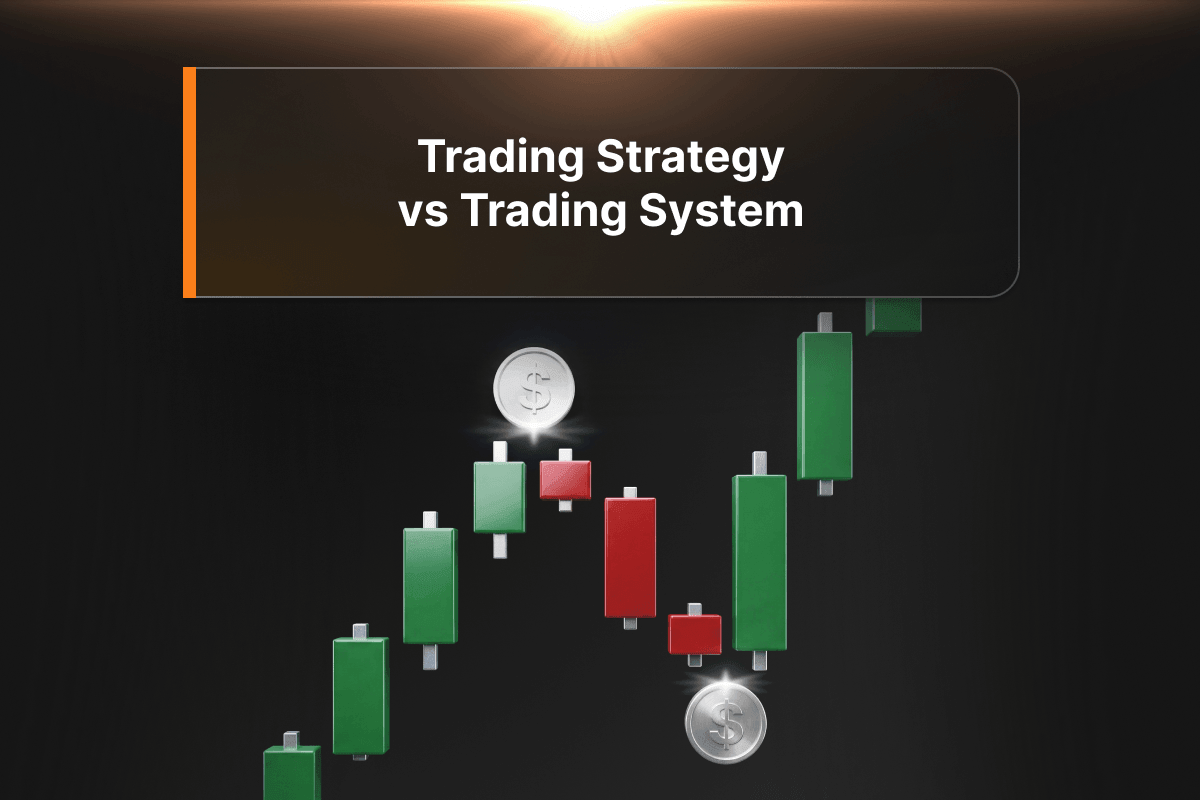
Trading Strategy vs Trading System: Understanding the Difference
 AMarkets — your online broker4 min read·Just now
--
Every trader wants to make smart, consistent decisions in the market. To do that, you need both a trading strategy and a trading system, but they’re not the same thing. A trading strategy is your plan: it tells you when to enter and exit trades, how to manage risk, and what market conditions to look for. A trading system, on the other hand, is how you put that plan into action, whether manually, with alerts, or fully automated tools.
Beginners often get confused because the terms are used interchangeably. Some think a system is the strategy itself, while others rely on a system without understanding the plan behind it. Understanding the difference is the first step toward trading with confidence and consistency.
What Is a Trading Strategy?
A trading strategy is basically your game plan for the markets. It’s a set of rules and guidelines that tells you when to enter a trade, when to exit, and how to manage risk. Think of it as your roadmap, it helps you make decisions without relying on guesswork or emotions.
Key components of a trading strategy include:
- Entry rules. When and why you decide to open a trade.
- Exit rules. When to close a trade, whether for profit or to cut losses.
- Risk management. How much of your capital you’re willing to risk on each trade.
Examples of common trading strategies:
- Trend-following. Ride the market in the direction of the trend.
- Breakout. Enter trades when the price breaks key support or resistance levels.
- Reversal. Look for signs that the market is about to change direction.
A good trading strategy gives you structure, clarity, and a higher chance of spotting profitable opportunities.
What Is a Trading System?
A trading system is the tool or framework that helps you put your trading strategy into action. While a strategy is your plan, the system is how you execute it, either manually, with alerts, or fully automated.
A trading system can help you:
- Follow your strategy consistently without second-guessing;
- Automate repetitive tasks like placing orders or tracking price levels;
- Monitor the market for signals based on your strategy.
Types of trading systems:
- Manual. You follow the strategy yourself and make all trades by hand.
- Semi-automated. The system gives alerts or partially manages trades, but you still make some decisions.
- Fully automated. The system executes trades on its own based on your strategy rules.
A trading system doesn’t replace your strategy, it simply makes it easier, faster, and more consistent to follow.
Key Differences Between Strategy and System
The easiest way to think about it is:
- Strategy = the plan or method;
- System = the tool or framework that executes the plan.
Your trading strategy defines what you want to do, when to enter, exit, and how to manage risk. Your trading system is how you actually carry out that plan, whether manually, semi-automatically, or fully automatically.
The two work together: your strategy guides the system, and a well-designed system helps you follow your strategy consistently. Without a clear strategy, a system is just a machine; without a system, even the best strategy can be hard to execute perfectly.
How to Combine a Strategy and a System
The best results come when your strategy and system work together. A trading system is simply the tool that helps you follow your strategy consistently and efficiently.
Here’s how to do it right:
- Use a system to follow your strategy. Let the system handle alerts, orders, or automation so you can stick to your plan without mistakes.
- Backtest and optimize. Test your strategy on historical data to see how it would have performed. Adjust rules or system settings to improve results.
- Monitor and adjust. Markets change, so keep an eye on your trades and update your system if needed to stay aligned with your strategy.
Common Mistakes Traders Make
Even experienced traders slip up sometimes. The most common mistakes include:
- Mixing up strategy and system. Thinking the system is the strategy itself.
- Relying only on a system. Letting automation make decisions without understanding the strategy behind it.
- Over-automation. Using too many tools or bots without proper risk management, which can backfire.
In trading, both a strategy and a system are essential. Your strategy is the plan, it tells you when to enter, exit, and manage risk. Your system is the tool that helps you follow that plan consistently, whether manually or automatically.
For traders who want to sharpen their skills, AMarkets offers education to help you understand strategies, systems, and risk management in real market conditions. Remember, practice, testing, and disciplined execution are what turn a good strategy and system into real trading success.