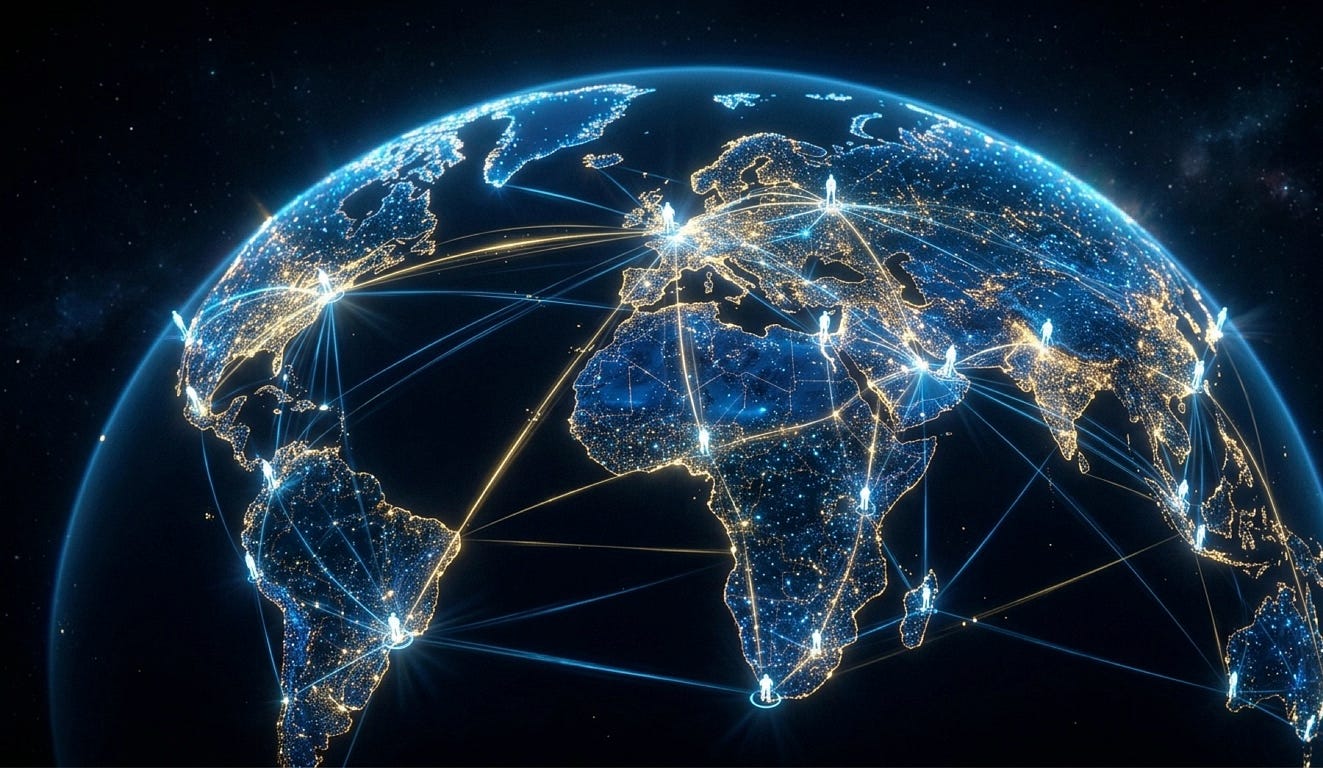
Top ICO Launchpad Trends to Watch in 2026: RWA Tokenization, AI-Powered Tokenomics, and Multi-Chain Strategies
 Stomhardy5 min read·Just now
--
The situation with the Initial Coin Offering (ICO) has changed considerably within the last several years as the initially speculative fundraising tool has developed into a systematic and innovation-focused model of capital creation.
The idea of ICOs in 2026 is not only to raise money, but also to create sustainable ecosystems, to adopt regulations, and to provide long term value. The new trends are being influenced by the emerging technologies and the evolving expectations of investors that are transforming the way ICOs are conducted and handled.
This paper discusses the best ICO launch trends to follow in 2026, including Real World Asset (RWA) tokenization, AI-based tokenomics and multi-chain strategies.
RWA Tokenization: Bridging Physical and Digital Assets
The emergence of Real World Asset (RWA) tokenization is one of the most radical changes in the development of ICOs. This is done by transforming the physical assets like real estate, commodities, equities and even intellectual property into tokens that are stored on blockchain.
RWA tokenization is more liquid, as it makes it possible to own high-value assets substantially with relatively small capital through fractional ownership. It enhances transparency and traceability, too, because blockchain guarantees that the records of ownership and transactions are immutable.
In the case of startups and enterprises, the incorporation of RWA into ICOs would be a powerful value proposition. The projects with real assets will be more trusted by investors compared to those that are supported by speculative tokens. This change is making ICOs regain credibility and institutional participation.
With regulatory frameworks becoming more transparent in different regions, the ICOs based on RWA are likely to take over the fundraising market and provide a balance between the innovation and the stability.
AI-Powered Tokenomics: Smarter and Adaptive Ecosystems
The success of an ICO has always depended on tokenomics. Artificial Intelligence is currently a major player in the design and optimization of token economies in 2026.
AI-based tokenomics uses data analytics, predictive modeling, and machine learning to develop dynamic and adaptive systems. These systems have the ability to adapt the supply of tokens, price controls and rewards to actual market circumstances and behaviour.
As an illustration, AI may be used to curb the problem of token inflation, by automatically controlling the supply or encouraging user participation by offering personalized rewards. It also allows managing the risks more effectively since the possible vulnerabilities in the token model can be determined during pre-launch.
This is a smart strategy that does not only improve efficiency, but also instills confidence among investors. Projects utilizing AI approaches are more likely to have long-term growth and remain relevant in the market.
In order to effectively deploy such sophisticated mechanisms, numerous projects are resorting to secure ico development solutions that guarantee technical strength as well as economic sustainability.
Multi-Chain Strategies: Expanding Reach and Interoperability
The second significant trend that will determine the ICO launch in 2026 is the implementation of multi-chain approaches. Unlike the use of only one blockchain network, contemporary ICO are taking advantage of several chains to maximize their scalability, lower transaction fees, and increase interoperability.
Multi-chain ICOs enable tokens to be used and deployed in various ecosystems of blockchains, including Ethereum, Binance Smart Chain, Solana and others. Such flexibility allows projects to have a wider audience and access a variety of users.
Assets are becoming more easily transferable across networks as a result of interoperability protocols and cross-chain bridges. Consequently, users are able to have faster transactions, reduced charges and increased accessibility.
Multi-chain deployment also removes the risk of overreliance on a single network, mitigating the risks of congestion or technical constraints to developers. This strategy is in line with the increasing need of decentralized and networked ecosystems.
To sustain these complicated infrastructures, companies are turning to enhanced blockchain development solutions that facilitate easy integration and cross chain capabilities.
Regulatory Alignment and Compliance-Driven ICOs
Regulation remains to be a key factor in the development of the ICO phenomenon. The year 2026, compliance is optional no longer, it is a basic necessity to success.
Increased regulators and governments around the world are providing more transparent policies regarding the token offerings, concentrating on investor protection, anti-money laundering (AML) and know-your-customer (KYC) measures. Projects based on ICO are now putting legal compliance at the forefront even during the initial phases of development.
This change is enhancing increased confidence amongst investors and opening the door to institutional investment. The ICOs that are based on compliance tend to be more successful and long-term sustainable.
Community-Centric Fundraising Models
The ICOs of the modern world are putting more focus on the participation and the involvement of the community. Decentralized forms of governance, including DAOs (Decentralized Autonomous Organizations), are allowing the token holders to have an active voice in the decision-making process of projects.
This tendency is turning ICOs into collaborative ecosystems in which users are not passive investors but active contributors. Locally based programs assist in creation of loyalty, increased transparency and credibility of the project.
Enhanced Security and Smart Contract Audits
Security has been a primary concern in the development of ICO. As cyber threats evolve and get more sophisticated, projects are pouring money into smart contract audits, penetration testing, as well as bug bounty programs.
In 2026, it is not only a technical requirement, but also one of the distinguishing factors in security. ICOs with a high level of security will be more acceptable to investors and have positive fundraising results.
Conclusion
Innovation, flexibility, and high emphasis on trust and transparency characterize the ICO environment in 2026. RWA tokenization, AI-driven tokenomics and multi-chain approaches are some of the trends that are transforming the approach to fundraising and ecosystem building by projects.
The key to success in ICOs is still to come in the form of integrating innovative technology with strong compliance and a user-friendly layout as the industry continues to develop. Through adopting these new trends, the startups and businesses can open new opportunities and create sustainable blockchain-based businesses in the coming years.