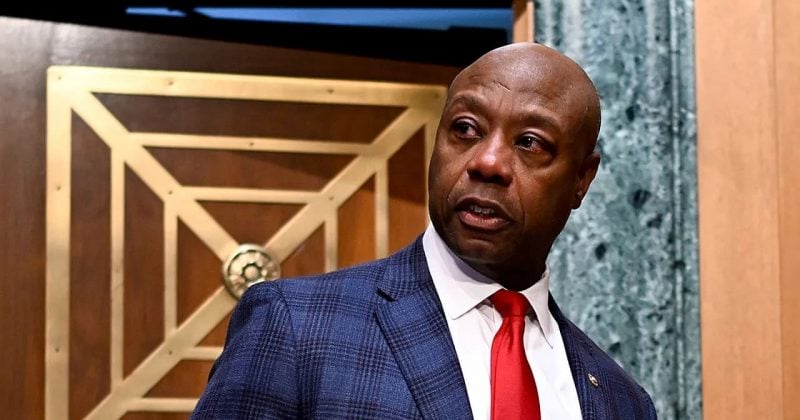
Tim Scott says Clarity Act makes Bitcoin safer and more transparent
The Senate Banking Committee chairman is pushing the Digital Asset Market Clarity Act toward a full Senate vote, calling it the foundation for making the US the 'crypto capital of the world.'
Share
Add us on Google by Editorial Team Jun. 9, 2026Senator Tim Scott wants to take crypto out of the regulatory shadows. The South Carolina Republican and Senate Banking Committee chairman is championing the Digital Asset Market Clarity Act of 2025, arguing it delivers the safety, fairness, and transparency that Bitcoin and the broader digital asset market have been missing.
The bill, formally known as H.R. 3633, already cleared the House with a 294-134 vote back in July 2025. It then advanced through Scott’s Banking Committee on a 15-9 bipartisan vote in mid-May 2026. Now it awaits consideration by the full Senate.
What the Clarity Act actually does
The Clarity Act attempts to settle the SEC-CFTC jurisdictional dispute with actual legislation instead of agency improvisation. It grants expanded oversight authority to the CFTC over digital commodities, which would include assets like Bitcoin. The SEC retains a more limited role, focused on tokens that function more like traditional securities.
Beyond the jurisdictional housekeeping, the bill includes consumer protection measures, safeguards for developers building in the space, and provisions aimed at combating illicit finance. Scott has framed the legislation as bringing digital assets into a regulatory framework that is “safer, fairer, and more transparent.”
AdvertisementThe senator has described the Clarity Act as a vehicle for positioning the US as the “crypto capital of the world.”
Nearly a year of bipartisan dealmaking
The Clarity Act reflects close to a year of bipartisan negotiations. The 294-134 House vote suggests meaningful cross-aisle support, though the tighter 15-9 committee vote in the Senate hints at more resistance in the upper chamber. Key amendments were incorporated during those negotiations to address concerns from both parties.
Coinbase CEO Brian Armstrong and Ripple CEO Brad Garlinghouse have both publicly praised the legislation, citing regulatory certainty as crucial for innovation. For Armstrong, whose company has been locked in high-profile regulatory battles with the SEC, the appeal is obvious. Garlinghouse, whose firm spent years fighting the SEC over whether XRP is a security, has similarly endorsed the bill.
The Clarity Act also emerged from a specific frustration. For years, the SEC under previous leadership pursued what critics called “regulation by enforcement,” suing companies rather than issuing clear guidelines. This bill is Congress essentially replacing that approach with definitive statutory guidelines.
What this means for investors
A bipartisan House vote north of 290 and a committee advancement in the Senate suggest genuine momentum. If the Clarity Act becomes law, companies operating in the US crypto market would have a defined compliance roadmap for the first time.
With the CFTC taking a lead role on digital commodities, exchanges and trading platforms would face a regulator more familiar with commodity markets. The CFTC, which has a smaller budget and less enforcement infrastructure than the SEC, would need to scale up significantly to handle its expanded mandate.
Tokens that get classified as securities under the new rules could face stricter listing requirements, potentially reducing their accessibility on major exchanges.
Disclosure: This article was edited by Editorial Team. For more information on how we create and review content, see our Editorial Policy.