The ZK Compression Edge: Radically Reducing Web3 Operational Overhead
--
Solana enthusiasts often brag about speed, but the hidden bill for storing data can dampen the mood. For years, keeping millions of user accounts active meant burning through thousands of dollars in rent. ZK Compression finally changes this dynamic by shrinking the financial footprint of on-chain data. It is a fundamental shift in how we handle the heavy lifting of blockchain state.
The Financial Burden of Persistent State
Every time you create a new account or mint an NFT on a blockchain, you occupy space on a global ledger. On Solana, this space is not free. Validators must keep this data in their RAM to ensure the network stays fast. To prevent the ledger from growing out of control, the system charges “rent.” While a few cents per account might seem trivial, it becomes a nightmare when you aim for a billion users.
If a developer wants to launch a social media app with five million users, they would traditionally need to lock up a massive amount of SOL just to keep those accounts alive. This capital is effectively trapped. It cannot be used for marketing, hiring, or improving the product. The reality of blockchain development often involves staring at a spreadsheet and wondering why “decentralization” has to be so expensive.
- Rent exemption requires a minimum balance that stays locked forever.
- State bloat slows down the entire network by increasing the hardware requirements for validators.
- High entry costs push developers toward centralized workarounds.
- Scaling a dApp to the masses becomes a financial risk rather than a technical one.
Rarely do we find a technology that solves both a technical and an economic problem at once. By addressing the “state” problem, we are essentially making the digital dirt of the blockchain much cheaper to build upon. This allows for experiments that were previously too risky to even attempt.
How ZK Compression Actually Functions
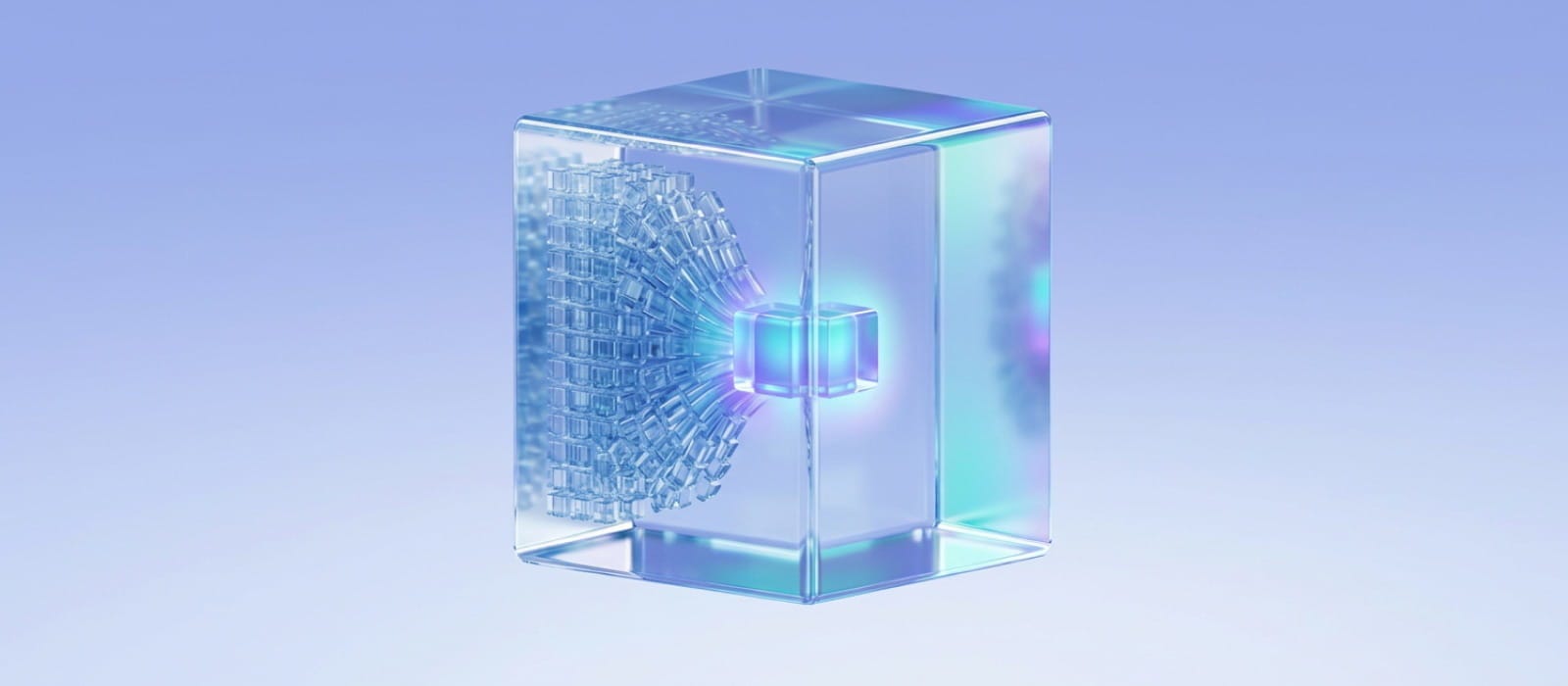
Despite the name, this is not about making a file smaller like a ZIP folder. It is about moving the majority of the data off the main ledger while keeping a cryptographic fingerprint on-chain. This fingerprint is a Merkle root. By using zero-knowledge proofs (specifically ZK-SNARKs), the network can verify that any piece of off-chain data is legitimate without actually seeing it all the time.
In a standard setup, every validator needs to know every detail of your account. With ZK Compression, the validators only care about the root of the “state tree.” When a user wants to change their balance, they provide the new data along with a proof that the change is valid. The network checks the proof, updates the root, and moves on. The full data stays with indexers or RPC providers, who are much cheaper to run than a full validator.
- Merkle Trees organize thousands of accounts into a single hash.
- ZK-SNARKs provide the mathematical certainty that no one is cheating.
- State remains accessible but does not clog the primary consensus layer.
- The system maintains the same security level as the base Solana layer.
This architecture means that the blockchain is no longer a giant, overflowing filing cabinet. It becomes a lean, efficient verification engine. You still get the transparency and immutability of a public ledger, but you lose the massive overhead that usually comes with it. It is a sophisticated way of having your cake and eating it too.
Comparative Costs for 1,000,000 Users
Building Smarter with New Tools
For those looking into Solana smart contract development services, the implementation of ZK primitives is the new gold standard. It requires a different way of thinking about how your program interacts with data. You are no longer just reading from an account; you are interacting with a state tree. The complexity moves from the blockchain’s economics to the developer’s logic.
Tools provided by teams like Light Protocol and Helius are making this transition easier. They handle the “boring” parts of generating proofs and managing the off-chain data. This leaves the developer free to focus on the actual features of their app. Whether you are building a gaming ecosystem with millions of items or a financial protocol with high-frequency updates, the barrier to entry has dropped significantly.
- Account abstraction can be combined with compression for a seamless user experience.
- Developers can pay for the compressed state on behalf of users with negligible impact on their budget.
- Privacy features can be added on top of the ZK layer because the data is already being handled as proofs.
- Legacy accounts can be migrated to compressed versions to save existing funds.
Humorously, we used to treat every byte of block space like it was a precious gemstone. Now, we can treat it more like digital air. This abundance leads to better design choices because you aren’t constantly trying to hack your code to save a few pennies. The focus returns to the user, which is exactly where it belongs.
Feature Set Comparison
The Future of Operational Overhead
If we want the decentralized web to succeed, it has to be cheaper than the centralized version. ZK Compression is the first time we have seen a path toward that reality. By removing the operational friction of high state costs, we open the door for high-volume applications like social media, micropayments, and massive multiplayer games. These are the things that will actually bring people into the ecosystem.
The technical community is still figuring out all the edge cases, but the initial results are staggering. We are seeing projects save 99% on their operational budgets within weeks of switching. It is not just a minor improvement; it is a total overhaul of the economic model. Developers who ignore this shift will likely find themselves priced out of the market by competitors who embraced the efficiency of ZK tech.
Conclusion
The landscape of Web3 is moving away from the era of expensive, clunky data management. Solana’s approach to ZK Compression proves that we can have massive scale without a massive price tag. As we refine these systems, the line between a “web app” and a “dApp” will continue to blur until the user can’t tell the difference. This is how we achieve real adoption.
Navigating these complex technical shifts requires a team that understands the nuances of the underlying protocols. The PixelPlex team is always ready to assist with any project, ensuring your transition to these advanced scaling solutions is smooth and efficient.