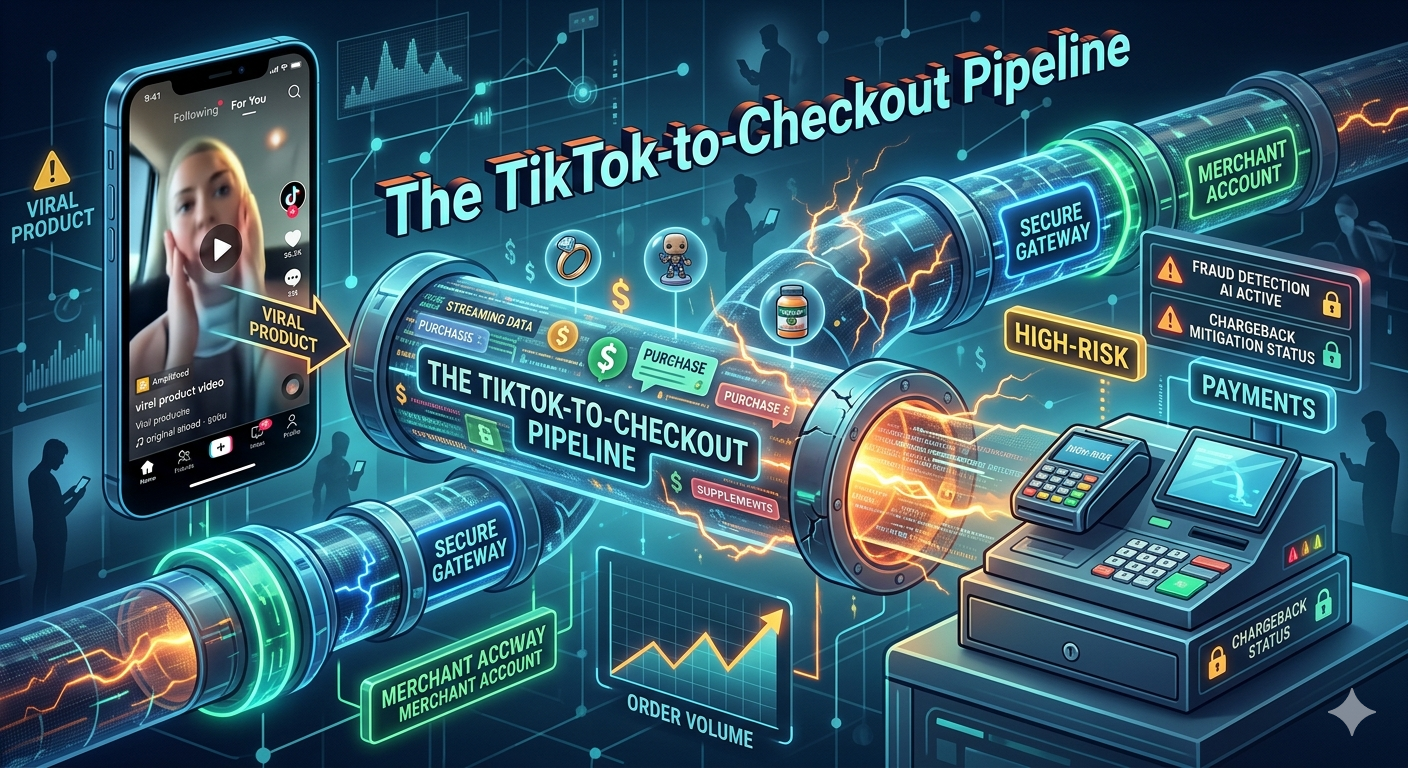
The TikTok-to-Checkout Pipeline: High-Risk Payments in the Age of Social Commerce
--
The digital storefront has officially moved from the browser tab to the “For You” page. In 2026, social commerce is no longer just a buzzword — it is a $1 trillion global industry, with TikTok Shop alone projected to hit over $23 billion in US Gross Merchandise Volume (GMV) this year. For merchants, this “TikTok-to-Checkout” pipeline offers an unprecedented velocity of sales, fueled by viral moments and influencer-driven hype.
However, beneath the sleek interface of “Buy Now” buttons and live-streamed demos lies a complex and often treacherous payment landscape. For businesses operating in high-risk sectors — ranging from nutraceuticals and “grey-market” beauty products to high-end collectibles — the speed of social commerce creates a friction point with traditional banking. Navigating the TikTok-to-Checkout pipeline requires more than just a viral video; it requires a sophisticated understanding of high-risk payment processing and fraud mitigation.
The Velocity Trap: Why Social Commerce is “High-Risk”
In traditional e-commerce, customer acquisition is a slow burn. In social commerce, it’s an explosion. A single viral video can send thousands of orders to a shop in minutes. While this is a dream for marketing teams, it is often a nightmare for risk underwriters.
Traditional payment processors view sudden spikes in transaction volume as a massive red flag. For a standard merchant account, a 1,000% increase in volume overnight can trigger an automatic freeze, as banks fear a “bust-out” fraud scheme or an impending wave of chargebacks.
Common High-Risk Triggers in Social Commerce:
- Flash Volume Spikes: Rapid increases in sales velocity that exceed monthly processing limits.
- Influencer Volatility: Sales tied to individual personalities rather than established brand history.
- High Fulfillment Pressure: Delayed shipping due to unexpected demand leads to “Item Not Received” (INR) disputes.
High-Risk Industries Winning (and Struggling) on TikTok
While any business can be flagged for high risk due to volume, certain industries are inherently categorized as such by card networks like Visa and Mastercard. TikTok’s algorithm has a peculiar way of surfacing these specific niches:
- Nutraceuticals & Supplements: Wellness “hacks” go viral daily. However, the health claims made by creators often lead to high return rates and strict regulatory scrutiny, making these merchants difficult to place with standard processors.
- Digital Goods & Subscriptions: Whether it’s “exclusive” content, software-as-a-service (SaaS) tools, or digital downloads, the lack of a physical shipping trail makes these prime targets for friendly fraud.
- High-Ticket Collectibles: The 2026 market for luxury watches, rare sneakers, and “blind box” collectibles has migrated to TikTok Live. Large-ticket transactions (anything over $500) significantly increase the bank’s exposure, requiring specialized high-risk merchant accounts with higher “ticket” thresholds.
The Chargeback Challenge: From Viral to Void
Social commerce thrives on impulse. That same impulse, however, is the primary driver of Buyer’s Remorse. When a customer buys a “viral” product at 2:00 AM while scrolling, they are significantly more likely to initiate a chargeback once the dopamine hit wears off.
Furthermore, the rise of “First-Party Misuse” (commonly known as friendly fraud) has escalated. Customers may claim they never received a package or that the product was “not as described” simply to get a refund without returning the item. In the social commerce ecosystem, where “cancel culture” can turn a merchant’s reputation overnight, managing these disputes is critical.
Pro Tip: High-risk merchants should maintain a chargeback ratio below 1%. Exceeding this can land you on the MATCH list (Member Alert to Control High-risk), effectively banning you from standard processing for years.
2026 Trends: Agentic Commerce and AI Fraud Prevention
As we move through 2026, the TikTok-to-Checkout pipeline is being further automated by Agentic Commerce. This involves AI agents that shop on behalf of users, finding the best deals and executing payments autonomously.
For high-risk merchants, this adds a new layer of complexity. Payment gateways must now distinguish between a legitimate AI agent and a malicious bot script. To survive, merchants are adopting AI-driven fraud prevention tools that use “identity proofing” rather than just simple CVV checks. These tools look at:
- Biometric Signals: How the user (or their agent) interacts with the checkout page.
- Device Fingerprinting: Identifying the hardware and software profile of the buyer.
- Velocity Checking: Monitoring how many times a specific card or IP address is used across the entire network in a short window.
Securing Your Pipeline: Best Practices for High-Risk Sellers
If your business lives on the edge of the TikTok algorithm, you cannot rely on “out-of-the-box” payment solutions. To ensure your checkout pipeline remains open, consider these strategic moves:
- Diversify Your Processors: Never rely on a single merchant account. Use a Payment Gateway that allows for “load balancing,” spreading your volume across multiple high-risk merchant accounts to avoid hitting volume caps.
- Implement 3D Secure 2.0: This protocol adds an extra layer of authentication that shifts the liability for fraud from the merchant back to the card issuer.
- Transparent Fulfillment Updates: High-risk processors look for transparency. Automate your tracking info to be sent immediately via SMS or email to reduce “where is my order” (WISMO) inquiries that turn into disputes.
- Aggressive Chargeback Management: Use automated tools (like Justt or Verifi) to fight illegitimate chargebacks. These systems can compile “compelling evidence” — like social media interactions or delivery photos — to win disputes.
The Future is Social (and Risky)
The TikTok-to-Checkout pipeline is the most efficient conversion tool ever created for e-commerce. It collapses the funnel from “discovery” to “ownership” into a matter of seconds. But for the merchant, those seconds are fraught with risk.
By securing a dedicated high-risk merchant account and employing 2026-grade fraud detection, businesses can ride the viral wave without fear of a sudden “Account Suspended” notification. In the world of social commerce, your payment strategy is just as important as your content strategy.
#SocialCommerce #HighRiskPayments #TikTokShop #Fintech2026 #EcommerceGrowth #ChargebackManagement #DigitalPayments #MerchantAccounts #ViralMarketing