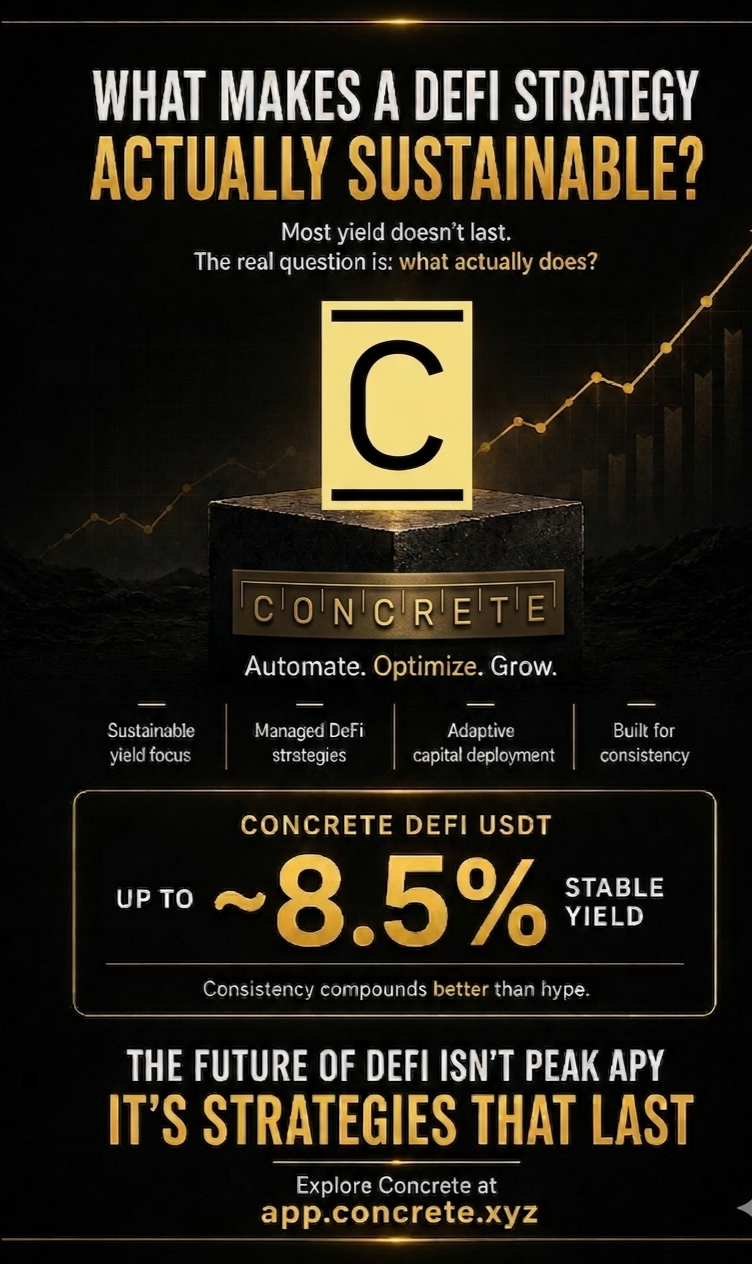
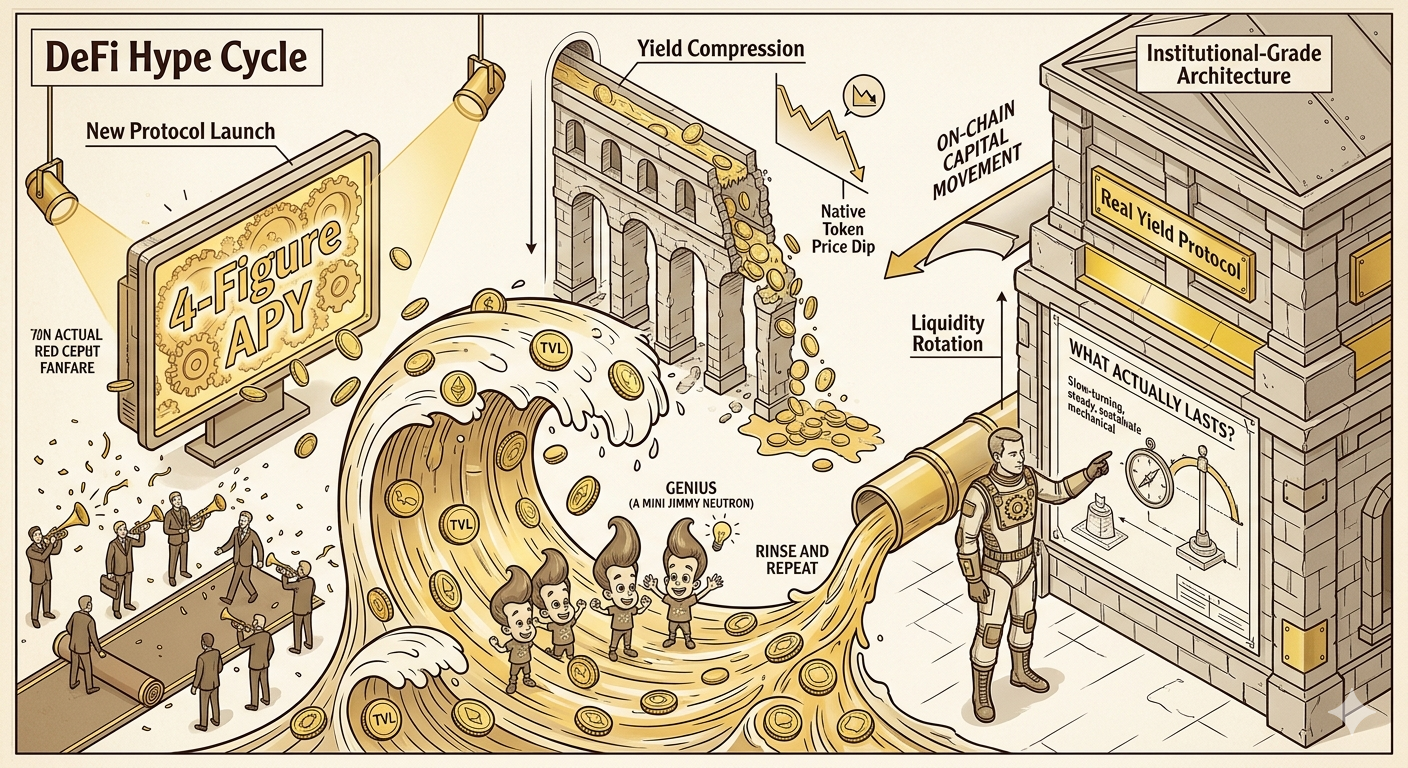
The lifecycle of a typical DeFi opportunity is a predictable, albeit exhausting, cycle. A new protocol launches with a staggering headline APY, a wave of capital rushes in to capture the "early bird" rewards, the yield inevitably compresses as the pool dilutes, and finally, the liquidity rotates to the next shiny object. This "Liquidity Mercenary" pattern has defined the first era of onchain finance, but it has also exposed a glaring flaw in the ecosystem: most strategies are built for a week, not for a market cycle. As the industry matures, the primary question for investors is shifting from "where is the highest yield?" to "what actually lasts?" The Anatomy of Sustainability: Durability Over Performance Sustainability in a financial context is often confused with high performance, but the two are distinct concepts. A truly sustainable strategy is defined by its durability—its ability to generate consistent returns over time without relying entirely on temporary incentives. It must remain viable across different market conditions, whether the trend is bullish, bearish, or stagnant. In mature financial systems, the best strategies are the ones that survive the stress tests of volatility and liquidity crunches, rather than those that peak during a two-week marketing campaign and fade into obscurity once the rewards dry up. The Source Code: Real Yield versus Temporary Incentives To identify a strategy that lasts, one must look at the source of the return. There is a fundamental divide between yield derived from real economic activity—such as trading fees, lending demand, and arbitrage—and yield fueled by token emissions. Emissions-driven yield is often a "bribe" to attract liquidity, and like all bribes, it eventually stops. Conversely, yield rooted in real-world utility is more stable because it is tied to the actual usage of the protocol. Not all yield is created equal, and distinguishing between engineered revenue and subsidized inflation is the first step toward long-term capital preservation. The Context of Growth: Liquidity and Market Conditions Sustainability also depends heavily on the environment in which a strategy operates. Some opportunities only exist in specific "volatility regimes," performing exceptionally well during calm markets but collapsing during spikes. A durable strategy requires liquidity depth and consistent user activity to function. Strategies that cannot adapt to changing correlations or demand for the underlying service are destined to fail when the market shifts. The hallmark of a sustainable approach is the ability to adapt its deployment as market conditions evolve, ensuring that capital remains productive regardless of the backdrop. The Hidden Erosion: Risk and Cost Awareness A strategy may look invincible on paper, but its sustainability is often eroded by overlooked factors like execution costs, slippage, and rebalancing friction. In the manual era of DeFi, these costs are often ignored until they have already hollowed out the net return. A sustainable strategy must be designed with these "leakages" in mind. When a strategy requires constant, high-cost repositioning to maintain its yield, it becomes structurally fragile. True sustainability requires a focus on net returns after all costs and risks are accounted for, moving beyond the vanity metric of headline APY. The Systemic Solution: Strategy Design and Concrete Vaults The shift toward sustainability requires a move away from isolated opportunities and toward structured systems. This is the core philosophy of Concrete Vaults. Instead of chasing a single, volatile source of yield, Concrete prioritizes sustainable yield sources and manages capital across a diversified set of strategies. By utilizing a managed DeFi infrastructure, these vaults can continuously monitor market changes and adapt allocation in real-time. This reduces the reliance on short-term incentives and focuses on the long-term productivity of the onchain capital. Grounding the Vision: The 8.5% Benchmark We see this focus on durability in the Concrete DeFi USDT strategy, which offers a stable yield of up to approximately 8.5%. While this may seem less "exciting" than a triple-digit farm, its consistency is its greatest strength. Over time, a stable, risk-adjusted yield can significantly outperform volatile opportunities that suffer from heavy drawdowns or incentive decay. Sustainable yield attracts long-term capital because it offers reliability in an ecosystem that is often defined by chaos. It represents a move toward institutional DeFi, where capital permanence is the ultimate goal. The Future of Finance: Infrastructure over Incentives As the DeFi landscape becomes more complex, the era of short-term yield chasing is coming to an end. The industry is moving toward long-term capital strategies where sustainability matters far more than peak returns. Infrastructure that can weather market cycles will outlast the fleeting incentives of the past. The future of decentralized finance will not be defined by who can print the highest number on a dashboard, but by who can build the strategies that actually last. Explore the future of sustainable yield at: https://app.concrete.xyz/earn
This article was originally published on Blockchain Tag and is republished here under RSS syndication for informational purposes. All rights and intellectual property remain with the original author. If you are the author and wish to have this article removed, please contact us at [email protected].
NexaPay — Accept Card Payments, Receive Crypto
No KYC · Instant Settlement · Visa, Mastercard, Apple Pay, Google Pay

 Oluwatade Iyanuoluwa4 min read·Just now