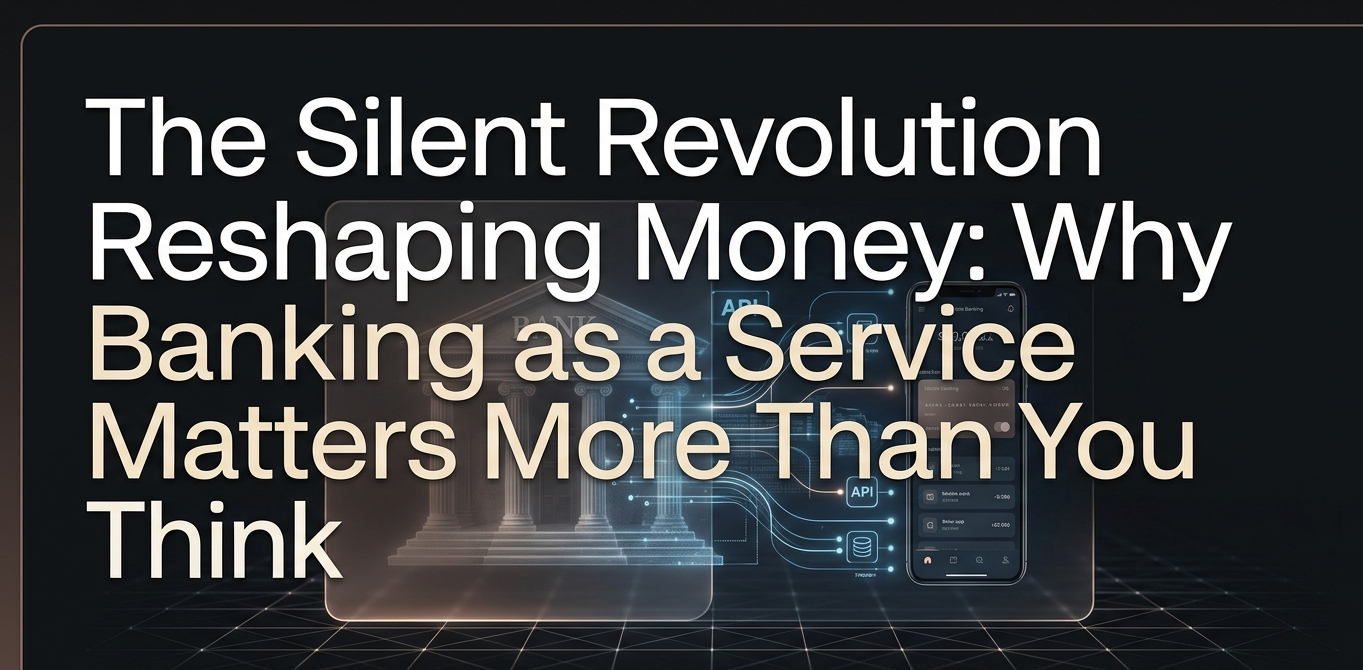
The Silent Revolution Reshaping Money: Why Banking as a Service Matters More Than You Think
From institutions to platforms Banking as a Service is quietly changing how businesses and people interact with finance every single day.
 Fin Saumya6 min read·Just now
--
I still remember the time I needed a business account as a young entrepreneur. The process was a hassle it involved paperwork, multiple branch visits and weeks of waiting. The bank felt like a fortress.
Today that same experience can happen in minutes through an app built by a company. This shift is not just convenient it represents one of the transformations happening in finance right now. Banking as a Service is changing the rules of money it allows non-banking companies to offer banking features without becoming banks themselves. What once required infrastructure, regulatory licenses and decades of trust-building is now available through platforms and APIs.
The Problem We All Rarely Named
For generations banking remained distant and difficult. If you wanted to accept payments, issue cards manage accounts or offer loans you had to partner with banks under their terms. Small businesses, fintech startups and even large corporations often found themselves stuck. Innovation moved slowly because the foundational layer of finance stayed locked away.
Customers felt it too we all have stories of banking experiences, delayed transfers, opaque fees, services that felt designed for another era. The gap between what technology could deliver and what traditional banks actually offered grew wider every year. This friction created a hunger for something businesses wanted to focus on their core strengths while still providing financial experiences to their customers. Users wanted finance that felt personal, instant and invisible Banking as a Service emerged as the bridge to fulfill both desires.
Understanding Banking as a Service: The Foundation
At its heart Banking as a Service is about separation and empowerment traditional banks handle the compliance responsibilities while technology platforms and partner companies deliver the actual customer experience. Through APIs companies can integrate core banking functions into their own products. Think of it like this: of building an entire power plant companies can now simply plug into the grid they get banking services without managing the complex infrastructure behind them.
This model has unlocked creativity, a ride-sharing app can now offer payouts to drivers an e-commerce platform can provide buy-pay-later options a healthcare app can help patients manage expense accounts. The possibilities expand beyond what any single bank could imagine on its own. Banking as a Service is making a difference in the way businesses and people interact with finance.
The Human Impact Behind the Technology
What makes Banking as a Service truly powerful is how deeply it touches lives. A freelancer in a town can now receive payments from international clients without expensive wire transfers. A small retailer can offer wallets and loyalty programs that required enterprise-level resources. Young professionals can access tools that were previously reserved for high-net-worth individuals.
I spoke with a business owner recently who described the difference it made before Banking as a Service-enabled solutions managing cash flow felt like a battle. Now her accounting software automatically handles invoicing, payments and even credit decisions she spends time on banking and more time growing her business and being present with her family. These stories matter because technology in finance often feels cold and distant when done right Banking as a Service becomes profoundly human.
It removes barriers it creates access it gives people and businesses control over their destiny. Banking as a Service is making a difference in peoples lives it is helping them to manage their finances in a better way.
Practical Ways Banking as a Service is Creating Value
Several powerful applications have already emerged that demonstrate the potential:
Embedded Finance
Companies now weave services seamlessly into their existing platforms you no longer need to leave an app to make a payment apply for credit or manage savings.
Instant Payment Solutions
Real-time transfers, instant card issuance and immediate loan decisions have become possible speed in finance translates directly to customer experiences. Improved cash flow for businesses.
Personalized Financial Products
With data and flexible infrastructure companies can create products tailored to specific customer segments.
Cross-Border Simplicity
International money movement, complicated and expensive is becoming significantly smoother through Banking as a Service networks.
These capabilities are not concepts they are available today becoming more sophisticated with each passing month. Banking as a Service is creating opportunities for businesses and people to interact with finance in a better way.
The Mindset Shift in Financial Leadership
The rise of Banking as a Service demands a kind of thinking from those shaping the future of finance. It requires leaders who understand both technology and human needs who can balance innovation with responsibility and who see regulation not as a constraint but as a foundation for trust.
Success in this space often comes from leaders who remain curious they ask questions about what customers need rather than what the industry has traditionally offered. They build teams that blend expertise with empathy for end users. The effective decision-makers in this ecosystem recognize that technology alone is not enough sustainable success requires respect for compliance, security and the human relationships that money ultimately represents.
Growth opportunities exist for those who move thoughtfully the companies thriving are often those that combine speed with wisdom, innovation with stability and ambition with responsibility. Banking as a Service is changing the way financial leaders think about finance and technology.
Real-World Examples That Show the Potential
Several thinking companies have already demonstrated what becomes possible with Banking as a Service:
Retail giants now offer branded credit cards and payment solutions that feel completely native to their shopping experience. Gig economy platforms provide cash-out options that dramatically improve quality of life for workers. Neobanks partner with institutions to offer services that combine the best of both worlds.
In emerging markets Banking as a Service has helped bring services to populations that traditional banking infrastructure never reached. Farmers can now access credit based on crop data small traders can accept payments in areas where physical bank branches remain scarce.
Each of these examples reveals something, when financial infrastructure becomes more accessible, human creativity and commerce flourish in ways. Banking as a Service is making a difference in the world.
Honest Challenges on the Journey
For all its promise Banking as a Service brings complexities that deserve consideration. Regulatory landscapes continue evolving, requiring attention and adaptation. Security concerns remain paramount when handling data. Integration challenges can be significant for companies to these technologies.
Questions around data privacy, customer protection and fair lending practices need attention. The technology works best when implemented with patience and expertise. Companies that rush in without understanding often face setbacks. Success requires commitment to doing things not quickly.
These challenges do not diminish the opportunity they simply remind us that meaningful transformation in finance requires both vision and responsibility. Banking as a Service is not without its challenges. The opportunities it presents are too great to ignore.
Future Opportunities in a Banking as a Service World
The coming years look particularly promising as intelligence, open banking standards and improved regulatory clarity converge we can expect more sophisticated and personalized financial services. We may see integration between services and other aspects of daily life.
Insurance, investing, lending and payments could become more contextual and proactive. Financial wellness tools might evolve from tracking apps into life planning partners. Emerging technologies like blockchain and improved data analytics will likely create possibilities we cannot fully imagine yet.
The key will be ensuring these innovations serve needs than just technological capabilities. Banking as a Service is the future of finance. It is full of possibilities.
A More Inclusive Financial Future
Banking as a Service represents more than an evolution it signals a shift toward systems that’re more accessible, more flexible and more responsive to actual human needs. The exciting possibility lies in what we cannot see when creative minds gain access to sophisticated financial tools they will build solutions for problems we do not even recognize today.
They will serve communities that traditional finance overlooked they will create value in ways that benefit both businesses and the people they serve. This revolution succeeds not because of the technology itself. Because of the human possibilities it unlocks.
It creates space for experiences, fairer access and thoughtful approaches to money and commerce. The transformation is already underway the question is not whether Banking as a Service will change finance. How thoughtfully we will shape that change together.
Engagement Section
If this piece resonated with you I would be grateful if you would applaud it so others can discover it too. Your comments mean a deal share your experiences with banking solutions or your thoughts on where financial services are headed.
What changes have you noticed in your life? Consider following The Fintech Guide for explorations of the forces shaping money and technology. If you are a writer with insights, in fintech, banking or digital innovation I would love to see your contributions. Lets continue this conversation together.