
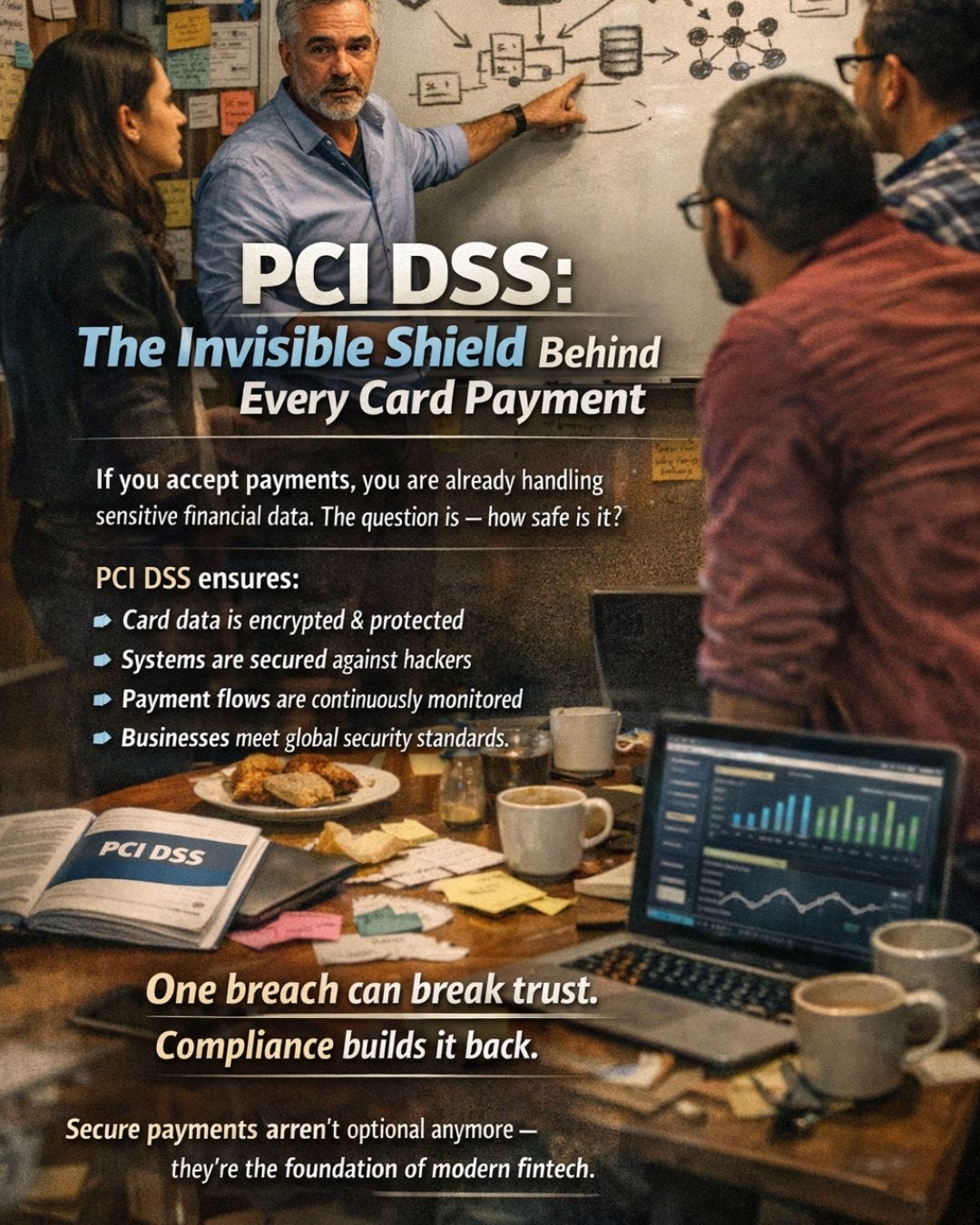
The Silent Gatekeeper: How PCI DSS Is Redefining Trust in Fintech (2026)
Why compliance is no longer a checkbox, but the backbone of trust in modern finance
 Yashika Mathur|Fintech, Crypto Borderless Payments4 min read·Just now
--
It is 11:47 PM.
A founder is sitting in a lit room, laptop glowing watching transactions flow in real time. The Payments are working, the Users are onboarding and the Revenue is finally real.
Everything feels like momentum an then an email drops, “Before we proceed please share your PCI DSS compliance details” and then the excitement pauses and the Moment Fintech Meets Reality
In the year 2026, fintech is not about speed anymore, fintech is about trust at scale. Every swipe, every tap every API call carries something cardholder data and protecting the cardholder data is not optional.
That is where PCI DSS steps in, not as a feature, not as a tool but as a gatekeeper.
The Payment Card Industry Data Security Standard, which is PCI DSS is the framework that defines how businesses handle card data. Whether they store it process it or simply pass it through their systems and here is the twist that, Most founders do not notice PCI DSS… until it is too late.
The Illusion of We Will Handle It
At early stage fintech teams focus on what matters most, They ship fast, they find product that is market fit and they close their users. Compliance feels like a problem but PCI DSS does not wait.
The moment the system touches card data. Indirectly, the PCI scope begins to grow. It spreads quietly, from the backend, to the logs, to the cloud, to the teams access like gravity.
The longer the founders ignore it the heavier PCI DSS becomes because a breach does not Start With Hackers. It starts with assumptions.
A checkout flow logs card details, a developer stores test data in production an API exposes more than it should, Weeks later.. the fraudulent transactions appear and the customers starts panic.
The trust disappears overnight, this is not fiction, Cyberattacks targeting payment systems have surged, with non businesses facing significantly higher breach risks.
In fintech trust is not lost gradually. The trust collapses instantly because PCI DSS is not about security tools, it is about discipline.
At its core, PCI DSS revolves around 12 requirements, including
They have to encrypt cardholder data, they have to restrict access, they have to monitor systems, they have to test vulnerabilities
But here, is what most people miss, PCI DSS is not hard because of technology.
It is hard because it forces clarity. Who has access to the cardholder data? Where does the cardholder data flow? What happens when something breaks? It exposes everything the founders have been ignoring.
The 2026 Shift: From Compliance to Continuity
There was a time when PCI DSS meant, they pass the audit, they get the certificate and then they move on.
With PCI DSS version 4.0.1 compliance has become a process,
They do real time monitoring, they do evidence collection, they do authentication like Multi Factor Authentication and also they do risk analysis. It is no longer an event, it is a habit.
The hidden advantage no one talks about, founders see PCI DSS as a blocker and the smartest ones, They use PCI DSS as leverage.
Because in fintech, banks will not partner without PCI DSS and Enterprises will not trust without PCI DSS.
Payment providers will not scale without PCI DSS because PCI DSS compliance is not security it is market access, it shortens sales cycles. It reduces diligence friction. It turns maybe into approved.
There are two kinds of fintech architectures
1. They handle card data directly, they own full PCI DSS responsibility. They deal with audits, risk and complexity.
2. They never touch card data. They use tokenization and hosted payment flows. Their PCI DSS scope stays minimal, same product and different future.
The Real Lesson
PCI DSS is not here to slow the founders down. It is here to force the founders to build things the way because in the year 2026, the biggest risk in fintech is not competition. It is infrastructure pretending to be secure.
Final Thought
Every fintech founder dreams of scale like Millions of users, Global payments, Seamless transactions. None of that matters, if users do not trust them with their money.
PCI DSS is not compliance. It is the contract between the founders and their users. Break it.. Everything breaks with it. Because, in fintech security is not a feature, it is the foundation.