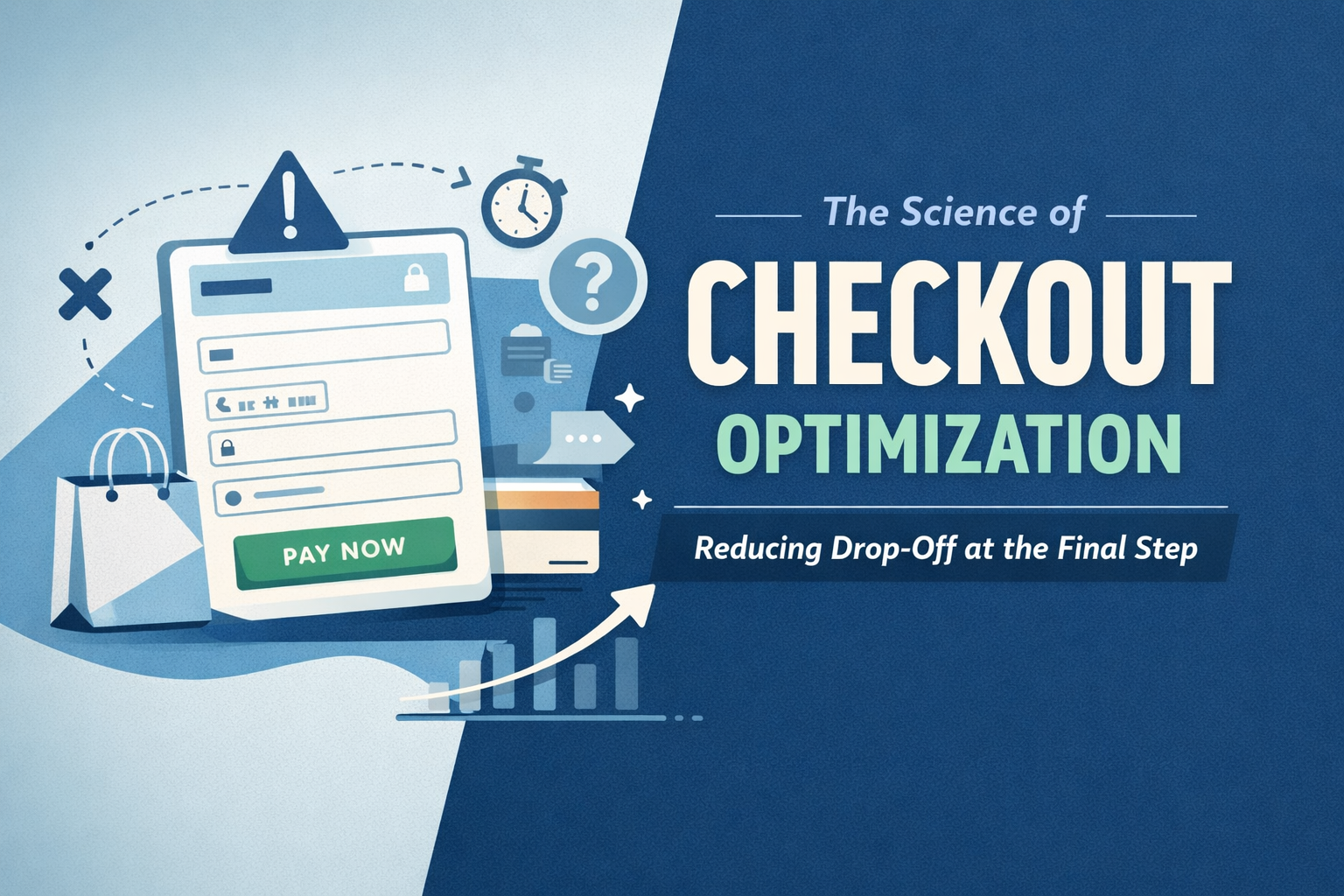
The Science of Checkout Optimization: Reducing Drop-Off at the Final Step
Why Most Users Abandon at Checkout and How UX + Data Can Fix It
 Prashant Thinks5 min read·Just now
--
In the world of e-commerce, getting a customer to add a product to their cart is only half the battle. The real challenge lies in what happens next, the checkout.
Despite advancements in digital payments and user experience design, checkout abandonment remains one of the biggest revenue leaks for online businesses. Studies consistently show that a significant percentage of users drop off at the final step, often after showing clear purchase intent.
This is not just a UX problem. It is a combination of psychology, performance, trust, and data-driven decision-making.
Understanding the science behind checkout optimization is essential for any business looking to maximize conversions and improve customer experience.
Understanding Checkout Abandonment
Checkout abandonment occurs when a user initiates the purchase process but fails to complete the transaction. Unlike casual browsing, these users are already at the bottom of the funnel, which makes their drop-off more costly.
Some of the most common reasons include:
- Unexpected additional costs (shipping, taxes, fees)
- Complicated or lengthy checkout processes
- Forced account creation
- Limited payment options
- Lack of trust or security concerns
- Slow loading times or technical errors
Each of these issues introduces friction and in checkout design, friction is the enemy of conversion.
The Psychology Behind Checkout Behavior
To optimize checkout flows, it is important to understand how users think during the final stage of a purchase.
At checkout, users are highly sensitive to:
1. Cognitive Load
If users are required to think too much, they are more likely to abandon.
Examples of high cognitive load include:
- Too many form fields
- Confusing layouts
- Unclear instructions
A well-optimized checkout minimizes decision-making and simplifies actions.
2. Trust and Risk Perception
Users are sharing sensitive information such as card details and personal data. Any sign of uncertainty can trigger hesitation.
Trust signals that reduce perceived risk include:
- Secure payment indicators
- Clear refund and return policies
- Recognizable payment methods
- Transparent pricing
3. Urgency and Motivation
Users are more likely to complete a purchase when there is a sense of urgency or value.
This can be created through:
- Limited-time offers
- Low stock indicators
- Fast delivery promises
Key Components of a High-Converting Checkout Flow
Optimizing checkout is not about a single change. It requires improving multiple elements across the user journey.
1. Simplified Form Design
Forms are often the biggest friction point in checkout.
Best practices include:
- Minimize the number of required fields
- Use auto-fill and address suggestions
- Enable inline validation to reduce errors
- Break long forms into smaller steps
The goal is to make the process feel quick and effortless.
2. Guest Checkout Option
Forcing users to create an account is one of the leading causes of abandonment.
Instead:
- Offer guest checkout as the default option
- Allow account creation after purchase
- Use social login for convenience
This reduces friction and speeds up the checkout process.
3. Transparent Pricing
Hidden costs are one of the fastest ways to lose a customer.
To avoid this:
- Display total cost early in the process
- Clearly show shipping fees and taxes
- Avoid last-minute surprises
Transparency builds trust and prevents drop-offs.
4. Multiple Payment Options
Different users prefer different payment methods.
A modern checkout should support:
- Credit and debit cards
- Digital wallets
- Buy Now, Pay Later (BNPL) options
- Local payment methods for global users
Providing flexibility increases the likelihood of conversion.
5. Mobile-First Optimization
A large portion of users complete purchases on mobile devices.
Mobile checkout should focus on:
- Large, tappable buttons
- Minimal typing requirements
- Fast loading times
- Responsive design
Even small usability issues can lead to significant drop-offs on mobile.
The Role of Data in Checkout Optimization
While UX design provides the foundation, data is what drives continuous improvement.
Businesses must move beyond assumptions and rely on real user behavior.
1. Funnel Analysis
Understanding where users drop off is the first step.
Key metrics to track:
- Cart-to-checkout conversion rate
- Step-by-step drop-off rates
- Payment failure rates
This helps identify the exact point of friction.
2. A/B Testing
Small changes can have a big impact.
Examples of test variations include:
- Button placement and color
- Form length and layout
- Guest checkout vs account-first flows
- Payment method order
Testing allows businesses to validate what works best.
3. Session Recording and Heatmaps
These tools provide visual insights into user behavior.
They help answer questions like:
- Where are users getting stuck?
- Which fields cause hesitation?
- What elements are being ignored?
This qualitative data complements quantitative metrics.
4. Payment Data Optimization
Payment failures are often overlooked but critical.
Improvement strategies include:
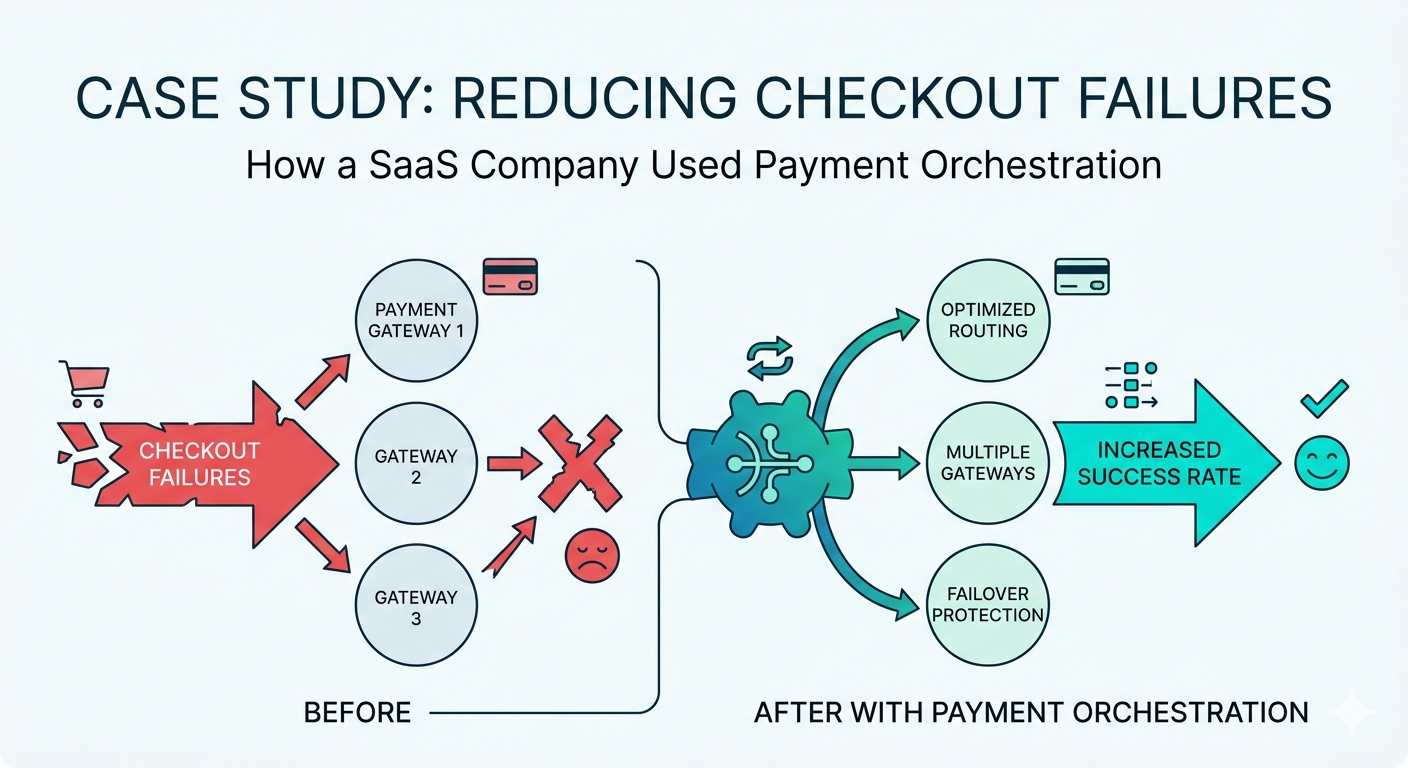
- Intelligent payment routing
- Retry mechanisms for failed transactions
- Tokenization for faster repeat payments
Reducing payment friction directly impacts revenue.
Advanced Checkout Optimization Strategies
As competition increases, basic optimization is no longer enough. Businesses are now adopting advanced techniques to improve conversion rates.
1. One-Click Checkout
One-click checkout eliminates the need for repeated data entry.
Benefits include:
- Faster transactions
- Reduced friction
- Higher repeat purchase rates
This is especially effective for returning customers.
2. Personalization at Checkout
Personalized checkout experiences can significantly improve conversions.
Examples include:
- Pre-filled user information
- Preferred payment methods
- Location-based currency and shipping options
Personalization reduces effort and enhances user experience.
3. Smart Error Handling
Errors during checkout can frustrate users and lead to abandonment.
Best practices:
- Provide clear error messages
- Highlight incorrect fields
- Avoid page reloads
A smooth recovery process keeps users engaged.
4. Trust and Security Enhancements
Security is a critical factor in checkout completion.
Important elements include:
- SSL encryption indicators
- Trusted payment logos
- Clear privacy policies
Even small trust signals can influence user decisions.
Common Checkout Mistakes to Avoid
Even well-designed checkout flows can fail due to common mistakes.
Avoid the following:
- Overcomplicated multi-step processes
- Slow page load times
- Limited payment options
- Poor mobile experience
- Lack of customer support access
Each of these can create unnecessary friction and reduce conversions.
The Business Impact of Checkout Optimization
Improving checkout performance has a direct impact on revenue.
Even small improvements in conversion rates can lead to significant gains.
For example:
- A 5% increase in checkout conversion can result in substantial revenue growth
- Reducing payment failures improves transaction success rates
- Faster checkout leads to higher customer satisfaction and repeat purchases
Checkout optimization is not just a UX improvement — it is a business growth strategy.
The Future of Checkout Experiences
The checkout experience is continuously evolving with new technologies and user expectations.
Key trends shaping the future include:
- AI-driven checkout personalization
- Voice-enabled payments
- Biometric authentication (fingerprint, facial recognition)
- Invisible payments (automatic checkout without user interaction)
These innovations aim to make checkout faster, safer, and more intuitive.
Final Thoughts
Checkout is the most critical stage of the customer journey. It is where intent turns into revenue or where it is lost.
Reducing drop-off at this stage requires a deep understanding of user behavior, thoughtful UX design, and continuous data-driven optimization.
By focusing on:
- Simplicity
- Transparency
- Trust
- Performance
businesses can create checkout experiences that not only convert but also build long-term customer relationships.
In the end, the science of checkout optimization is about removing friction and making it as easy as possible for users to say “yes” to their purchase.