The Real Cost of High-Risk Payment Gateways (And Why Most Businesses Overpay)
 Web Pays3 min read·Just now
--
If you run a high-risk business, you’ve probably noticed something frustrating:
Payment processing feels expensive… and unclear.
You’re told:
- “Higher fees are normal”
- “Reserves are required”
- “This is industry standard”
But no one really explains why you’re paying what you’re paying — or how to reduce it.
Let’s fix that.
First, What Makes a Payment Gateway “High-Risk”?
Not all businesses are treated equally by payment providers.
If your business falls into categories like:
- Online gaming or betting
- IPTV or streaming services
- Subscription-based platforms
- Forex or crypto
You’re automatically considered high-risk.
And that changes everything about how payments work.
💸 Why High-Risk Payment Gateways Cost More
The higher cost isn’t random — it’s based on risk.
From a payment provider’s perspective, high-risk businesses bring:
- Higher chargeback rates
- Increased fraud exposure
- Cross-border transaction complexity
- Regulatory uncertainty
So instead of flat pricing, you get risk-based pricing.
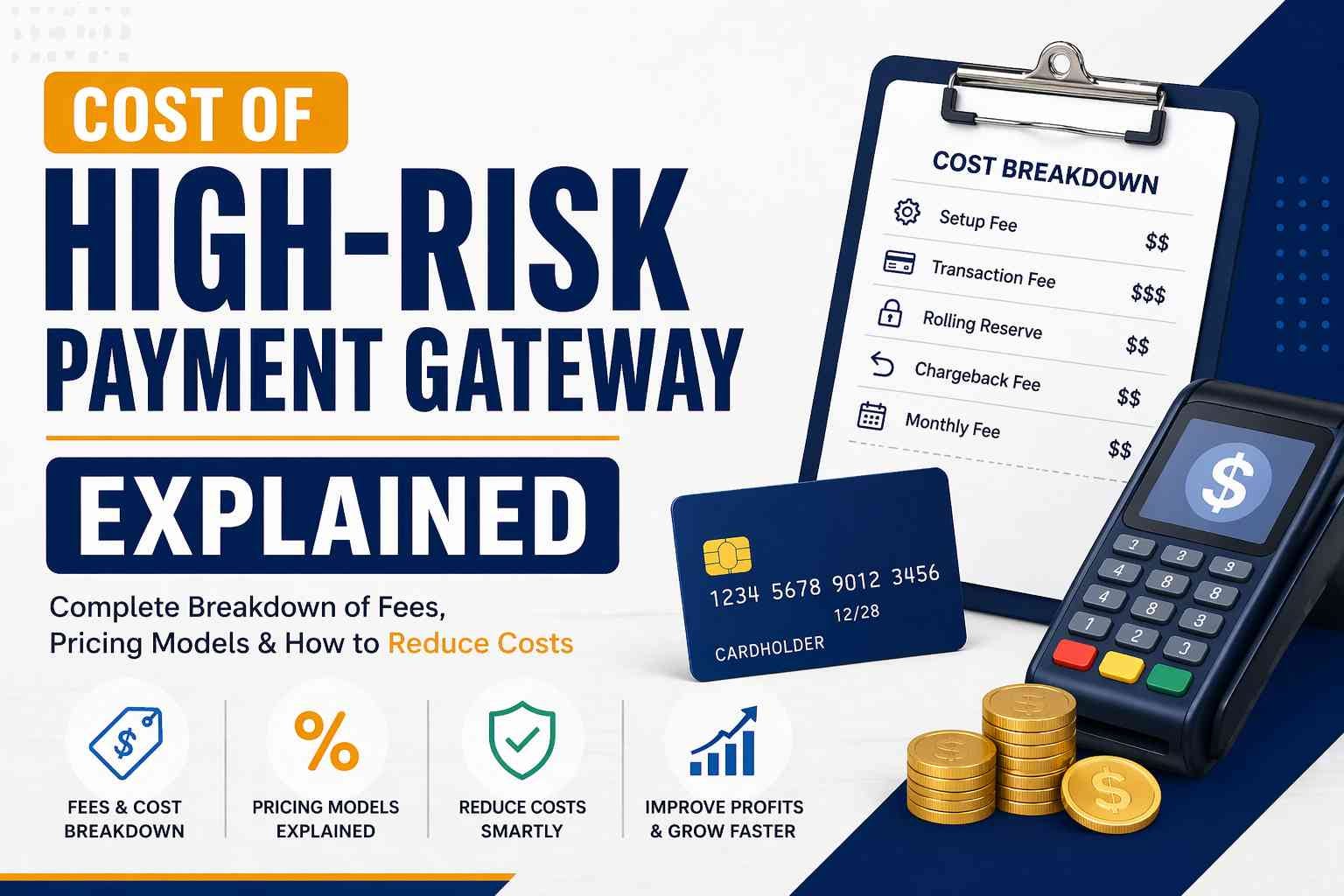
📊 The Actual Cost Breakdown (What You’re Really Paying For)
Most businesses only look at transaction fees.
That’s a mistake.
Here’s the full picture:
1. Transaction Fees
Typically between 3%–10% per transaction
This varies based on:
- Industry
- Volume
- Customer location
2. Rolling Reserves
A portion of your revenue (usually 5%–10%) is held for 90–180 days.
It’s not a fee — but it impacts your cash flow significantly.
3. Chargeback Fees
Each dispute costs you:
- $15 to $50 per case
- Plus potential penalties if rates increase
4. Setup & Monthly Fees
Some providers charge:
- Setup fees
- Monthly gateway fees
- Maintenance costs
5. Hidden Costs (The Biggest Problem)
This is where most businesses lose money.
Examples:
- Currency conversion fees
- Cross-border surcharges
- Poor routing → failed payments
And failed payments are the most expensive cost of all.
🚨 The Biggest Mistake Businesses Make
Most people focus on:
“How do I get lower fees?”
But the better question is:
“How do I increase successful transactions?”
Because:
👉 Saving 2% in fees means nothing
👉 If you’re losing 20–30% of payments due to declines
📈 What Actually Reduces Your Costs
Here’s what makes the real difference:
✔ Better Approval Rates
More successful transactions = more revenue
✔ Smart Payment Routing
Sending transactions through the right channels reduces failures
✔ Lower Chargebacks
Better fraud control + customer experience = fewer disputes
✔ Right Payment Partner
Not all providers are built for high-risk businesses
🧠 What Most Providers Won’t Tell You
High-risk payment processing isn’t just about accepting payments.
It’s about:
- Maintaining stability
- Reducing risk exposure
- Keeping your revenue predictable
A cheap provider that causes instability will cost you more than an expensive one that performs.
🔗 Want the Full Breakdown (With Action Steps)?
If you want a deeper breakdown with practical strategies to reduce your costs, read the full guide here:
👉 https://webpays.com/blogs/cost-of-high-risk-payment-gateway/
🚀 Final Thought
The cost of a high-risk payment gateway isn’t just a number.
It’s a combination of:
- Fees
- Risk
- Performance
- Reliability
And the businesses that understand this don’t just survive — they scale.
💬 If You’re Running a High-Risk Business
Ask yourself:
- Are your payments stable?
- Are you losing revenue to declines?
- Do you actually understand your costs?
If not, it might be time to rethink your setup.