The Quiet Rise of AI in Personal Finance
 Andreas Jäger4 min read·Just now
--
For decades, budgeting followed a simple pattern. You sat down with a spreadsheet, a notebook, or perhaps a basic finance app and tried to categorize every purchase. Rent, groceries, transport, entertainment. The process worked, but it required discipline and time. Many people abandoned it after a few weeks because it felt like homework.
Artificial intelligence is beginning to change that dynamic.
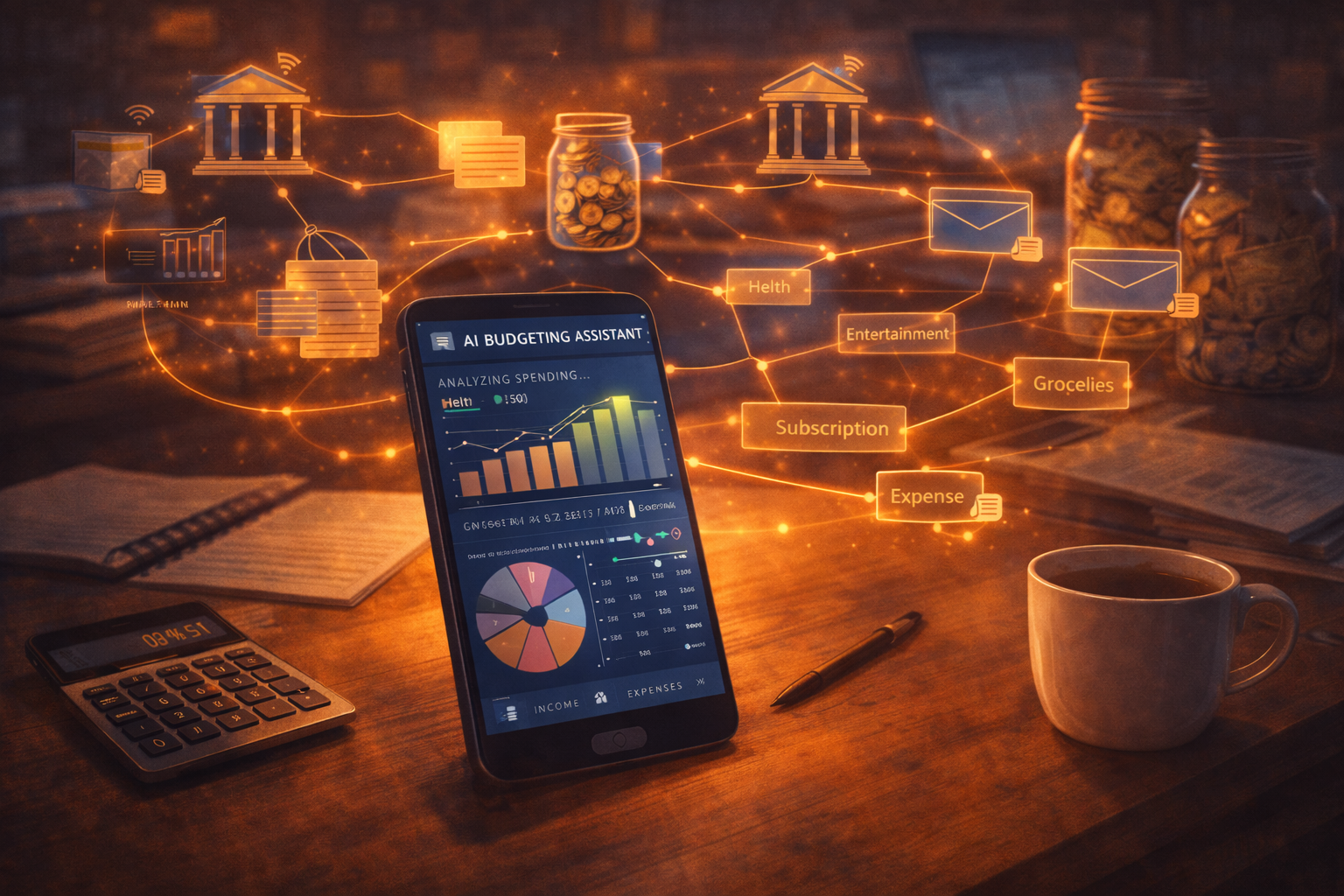
Instead of forcing people to manually organize their financial life, modern AI powered tools now observe spending patterns, identify trends, and suggest adjustments automatically. Budgeting is slowly shifting from a chore into a background system that runs quietly while you live your life.
This change may sound subtle, but it has deep implications for personal finance.
From Recording the Past to Predicting the Future
Traditional budgeting tools were historians. They showed you what had already happened. At the end of the month you discovered that you spent too much on restaurants or subscriptions. The insight arrived too late to change the outcome.
AI systems approach the problem differently.
By analyzing transaction history, income timing, and recurring bills, they can forecast what your financial month will likely look like before it happens. Instead of reacting to overspending, users receive early warnings.
For example, if spending during the first half of the month rises faster than usual, an AI system may suggest slowing down discretionary purchases. If a large bill is approaching, it may recommend shifting funds ahead of time.
The difference between hindsight and foresight is enormous. Prevention almost always beats correction.
Smarter Categorization Without Manual Effort
Anyone who has tried to maintain a personal finance spreadsheet knows how tedious categorization can become. A coffee shop purchase must be labeled. A subscription must be assigned to a category. A new merchant name creates confusion.
AI tools handle this automatically.
Machine learning models recognize vendors and spending patterns with surprising accuracy. A grocery chain is identified immediately. A streaming service is recognized as entertainment. Even irregular purchases are categorized based on context.
Over time the system becomes more precise as it learns from the user’s behavior.
The result is simple. Instead of managing data, people can focus on interpreting it.
Personalized Savings Strategies
One of the most powerful features of AI driven finance tools is automated savings guidance.
Traditional advice tends to be broad. Save ten percent of income. Build an emergency fund. Reduce unnecessary spending.
While useful, these guidelines rarely reflect individual circumstances. Someone with irregular income or seasonal expenses may struggle to follow rigid rules.
AI systems can tailor savings plans based on real behavior.
If income fluctuates, the system might recommend variable saving amounts depending on the month. If spending patterns show excess cash flow in certain weeks, it may suggest automatic transfers into savings accounts during those periods.
Some tools even create micro saving strategies. Small amounts are moved into savings whenever spending falls below predicted levels. The user often barely notices the change, yet balances grow steadily.
This approach relies on behavioral insight rather than strict discipline.
Detecting Wasteful Spending
Another quiet advantage of AI budgeting tools is pattern recognition.
Humans are surprisingly bad at spotting recurring waste in their finances. A few euros here and there rarely attract attention.
AI systems excel at identifying these patterns.
Duplicate subscriptions. Rising utility bills. Forgotten memberships. Price increases in recurring services. All of these can be flagged automatically.
Instead of combing through statements, users receive clear alerts about spending habits that deserve attention.
The time saved alone is valuable.
Financial Coaching in Your Pocket
In a sense, AI budgeting tools act like a small financial advisor that operates continuously.
They do not replace professional guidance, but they provide everyday awareness. When spending shifts, the system notices. When savings stagnate, it suggests adjustments. When income changes, it recalculates expectations.
For people who never received formal financial education, this kind of guidance can be transformative.
The barrier to entry for good financial habits becomes lower.
The Limits of Automation
Despite their advantages, AI tools are not perfect.
They depend heavily on accurate data. If accounts are not connected properly or transactions are misclassified, the system may draw incorrect conclusions.
There is also a psychological risk. When automation handles everything, users may stop thinking critically about their finances. Passive monitoring is helpful, but awareness still matters.
The best approach combines automation with periodic review.
Let the tools do the tedious work, but remain engaged with the broader picture.
A New Relationship With Money
Perhaps the most interesting effect of AI budgeting is how it changes the emotional relationship people have with money.
Budgeting used to feel restrictive. A set of rules that limited spending.
AI based systems feel more like guidance. They show possibilities rather than impose rigid boundaries.
Instead of telling you what you cannot do, they reveal what you can afford to do safely.
That subtle shift encourages consistency, which is the true engine of financial progress.
The Bigger Picture
Technology often improves life by removing friction. Personal finance has long been full of friction. Tracking expenses, organizing statements, analyzing patterns.
AI powered tools remove much of that effort.
The result is not merely convenience. It is clarity. When financial information becomes easier to understand, people make better decisions.
Better decisions accumulate. Savings grow. Stress falls.
Budgeting will likely never be glamorous. But with intelligent tools quietly assisting in the background, it may finally become something most people can sustain.
And in personal finance, sustainability beats perfection every time.