The Psychology of Loss Aversion: Lessons from My Trading Journey
 Akaljot3 min read·Just now
--
The Beginning: Expectations vs Reality
Many of us start trading believing we can make $50–$100 a day consistently. I started smaller — aiming for $5–$10 on a $100 account, thinking I could compound it forever. At the beginning, it feels really smooth: you win some, you lose some, and then suddenly you see just a few trades bleeding your account.
“I remember staring at my screen, watching my position bleed, telling myself — ‘It’ll come back.’ It didn’t.”
Beginner Mistakes We All Make
All of us have had a time where we are watching a losing trade and refusing to close it. Moving stop loss “just a little further” or holding a red position while hoping it will get back into profit — these are the key traits of a beginner trader.
It is something where you are winning $10 while risking $20–$30 or even more; the ratios never suit this approach.
What is Loss Aversion?
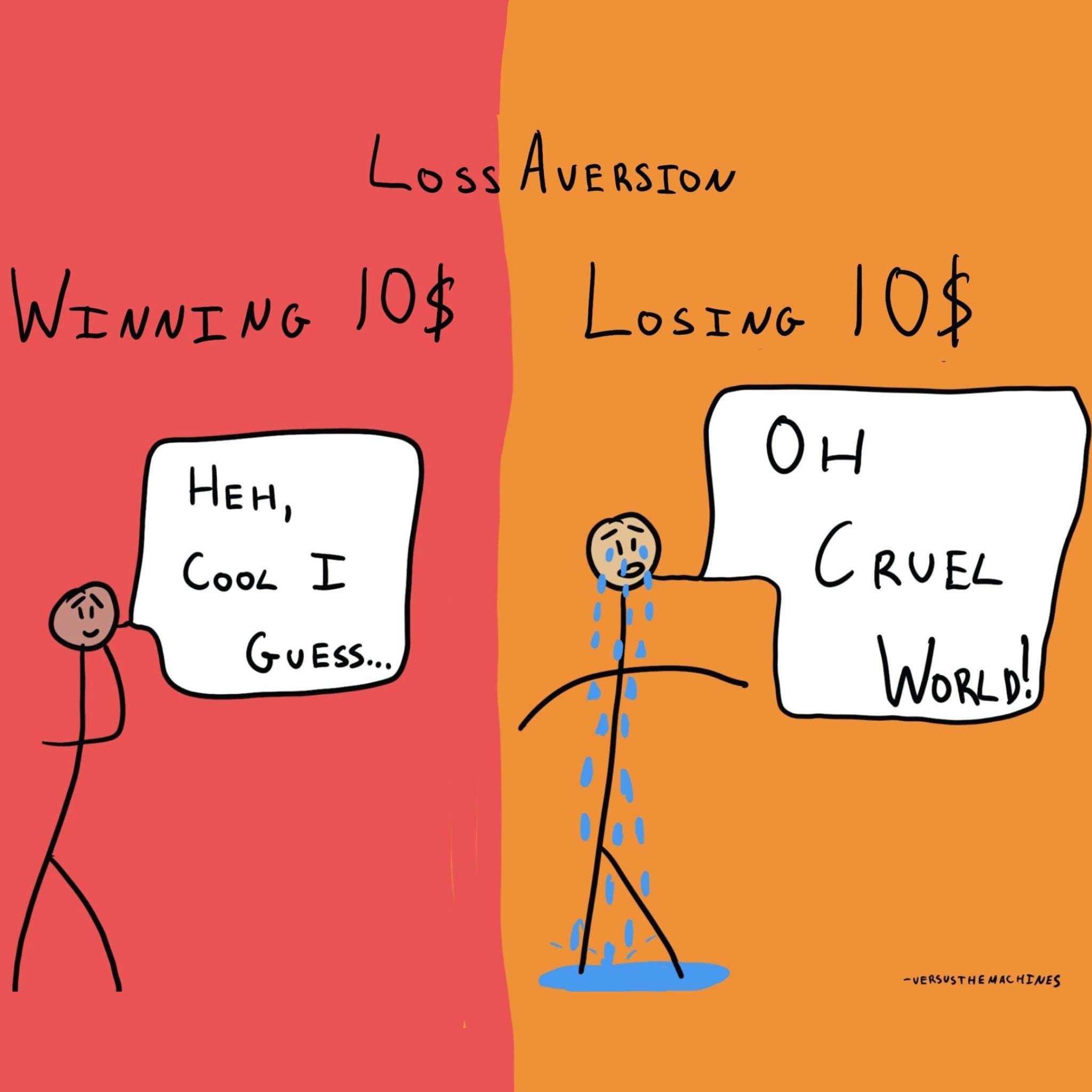
What is Loss Aversion? It is simply a psychological phenomenon where losses feel 2x more painful than gains feel good.
In simple reference, making $10 feels amazing and refreshing, while losing $5 feels unbearable. It’s where the winning mindset kicks in — you are okay with making small gains but don’t want to lose a single penny.
So, you tend to cut profits early, and once the trade is in loss, you wait for hours or days for it to come back into profit — and that single trade can bleed your account.
My Experience with It
Am I different? No. I’ve been through the same struggle, been through the same hardship that makes it more psychological than technical.
On paper, it sounds quite realistic to have a win rate of 90%, but being in the market for long, I can tell you there’s nothing like a 90% win rate. We all go through the same path where “we aren’t trading the market, we are trading our emotions.”
The Turning Point
That’s when I realised something important — profitability in trading isn’t about being right all the time.
I remember a quote from Trading in the Zone:
“The market is neutral. It’s your perception that defines your experience.”
— Mark Douglas
What This Actually Means
Well, simply, it means that nobody can predict the market. You don’t need to always be aware of what is going to come next to make money in trading. You just need to be aware of what you are doing.
Watch all the legitimate traders with years of experience — they go through losing streaks in double digits, they still lose trades, yet they come out of the year with profitable numbers.
How is it possible?
Well, certainly it’s never about winning all the trades you are in. It’s about optimising how you are holding your winners and cutting your losers. A person with 50% winrate can still earn more than a person with 99% winrate — the certainty of probability, it’s all about probability.
What I Changed
Lesson 1: Accept Losses as Cost of Business
“A loss is not failure. It’s tuition.”
Lesson 2: Pre-define Risk
“Having a clear picture of when to exit”
Lesson 3: Detach Emotionally
“Focus on process, not outcome”
Lesson 4: Think in Probabilities
“Not every trade will win”
Final Realisation
“The biggest shift in my trading wasn’t strategy — it was accepting that losses are part of the game.”
“The best losers win.” (Inspired by Best Loser Wins)