The New Identity Stack: Credentials, Blockchain, and Trust Services
 Everycred4 min read·Just now
--
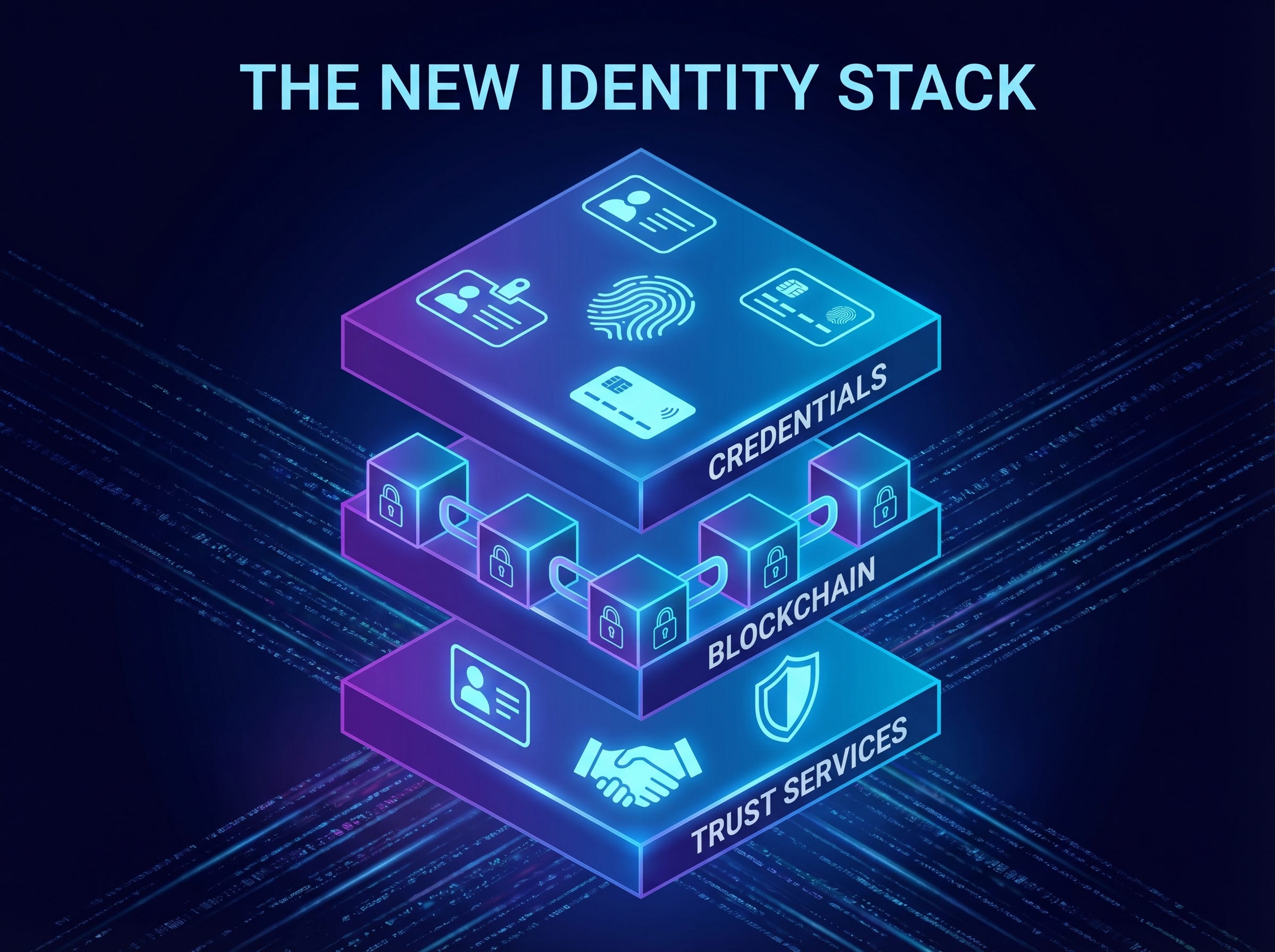
Digital identity is no longer a single layer in a system, it has become a stack. What once relied on basic authentication and isolated verification processes is now evolving into a multi-layered architecture built on credentials, blockchain, and trust services.
This new identity stack is not just improving security. It is redefining how trust is created and maintained in digital ecosystems.
From identity checks to identity infrastructure
In traditional systems, identity verification was treated as a checkpoint. A user logs in, verifies their identity, and gains access. Once that step is complete, the system assumes trust.
But modern digital environments are far more dynamic. Users interact across multiple platforms, share data in real time, and access services that require ongoing validation. This makes one-time digital identity verification insufficient.
Organizations are now moving toward identity infrastructure, systems designed to manage identity continuously rather than at a single point in time.
Layer one: digital credentials
At the foundation of the new identity stack are digital credentials. These include digital certificates, digital badges, and digital id cards that represent verified information about individuals or entities.
Digital credential platforms and digital credential software allow organizations to issue, manage, and verify these credentials efficiently. Instead of repeating identity proofing processes, systems can rely on verified credentials that are reusable and instantly validated.
This approach reduces friction for users and simplifies credential management for organizations.
Layer two: blockchain as the trust engine
While digital credentials provide the structure, blockchain provides the integrity.
Blockchain identity solutions ensure that credentials are tamper-proof and verifiable. Once a credential is issued as a blockchain credential, it cannot be altered, making credential verification more reliable.
Blockchain identity verification enables real-time validation without relying on centralized systems. This reduces fraud and increases transparency.
Decentralized identity models further enhance this layer by giving users control over their own data. Instead of storing identity information across multiple platforms, individuals can manage and share their credentials securely.
Layer three: digital trust services
The final layer of the identity stack is digital trust services. These services ensure that identities and credentials are not only verified but also trusted across systems.
Digital trust platforms bring together identity, credentials, and verification into a unified framework. They enable organizations to implement consistent trust policies, automate compliance, and ensure secure interactions.
Digital identity compliance automation software plays a key role here by integrating identity verification and credential validation into workflows. This allows organizations to maintain compliance without slowing down operations.
How the identity stack works together
What makes this new identity stack powerful is how these layers interact.
- Digital credentials provide verified data
- Blockchain ensures authenticity and immutability
- Trust services enable secure and scalable use of that data
Together, they create systems where trust is not assumed but continuously validated.
For example, a user can present a verified credential issued through a digital credential platform. The credential is validated through blockchain identity verification, and digital trust services ensure it meets compliance requirements.
This entire process can happen in real time, without manual intervention.
Impact across industries
The adoption of this identity stack is transforming multiple sectors.
In the public sector, digital government transformation initiatives are leveraging digital government solutions to issue digital id cards, manage citizen identities, and deliver services more efficiently.
In the enterprise world, businesses are using digital identity management solutions to streamline onboarding, improve compliance, and enhance user experience. Credential platforms enable faster credential verification, while trust services ensure consistent security.
Across industries, the focus is shifting from isolated identity checks to integrated trust systems.
Benefits of the new identity stack
The move toward a credential-based identity stack offers several advantages:
- Reduced friction through reusable credentials
- Improved security with tamper-proof blockchain credentials
- Faster verification through automated systems
- Enhanced user control with decentralized identity
- Scalable trust across interconnected ecosystems
These benefits make the identity stack a critical component of modern digital infrastructure.
Challenges to consider
While the new identity stack offers significant advantages, it also comes with challenges.
Interoperability is essential. Credentials must be recognized across different platforms and systems to be effective.
Privacy must be carefully managed, especially in decentralized identity systems where users control their data.
Adoption requires investment in technology and alignment across organizations.
Despite these challenges, the direction is clear. The identity stack is becoming more layered, more intelligent, and more focused on trust.
Final thoughts
The concept of identity is evolving from a simple verification step to a complex system of trust.
The new identity stack built on digital credentials, blockchain identity solutions, and digital trust services represents this evolution. It enables organizations to move beyond basic authentication and create systems where trust is embedded into every interaction.
As digital ecosystems continue to expand, this layered approach will become essential for building secure, scalable, and user-centric systems.
If you’re exploring how to implement digital credential platforms, blockchain identity solutions, or digital trust services, you can connect with us. A quick conversation can help you take the next step toward building a modern, trust-driven identity system.