The Netherlands Has Banks With No Branches. Côte d’Ivoire Is Reinventing Its Own.
 Assalé Olivier KACOU6 min read·Just now
--
While part of the world is shutting down bank branches, Côte d’Ivoire is proving there is a third way: more inclusive, more innovative, and deeply African.
TL;DR
In the Netherlands, some banks have eliminated all their physical branches and send advisors to clients’ homes instead. In Côte d’Ivoire, the number of branches has actually increased: 765 branches in 2025, up by 101 since 2023. This is not a disappearance: it is a transformation. Meanwhile, a quiet revolution has changed everything: mobile money. With 28 million registered accounts and a financial inclusion rate that rose from 41% to 51% in eight years, Côte d’Ivoire is not copying the European model. It is building its own.
I. The Report That Stopped Me Cold
A few weeks ago, I was watching a news segment broadcast on France 2. The scene takes place in the Netherlands. A financial advisor rings a doorbell, briefcase in hand. He steps into a living room, sits on a sofa, opens his laptop.
No branch. No counter. No waiting room with numbered tickets.
The journalist explains: some Dutch banks have eliminated their entire physical network. ING closed more than 300 branches between 2016 and 2019. ABN AMRO followed the same path. According to the European Banking Federation (EBF), the Netherlands had around 3,400 branches in 2010 — against fewer than 1,800 in 2023. A 47% reduction in thirteen years.
The question that immediately came to mind: what about Côte d’Ivoire?
II. The Ivorian Reality: What the Numbers Actually Say
First surprise; and it is a big one.
Contrary to what one might expect, the number of bank branches in Côte d’Ivoire has not decreased. According to the official BCEAO list updated on May 22, 2025, our country has:
- 28 banks and 4 financial institutions of a banking nature
- 765 bank branches, +101 branches compared to 2023
- 1,200 ATMs, +249 compared to 2023
- A total balance sheet for credit institutions reaching 22,190 billion CFA francs (≈ USD 40.19 billion)
Côte d’Ivoire today accounts for 33.7% of all banking assets in the UEMOA ; the largest share among the eight member states of the Union.
So why does it feel like banks are retreating?
Because the function of branches is evolving, even as their number grows. Routine operations (withdrawals, transfers, balance checks) are shifting massively toward digital channels and ATMs. Branches are refocusing on advisory services, complex credit, and business support. This is not disappearance. This is phygital transformation: physical + digital.
III. Meanwhile: The Revolution No One Saw Coming
But reducing the story of Ivorian finance to its bank branches would mean missing the point entirely.
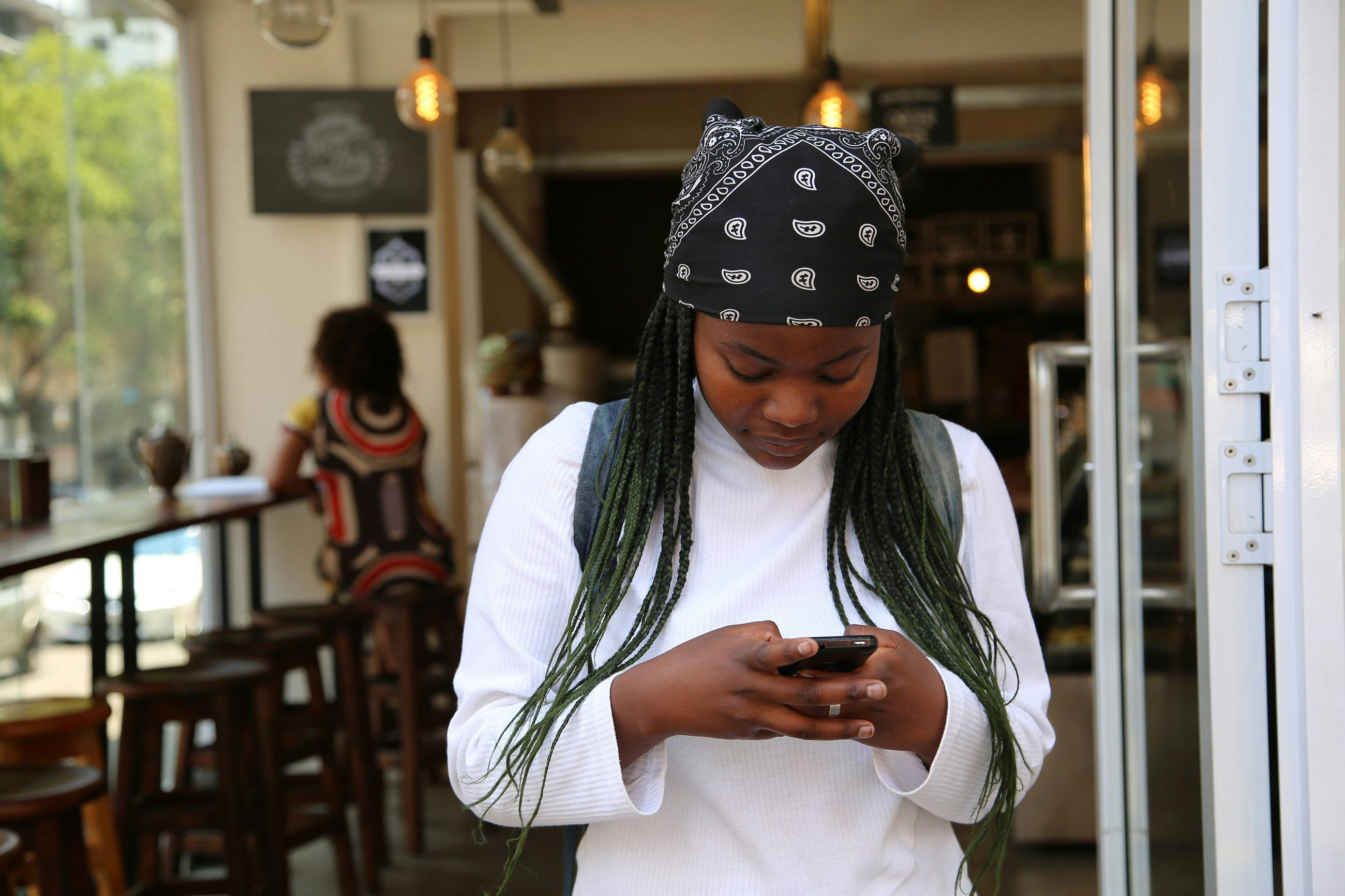
Because while banks were rationalizing their networks, a quiet revolution changed the rules of the game. That revolution is called mobile money.
The M-PESA Legacy
It all starts in Kenya, in March 2007. Safaricom launches M-PESA with a simple promise: allow unbanked populations to send and receive money via their phone, without a bank account, without paperwork, without a branch.
The result is staggering. In less than ten years, Kenya’s financial inclusion rate goes from 27% to over 75%. M-PESA today counts more than 28.5 million active users in East Africa.
The lesson is fundamental: the bank must go where people need it. Not the other way around.
The Wave Hits Côte d’Ivoire
Inspired by this model, Ivorian players built their own ecosystem:
Orange Money (2008) — The pioneer. With consolidated revenues of 1,197.1 billion CFA francs in 2025 (+10.4%), Orange Côte d’Ivoire invested 184 billion CFA francs to strengthen its network and deployed 1,131 new sites. Its total customer base reaches 38.5 million.
MTN Mobile Money (2009) — In August 2025, MTN Côte d’Ivoire made a bold move: eliminating deposit and withdrawal fees. A decision that speaks volumes about the intensity of competition. MTN claims 21 million accounts and 437,000 points of sale across the country.
Wave (2020) — The radical disruption. Founded by two American entrepreneurs, Wave arrives with an unprecedented promise: zero fees on deposits and withdrawals, just 1% on transfers. Against fees sometimes ranging from 6% to 10% at legacy operators, Wave broke everything. By 2021, 20.7 million people were already using mobile money in Côte d’Ivoire. In October 2025, Wave obtained authorization to create Wave Bank Africa SA — becoming a fully licensed bank.
Djamo (2019) — The Ivorian neobank. In March 2025, Djamo crosses one million active users. Its strength? A Visa card accessible without the administrative burden of traditional banks. The number that says it all: 60% of Djamo users got their first ever bank card through the fintech — over one million people who had never owned a card before.
IV. The Real Picture: What the Numbers Say About Us
In 2014, the World Bank noted that in Côte d’Ivoire, more people had a mobile money account (24%) than a traditional bank account (15%). The gap has widened since — but in the right direction: both have grown, and their complementarity is creating value.
V. The Ivorian Phygital Model: Neither Dutch Nor Kenyan
Let us return to our Dutch advisor on his sofa.
That model works in the Netherlands because 99% of the population is banked, internet coverage is near universal, and urban density is extreme. It is a response to an already-achieved maturity.
In Côte d’Ivoire, we have a different challenge — and a different opportunity. Our model is not the disappearance of branches. It is their complementarity with digital:
- Branches refocus on high-value advisory, corporate credit, SME support
- Mobile money reaches the 60% of rural or semi-urban populations that branches never served
- Fintechs fill the gaps: first bank card, alternative credit scoring, instant merchant payments
- BCEAO builds the regulatory infrastructure: Instruction №001–01–2024 and the Interoperable Instant Payment System Platform (PI-SPI), launched September 30, 2025, enable 24/7 instant transfers between all actors
This is the Ivorian phygital model: grounded in reality, driven by inclusion, fueled by innovation.
VI. The Bank Isn’t Disappearing. It Is Reinventing Itself Where It Is Needed.
In the Netherlands, the bank of the future has no branches. That is a sign of a completed transformation.
In Côte d’Ivoire, the bank of the future is hybrid — physical where necessary, digital where possible, mobile wherever that is enough.
The 765 branches are not resistance to change. The 28 million mobile money accounts are not the death of banks. They are two sides of the same coin: a financial system being built for all 27 million Ivorians, not only for the few million who live in Abidjan.
Wave became a bank. Djamo surpassed one million users. Orange Money covers 38.5 million customers. Traditional banks are opening new branches while developing their apps.
This is not a contradiction. It is a strategy.
And if Côte d’Ivoire continues on this path — with the right regulation, the right players, and the right infrastructure — this African phygital model could become a global reference. Not a copy of the Dutch model. An Ivorian invention.
Sources
- BCEAO — List of UMOA credit institutions, Côte d’Ivoire (updated May 22, 2025)
- SBS Software — Banking sector in Côte d’Ivoire: mobile money and fintech (April 2026)
- GSMA — State of the Industry Report on Mobile Money 2026
- Orange Côte d’Ivoire — Consolidated financial results 2025
- MTN Côte d’Ivoire — Removal of deposit/withdrawal fees (August 2025)
- Djamo — 1 million active users (Digitalmag.ci, March 2025)
- CommsOfAfrica — Wave Bank Africa SA (October 2025)
- BCEAO — Instruction №001–01–2024 on payment services in UMOA
- BCEAO — PI-SPI launch (September 30, 2025)
- European Banking Federation (EBF) — Banking Supervision Report 2022–2023
#DigitalBanking #CotedIvoire #BCEAO #MobileMoney #PhygitalBanking #DigitalTransformation #FinancialInclusion #Wave #Djamo #OrangeMoney #AfricaFintech #UEMOA #WestAfrica #FinTech