Member-only story
The Math Behind Why Casinos Never Lose, and How Traders Can Copy It
 Tattva Tarang5 min read·Just now
--
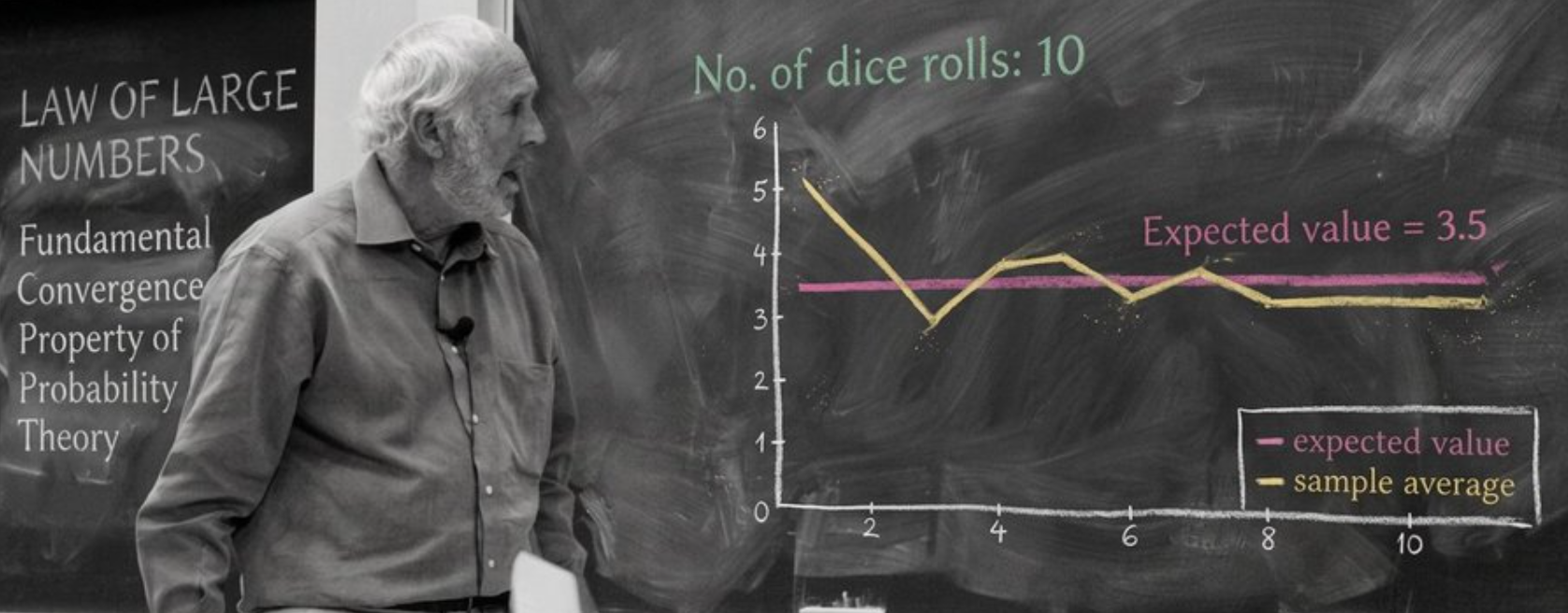
“Any one anomaly might be a random thing. But if you have enough data, you can tell it’s not.” — Jim Simons. This one quote that changes everything. Most traders hear this and agree, but few follow it consistently. Those who do are known as systematic traders. Essentially, they are the casino, the mathematical entity, rather than the player.
Why 10 winning trades mean nothing
Let’s illustrate this with code to make it perfectly clear: a fair coin, with a 50/50 chance, can land on heads 9 times in 10 flips without any trickery. Here’s a simulation example:
// Simulate N coin flips and return win rate
function simulateCoinFlips(n) {
  let heads = 0;
  for (let i = 0; i < n; i++) {
    if (Math.random() > 0.5) heads++;
  }
  return (heads / n * 100).toFixed(1);
}

// With a TRUE 50% edge:
console.log(simulateCoinFlips(10));    // Could print 90.0%
console.log(simulateCoinFlips(100));   // Closer to 50%
console.log(simulateCoinFlips(10000)); // Very close to 50.0%
The coin remains unchanged, but the sample size varies. Your last 10 trades function identically. A 7-out-of-10 winning streak might just be a sign of a strategy with a 45% win rate during a lucky period. It's nearly impossible to determine definitively.