
Stablecoins are not a financial innovation. They are a philosophical revolution and we are sleepwalking into it.
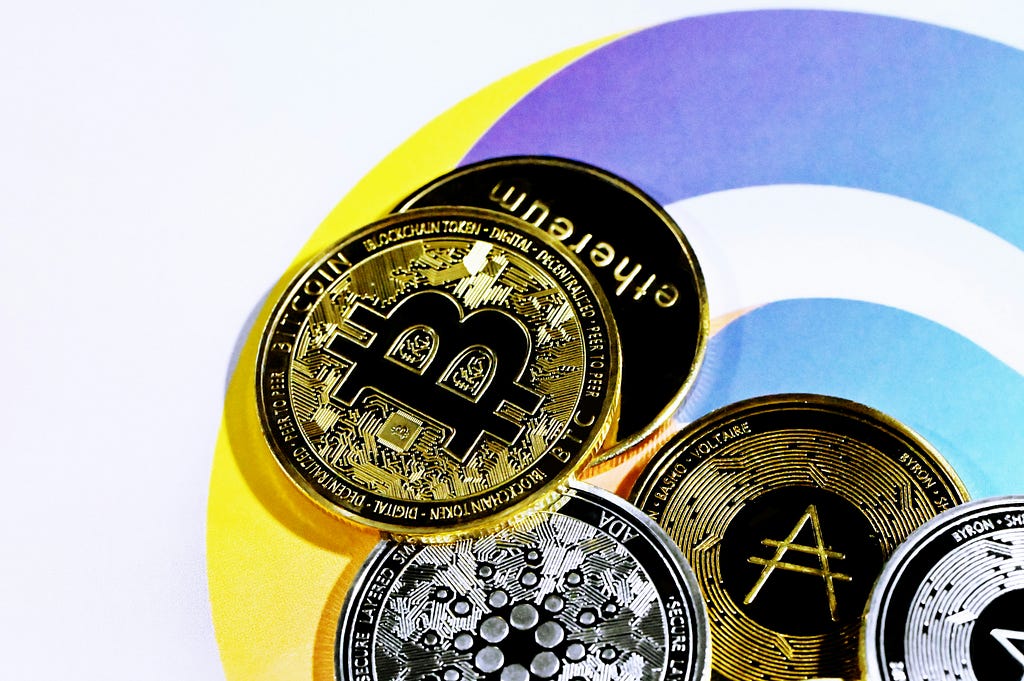
Seventy thousand years ago, a small band of Homo sapiens did something no other animal had ever done. They began to believe in things that didn’t exist.
Not gods. Not yet. Something far more dangerous.
They began to believe in value.
A shell has no intrinsic worth. A piece of gold cannot feed you in a famine or shelter you in a storm. And yet, the moment two humans agreed that this particular shiny rock was worth something — civilisation became possible. Money was never a commodity. It was always a story. A shared fiction so powerful that it built the pyramids, funded the Renaissance, and launched humans to the moon.
Now, in the third decade of the twenty-first century, we are about to tell a new story. And unlike every monetary revolution before it — the invention of coinage, the printing press, the gold standard, the Bretton Woods system: this one is being written by an algorithm.
The Fragility of the Old Story
To understand why stablecoins matter, you must first understand why the money in your pocket is already an act of faith.
Open your wallet. Find a £20 note, a $100 bill, a €50 note. Now ask yourself: what makes it real?
It is not the cotton-linen blend. It is not the ink, or the watermarks, or the serial number. What makes that piece of paper worth anything at all is that approximately eight billion people have collectively agreed — mostly without thinking about it — to accept the story that a government is telling them.
This is not cynicism. This is the profound truth of what economists call “fiat currency.” Fiat from the Latin: let it be done. Government-issued money has value because authority declares it so, and because enough people believe in that authority.
For most of history, this was a good enough deal. Governments provided armies, courts, infrastructure, and the rule of law. In exchange, citizens accepted the government’s monopoly on monetary storytelling.
But the twenty-first century has introduced a destabilising variable into this ancient equation: trust in institutions is collapsing.
According to Edelman’s Trust Barometer, trust in governments across the developed world has been falling for two decades. After the 2008 financial crisis, after COVID-era money printing that devalued savings overnight, after inflation spikes that hit the poorest hardest — billions of people are quietly asking themselves a subversive question:
Do I still believe this story?
Enter the New Priests
Into this crisis of faith stepped an unlikely prophet: an anonymous figure known only as Satoshi Nakamoto.
Bitcoin was not, primarily, a financial product. It was a theological statement. A declaration that money could exist without priests without central bankers, without governments, without any human authority at all. The blockchain was designed to be the first monetary system in history that required no trust in any individual, institution, or nation-state.
It was beautiful. It was radical. And for the purposes of everyday commerce, it was nearly useless.
The problem with Bitcoin and with most first-generation cryptocurrencies is that they solved the trust problem by introducing a volatility problem. A currency that can lose 40% of its value in a week is not a currency. It is a casino chip. You cannot pay your rent in a casino chip. You cannot price a loaf of bread in one.
This is where stablecoins enter the story. And this is where the story gets truly interesting.
What Is a Stablecoin, Really?
A stablecoin is, at its most basic, a cryptocurrency designed to maintain a stable value — typically pegged to a fiat currency like the US dollar, to a basket of assets, or in more radical iterations, to nothing but a mathematical formula.
The three dominant varieties are:
Fiat-collateralised stablecoins like USDC or Tether hold reserves of actual dollars in a bank for every digital dollar in circulation. They are, in essence, digital receipts for real money. The story they tell is familiar, but told in a new language.
Crypto-collateralised stablecoins like DAI back their value with other cryptocurrencies, using complex over-collateralisation mechanisms to absorb volatility. They are the monetary equivalent of building a house on a moving ship.
Algorithmic stablecoinsthe most ambitious and most dangerous breed use software alone to expand and contract supply, mimicking the functions of a central bank with no human hand on the lever. TerraUSD’s catastrophic collapse in 2022, which evaporated $40 billion in days, was their Chernobyl: a warning about what happens when the algorithm fails and the story unravels in real-time.
But here is what matters: all three are asking the same question.
Can we replace institutional trust with mathematical trust?
The Algorithm as Sovereign
For most of human history, monetary authority followed a predictable pattern. Physical commodity (gold, silver, salt) gives way to representative currency (paper backed by commodity), which gives way to fiat currency (paper backed by government promise). Each transition was a story becoming more abstract, more dependent on collective belief.
Stablecoins represent the next abstraction. And it is a profound one.
Consider what happens when a billion people in the Global South in Nigeria, in Argentina, in Lebanon — begin holding their savings in USDC rather than in their own nation’s currency. They have not abandoned money. They have abandoned their government’s monetary story, and adopted someone else’s.
This is not hypothetical. It is already happening.
In Venezuela, where the bolívar has lost 99% of its value since 2016, dollar-pegged stablecoins have become a lifeline for millions. In Turkey, where inflation reached 85% in 2022, crypto adoption surged as citizens fled the lira. In Nigeria, which has the highest peer-to-peer crypto trading volume on the continent, stablecoins are not an investment — they are a survival mechanism.
What we are witnessing is the slow, quiet dissolution of monetary sovereignty.
For the first time in history, an ordinary person with a smartphone can opt out of their government’s monetary system not by stuffing dollars under a mattress, but by holding a digital asset that is instantly transferable, globally accessible, and requires no permission from any bank, border, or bureaucracy.
This is not a minor disruption. This is a civilisational shift.
The New Money Is Data and Data Is Power
Here we must pause, because the story has a shadow.
The same properties that make stablecoins liberating for a citizen in Caracas or Lagos make them deeply threatening to every government on Earth. And governments are not passive observers.
The response is already taking shape: Central Bank Digital Currencies CBDCs. Digital euros, digital dollars, digital yuan. These are, in essence, governments building their own stablecoins. Same technology. Very different story.
A CBDC is programmable money. And programmable money is, potentially, the most powerful surveillance and control mechanism ever invented.
Imagine a currency where the government can see every transaction you make not through court orders and bank subpoenas, but automatically, in real-time. Imagine money that expires if unspent, that cannot be used to purchase certain goods, that can be frozen not just in a bank account but in your digital wallet, instantly, without appeal.
This is not dystopian fantasy. The digital yuan already in wide deployment in China includes features that allow spending to be tracked and, in some implementations, time-limited. Several Western central banks are explicitly studying programmability as a feature, not a flaw.
We are approaching a fork in the road of monetary history.
One path leads to decentralised, permissionless stablecoins where algorithmic trust replaces institutional trust, and individuals gain financial sovereignty at the cost of regulatory oversight.
The other leads to CBDCs where governments replace analogue money with digital money, gaining unprecedented visibility into economic life, and citizens trade the last remnants of financial privacy for the convenience of a well-functioning monetary system.
Both paths claim to be the future of money. Both are right. The question is: whose future?
When the Story Eats Itself
There is a deeper problem lurking beneath all of this, one that Harari might call the problem of inter-subjective reality collapsing under the weight of its own complexity.
The original genius of money was its simplicity. Everyone understood the story. A gold coin was a gold coin. A banknote was a promise from a recognisable institution. The shared fiction was legible.
Stablecoins are not legible. Not to ordinary people.
Ask a user of Tether whether they understand what backs it. Ask them about the composition of Tether’s reserve portfolio its mix of commercial paper, treasury bills, and secured loans. Ask them whether they have read the audit reports, and whether those reports represent genuine transparency.
They have not. They cannot. The story has become too complex for the story-tellers to comprehend.
This is unprecedented. Every previous monetary revolution produced a new story that was, at least in principle, understandable. The fiction of the gold standard was legible: there is gold in a vault, and this paper represents some of it. The fiction of fiat currency was legible: the government promises this is worth something, and you trust the government.
The fiction of algorithmic stablecoins is not legible to 99.9% of the people who use them. They are trusting not a king, not a central bank, not even a corporation but a smart contract. A piece of code written by people they will never meet, running on infrastructure they don’t understand, governed by incentive mechanisms most economists cannot fully model.
We are building a global monetary system on stories that almost no one can read.
The Unbanked and the Unchained
And yet.
And yet, I cannot dismiss stablecoins. Because for all the complexity, for all the risk, they represent something genuinely new in the history of human freedom.
There are 1.4 billion adults on this planet who have no access to a bank account. They are not poor because they lack money. They lack money, partly, because they are excluded from the systems that create and distribute it. No credit history. No collateral. No physical address that satisfies a bank’s compliance requirements.
A stablecoin wallet requires none of these things. It requires a smartphone and an internet connection.
For a migrant worker in Dubai sending money home to the Philippines, a stablecoin transfer costs a fraction of a Western Union fee and settles in minutes instead of days. For a small business owner in sub-Saharan Africa, access to dollar-denominated savings protects against currency devaluation that would otherwise wipe out years of work.
For the first time in history, the global financial system is accessible to anyone — not as a privilege granted by an institution, but as a right encoded in open-source software.
If money is a story, then stablecoins are the first chapter of money that was written for everyone.
The Question We Are Not Asking
But we are asking the wrong questions about stablecoins.
We ask: Are they stable enough? We ask: Are they regulated properly? We ask: Will they replace banks? These are important questions. They are not the important question.
The important question is this: Who controls the story?
Throughout all of human history, the power to define money has been the power to define reality. The Roman Emperor who debased the currency was rewriting the rules of the economy. The Federal Reserve that prints dollars in a crisis is making a philosophical claim about what value means. The IMF that imposes monetary conditions on a debtor nation is not just restructuring debt — it is restructuring society.
Stablecoins do not escape this dynamic. They merely relocate it.
A world running on USDC is a world in which a private company, Circle Internet Financial, and its relationship with the US regulatory system, becomes a de facto global monetary authority. A world running on algorithmic stablecoins is a world in which the writers of smart contractsa small, homogeneous, predominantly male, Western technical elite become the architects of global monetary law.
We have not abolished monetary priests. We have hired new ones. We just haven’t told them or ourselves what religion we’re practising.
The Choice Before Us
In the end, every monetary system is a choice about what kind of society we want to live in.
The gold standard chose scarcity over flexibility. Fiat currency chose growth over stability. The welfare state’s relationship with money chose redistribution over accumulation. Each choice reflected values, not just economics.
Stablecoins force us to make a choice we have been avoiding.
Do we want money that is free, decentralised, permissionless, beyond the reach of any government knowing that freedom means no safety net, no consumer protection, no bailout when the algorithm fails?
Or do we want money that is fair ,regulated, accountable, embedded in democratic governance. Knowing that fairness requires authority, and authority can become control?
This is not a question that can be answered by a whitepaper, or a central bank working group, or a Senate subcommittee. It is a question that eight billion people need to answer together.
Except, of course, that eight billion people are not being asked.
The decisions being made right now in the boardrooms of Circle and Tether, in the development labs of the Federal Reserve and the European Central Bank, in the regulatory corridors of the SEC and the BIS will determine the monetary architecture of the next century. The people who will live inside that architecture are not at the table.
They are in their pockets, sending stablecoin transactions, not knowing they are voting.
Epilogue: The Next Story
Seventy thousand years ago, Homo sapiens invented the capacity to believe in shared fictions. It was the cognitive revolution that made us human.
Money was the first and most consequential of those fictions. It is what allowed strangers to cooperate. It is what made civilisation possible.
Every few centuries, the story changes. The story is changing now.
Stablecoins are not a bubble to be dismissed or a threat to be regulated away. They are the opening paragraph of a new chapter in the oldest story humans have ever told — the story of what we agree to value, and why.
The question is not whether this story will be written.
The question is whether we will be the ones who write it.
If this piece made you think, please give it a clap — or fifty. Share it with someone who still thinks crypto is just for speculators. The conversation we need to have about the future of money is the one we haven’t started yet.
The Last Story We’ll Ever Tell About Money was originally published in DataDrivenInvestor on Medium, where people are continuing the conversation by highlighting and responding to this story.