The kindest device you own could stop working.
What Amazon’s decision to kill pre-2013 Kindles really means, and why it matters more than you think
 FinTech with Aniket11 min read·Just now
--
That moment sticks in my mind, fingers closing around the shape of a Kindle for the very first time.
Back then, it was 2009. So slim the gadget seemed unreal, almost silent in your hands. Shades of gray filled the display, nothing more. Lighter than most novels, it rested easily. Its only job? Showing words on a page is exactly why people wanted it.
Back then, I figured things would stay put. A simple design means steady function. Ten years down the line, it still runs just like before.
I was wrong.
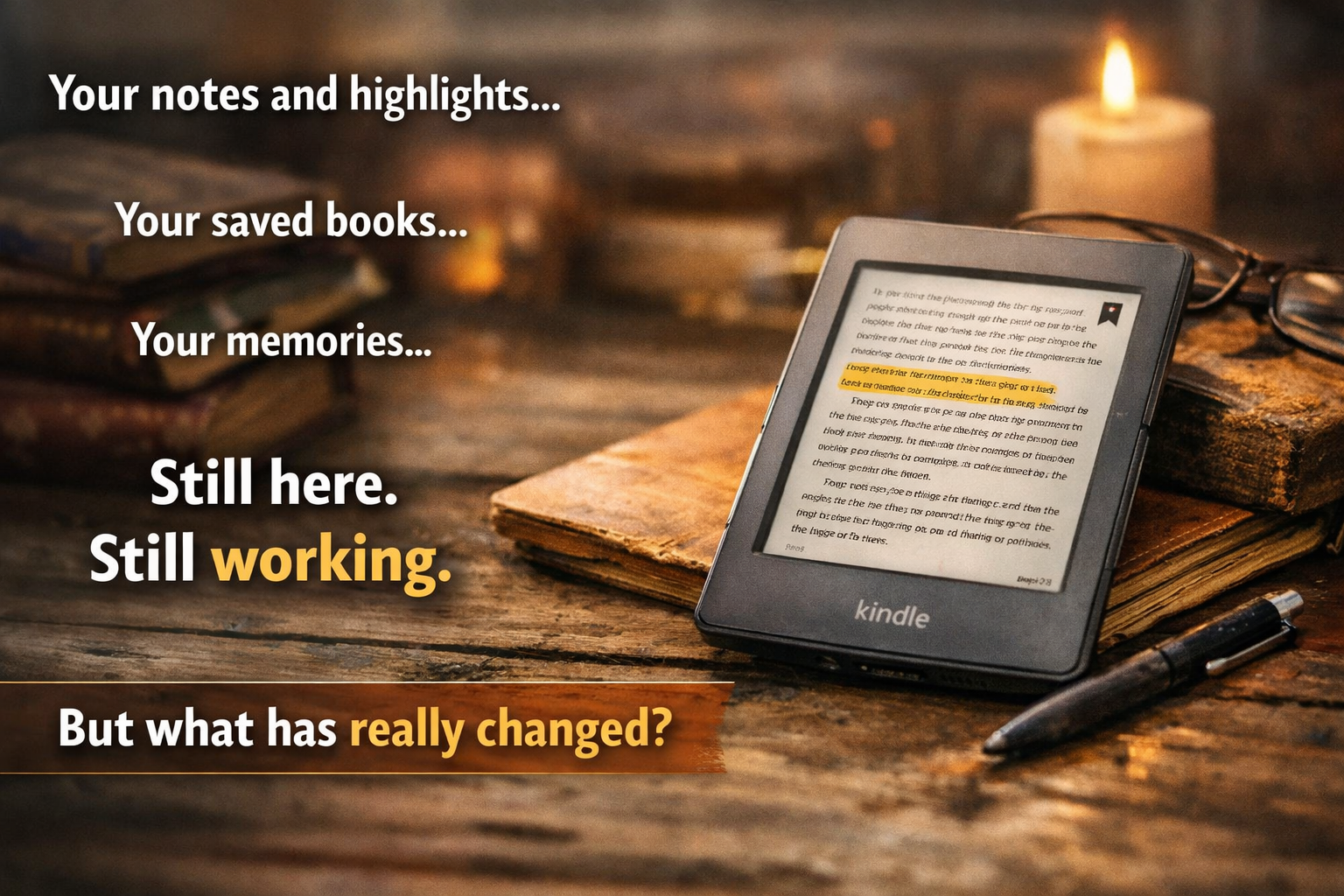
One day in May, just past the middle of the month, Amazon plans to shut down a doorway. Older gadgets, born back when digital reading felt strange and new, will lose their link to fresh tales. Machines made as far back as 2007 — yes, that long ago — won’t vanish from existence. They’ll keep humming along with what they’ve got inside. Yet reaching beyond those pages? That part ends now. A quiet stop replaces what once was open.
Chances are, that message landed in your inbox if you’ve got one of those Kindles. Friendly tone, maybe even a bit warm. A deal popped up for an upgrade — just there, sitting in the words. Your old purchases? Still waiting where they always were.
Yet unclear was how ownership shifts once the company ends support for your gadget. Ownership fades when backing vanishes. The moment help disappears, control slips away too. Without updates, what felt like yours changes shape. Support ending rewires possession completely. When assistance halts, belonging feels different. Your hold weakens after service shuts down. Once maintenance stops, ownership transforms quietly.
The Machine Functioned Beyond Expectations
Forget about standing out. The first Kindle just wanted to disappear into your hands. Its job? To stay quiet while you read. Don't shout for attention. Just work without fuss. Vanish between fingers as it belonged there.
Books were what mattered most to Jeff Bezos. Not fame, not news stories. His goal shaped the machine from the start. It had to stay out of sight — just a quiet way to move pages into hands.
Then came a twist. Folks took to it right away.
A Kindle never sparked joy like a new phone or a shiny gadget meant to impress. It earned affection more quietly, like trust built over time with something reliable. Think of how you feel about a pen that writes smoothly every single time. Or a pillow that always fits just right when you lie down. These things do what they promise without fuss. Their value shows up in daily use, not in flash. Complicated features? Unnecessary extras? Missing on purpose. The screen stays plain. Pages turn cleanly. No distractions sit between the reader and the book.
It happened with people I know. What started as a gadget slowly turned into routine. Instead of scrolling, they’d read on the train. Even trips turned into pages flipped. Nights ended with books glowing in their hands. Not because they suddenly loved reading more — but because stopping wasn’t needed anymore.
Sarah’s old Kindle dates back to 2010, yet she uses it every day. Wrapped in a leather cover that’s seen better days, it keeps ticking. Three weeks on a single charge — that’s how long the battery holds up. A couple of scuffs mark the screen; reading isn’t harder because of them. Traveling means packing just two things: her phone and that trusty e-reader. Perhaps she has gone through around four hundred books on the topic. Without even glancing, her hand finds where the power button sits.
What happened wasn’t what Amazon expected. That gadget did its job too thoroughly. Meant to stick around just a short while. Supposed to help users step into the Kindle world. After that, move on to pricier versions. Followed by fresh titles. Newer gadgets next. Round after round kept going.
Then everything changed. A few folks simply never left.
Back then, a few of those first versions just sat unused until 2021, once 3G vanished and killed their signal. Yet the ones built for WiFi? Still ran. Without fuss. Day after day. Outlasting guesses on how long they’d last.
A reader from 2011 told me, “I still use my Kindle Touch from the first generation. I don’t think anything could break it. The screen is perfect. The battery still charges. I’ve carried it everywhere for thirteen years.”
This should not occur with today’s gadgets. A reasonable lifetime is expected. Over time, sluggish performance becomes normal. Little annoyances build up — slowly steering you toward buying new ones.
Still wouldn’t budge. Speed held firm. Simplicity stuck around. Kept chasing one goal as it did back in 2007 — step aside so reading could happen.
Ownership With Strings Attached
On May 20th, this is how it plays out: almost no change at all. Your older Kindle still holds every book you bought. It keeps running just like before.
Yet now it’s impossible to
- Browse the Kindle Store from the device itself
- Grab titles straight through the platform instead
- Borrow books through Amazon Prime Reading
- Grab fresh tracks straight into storage
Start by visiting Amazon’s site using another gadget. Grab a book there, pick one you like. That purchase gets pushed to your older Kindle through wireless connection — same method used earlier. Only difference? This time around, nothing flows naturally. An added move shows up. Followed by yet another. Pretty soon, it stops feeling like reading. More like fixing something broken.
Here lies the quiet brilliance behind Amazon’s move. Not removing the gadget at all. Instead, a small downgrade here. A minor hassle there. Outdated? Just barely. Almost unnoticeable.
Software updates that quietly kill your device on purpose.
A thought sits quietly. Ownership shifts when control slips away. A switch flips once rules come from far-off desks. Power moves where updates carry terms no one reads. The machine stays yours until choices get made without you.
The Larger Issue Being Overlooked
This isn’t truly focused on Kindles.
What unfolds comes down to handing over the books inside our houses to firms we can’t truly steer.
Picture this. Each ebook purchased on your Kindle sits in a kind of borrowed space. Not quite yours, at least not like paperbacks are. What you hold is permission — granted by Amazon — to access their version. Their system keeps it running. Should they choose to shut down support for older models, that pass gets blocked without warning.
Over by the screen, those books haven’t moved an inch. Yet everything built around them — how they arrive without wires, link to shops, flow so smoothly — starts to fall apart.
That shift didn’t come out of nowhere — Kindle Store access vanished for those gadgets nearly four years ago. Yet this moment shifts something else entirely. Amazon now signals: your old device will fade away, not with a shove, but slowly, like a light dimming on its own.
Strange how obvious it becomes once you see it. Not against the rules, mind you. Never meant to attack anyone. Just rolls out like the weather. Shows up whenever a business figures out there’s no more profit left in an old product, and keeping it alive starts eating money instead of making it.
The Philosophy We Lost
Odd how it nags at you, this unease, despite having more than enough to cover the cost of another device. What sticks isn’t the price but something quieter underneath. Comfortable wallets don’t always cause discomfort. It sits there, uninvited, as a note played slightly off key. Not anger, not quite sadness — more like recognition. A mirror showing a choice that doesn’t sit right. Even when no one is watching, it matters. Because owning isn’t just spending. It’s what happens after you click yes.
Back then, folks figured tech would work harder the longer you had it. Stuff didn’t fade — instead, it grew more useful over time. Gains piled up quietly, like interest. Each upgrade built on what came before, without wiping anything out.
New versions of programs boosted how well your phone worked. Since these changes helped gadgets run more smoothly, firmware got upgrades too. Even when things aged, firms kept systems alive — doing what mattered most.
A decade ago, the first Kindle came into being. Built on trust, it treated users as allies rather than targets for updates.
Feels different these days. Updates arrive like warnings. Firms drop help the second profit fades. Not asking how to improve things anymore. Wondering instead when folks will trade up
That note from Amazon felt kind. Not every firm softens the blow when retiring gadgets. This one came with savings tucked inside. Few brands bother being this thoughtful when moving on.
Yet somehow it stung, like being let down. After all, those who owned Kindles hadn’t demanded more. Reading was their only act.
What Actually Changes
Here’s the thing — what you’re seeing isn’t quite what it seems, since news titles often twist reality a bit.
One day past mid-May, that aging Kindle still lights up fine. Every title already inside remains readable. New stories show up too — just pick them from Amazon’s site now, not the gadget store. Getting them takes extra clicks, yet everything runs. It stays useful.
A person who reads now and then might shrug it off. When you care about your gadget, though, it hits different — like a tiny break that could widen.
Bold moves at first. Direct store access disappears without warning. Security patches crawl in later, barely noticeable. Sideloaded content becomes a puzzle after that. Afterward comes word of a fresh system, one that won’t work with earlier gadgets. Soon after, support for online functions quietly fades away.
A long way down begins with one footfall after another. Still, every single move makes sense by itself. Even when taken alone, it feels right. Only later does the pattern show.
Yet when combined, these pieces form a picture of leaving.
The Real Loss
True loss? Not the ability to reach books.
Few realize how much they miss when tools vanish into the background. Hidden strength lies in what does not demand attention. What works quietly often leaves the deepest mark. Ease slips away once you notice it.
Right there, your phone tugs at you like it needs something. Not far off, the tablet nudges you toward extra tools it says are better. Each gadget hums along, trying to get a piece of your time. Even quiet things — like lights or speakers — send signals when you’re not looking.
A book’s quiet wish — just choose me, that’s all it asked. The Kindle lived for those moments.
Back then, simple felt like a rebellion. By 2013, hardly anyone bothered anymore.
In 2026, barely a trace remains.
Out of nowhere, Amazon pulled the plug on a Kindle model — not due to poor sales. Success did it in. People held onto their devices longer since they worked just fine. Upgrades became unnecessary.
What This Actually Costs
It’s not like I’m sad about the Kindle itself. Stuff wears out over time. Power stops lasting long. Glass breaks easily. Just how things go.
Mourning that idea now. The one where a solid build meant it just kept going. That promise feels broken. A machine put together right should last. Not anymore. Something shifted without warning. Trust in craftsmanship is fading. Each shutdown stings more than the last. Belief worn thin by design. Expected better.
What Kindle users miss isn’t just reading material. Buried beneath that loss is the quiet satisfaction of using a device built to do one thing without fuss.
Broken isn’t what kills your gadgets anymore. Worthless, on paper, is how they die — when firms tally up time spent fixing things and walk away instead.
One day, your phone won’t receive security fixes anymore. Then again, apps might vanish from your smart TV. Even so, certain functions in your connected car could just stop working. On top of that, your watch slowly loses its edge. Meanwhile, your fitness tracker connects to nothing — just silence where data once flowed.
Here stands the world we made. Each thing inside it connects as a point within another person’s setup. Once that person shuts down their side, our things stop working — no damage involved, just dependence on structure instead of standalone items.
Something shifted, though the device itself worked fine. Attention drifted elsewhere instead.
Things You Can Do
Folks with older Kindles made before 2013 won’t lose their existing books; those models keep working just fine for reading. A discount shows up if you’re eyeing newer versions — Amazon tosses one in, quietly helpful.
Yet choices exist beyond that one.
Sending ebooks to your Kindle works through Calibre, while older models, including the 2007 version, often run just fine. A jailbroken device opens doors — custom firmware becomes possible. File conversions happen easily enough when needed. Workarounds? They’re something you can piece together over time.
A few tweaks by skilled users might just let older Kindles run forever.
Few actually resist. A quick annoyance hits when they read it, then most just update anyway. That quiet surrender? Amazon banks on it.
The Machine That Needed Less
What truly hurts here? Not Amazon axing some gadget. What matters is watching them abandon an idea they once stood for.
Forever matters when a gadget works exactly right. That first Kindle believed in sticking to reading only. It skipped extra clutter without apology. Updates never forced their way in. Features stayed absent if they weren’t needed. Doing less became its quiet strength.
Just shy of dull. Which is exactly what they wanted.
One gadget said no when every other device said yes. Instead of games or videos, it offered only pages. Without cameras or microphones, it left you alone. Ads? Only if you picked the model that included them. Its whole purpose stayed narrow. A machine built for one thing: reading words off a screen.
Built only to handle books, it did that job well.
Today, gadgets meant to be basic come loaded with hidden strings. Support sticks around only if you follow their rules. What looks like ownership turns out to be borrowing under someone else’s shifting conditions.
The Kindle didn’t become obsolete because it stopped working.
Once useful, it faded when effort no longer brought results.
The Question Worth Considering
This tale unfolds simply: older Kindle devices will no longer reach the bookstore. A small shift, really. Within days, it slips into silence.
Yet here it sits, that quiet thought, pressing gently: what matters most when you pause long enough to notice?
One day, your phone works fine. Then it does not. A company says so. Updates vanish overnight. Features disappear without warning. Old gadgets get slower on purpose. People feel stuck replacing things they paid for. Trust fades slowly. Devices start feeling temporary. Ownership seems like a joke. Frustration builds quietly. The line blurs — tool versus trap.
Still works. Gets the job done. That matters more than you think.
Right this moment, tucked inside a drawer at somebody’s place, sits a 2011 Kindle with a flawless display. The power holds strong — weeks between charges. Loaded up with novels, its owner can’t bear to part with. It just keeps working.
A couple of weeks down the line, everything stays unchanged — identical screen, identical power cell, identical reading list. The gadget looks just like before, sitting there with its familiar face and well-worn pages nearby. Same setup, different day, not much else shifts around here.
Something will seem missing, though.
It never really catches our eye these days, how often it occurs.
Perhaps the most unsettling thing is that.