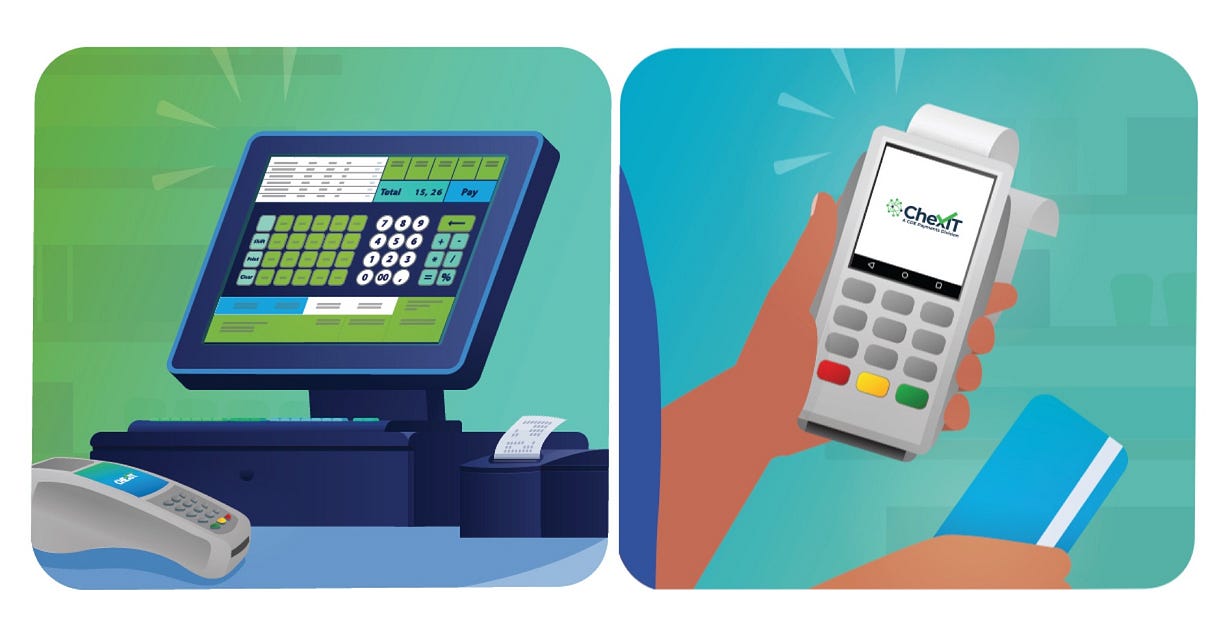
The Invisible Checkout: Why Physical Retail is the Next Frontier of FinTech”
 Afsha Nathani4 min read·1 hour ago
--
Introduction : People often think of the “FinTech revolution” as happening in boardrooms and cloud servers, but the most important new thing in finance is happening at the checkout counter.
Question: If we already live in a world where payments can be made instantly online, why does the checkout process still seem to be a problem for customers and brands?
The answer is that our payment systems have changed faster than our operational infrastructure, leaving retailers stuck between the need for speed and the need for ironclad security.
Problems :
Right now, retailers are stuck in a complicated “friction vs. security” trap. The main problems are:
Old Infrastructure: Many brick-and-mortar stores still use old backend systems that can’t handle modern, real-time digital payment data.
The Fraud-Security Paradox: As payments get faster, so does the complexity of AI-driven fraud. Standard security rules that don’t change often lead to the false rejection of real transactions, which hurts customer trust.
Operational Bottlenecks: The “instant-gratification” expectations of consumers in 2026 mean that manual verification processes take too long, which leads to long lines at checkout and lower throughput.
Data Fragmentation: Retailers often have trouble bringing together data from different payment channels, which makes it hard to get a complete picture of how customers spend their money.
Solutions :
New Technologies and Solutions To deal with these problems, the industry is moving toward Agentic Commerce and smarter infrastructure. Some important solutions are:
• Adaptive AI Systems: Instead of using static rules, these systems use machine learning models to look at spending patterns in real time and approve transactions based on behavioral intent instead of strict, old checks.
• Universal Commerce Protocols (UCP): Setting up standard protocols that let different digital wallets, banking apps, and point-of-sale terminals talk to each other without any problems.
• Tokenization as a Security Standard: Moving to full-scale tokenization, which replaces sensitive personal financial data with secure digital tokens. This makes sure that even if the system is hacked, real financial information stays safe.
• Integrated Analytics Dashboards: Using advanced SQL and Python models to bring together transaction data so that retailers can spot patterns of risk before they turn into failure.
Examples :
Invisible Payments: Stores like Amazon Go use computer vision to process payments as you walk out, making the checkout process a smooth background task instead of a bottleneck.
Real-Time Fraud Defense: Processors like Stripe use AI “Velocity Checks” to instantly flag a card that was used in two different countries within an hour. This sends a verification alert before the money leaves your account.
• Dynamic Risk Scoring: Buy Now, Pay Later (BNPL) services like Klarna don’t just look at static credit scores. They use AI to look at the details of a transaction, like the buyer’s history, to approve loans in milliseconds.
Klarna doesn’t depend on just one “AI.” They use two different methods: GPT-4-class LLMs to give customer support that is conversational and aware of the context, and their own machine learning models to look at thousands of risk factors in real time, which lets them make safe, almost instant financial decisions.
AI-powered fraud detection dashboard illustrating real-time transaction monitoring and alerts in a fintech environment.
What the Future Holds”
The data confirms this shift is not just hype. Recent industry analysis shows that AI-referred traffic now converts 42% more effectively than traditional sources. However, we are still facing an expectation gap. While 65% of shoppers want the speed of one-click payments, many retailers have been slow to modernize. Only 45% are prioritizing frictionless systems. This gap is where the next generation of data-savvy analysts will be needed to build, bridge, and improve the retail backend.
Consumer & Retailer Feedback :
The shift to these high-tech systems is getting mixed reviews. Many consumers like the quickness of “tap-to-pay” and biometric checkouts, often calling them a welcome relief. However, there is a constant worry about data transparency; customers are increasingly asking, “What is this AI actually doing with my purchase data?”
On the retailer side, the feedback is also mixed. Staff and management say that while these systems shorten checkout lines, they bring a new challenge: technical troubleshooting. The need for digital infrastructure means that if the network has issues, the whole store can come to a stop. Retailers are clear about what they want: they seek innovation, but they need reliability to support it.
Conclusion:
The retail environment is no longer just a storefront. It has become a fast-paced laboratory for financial technology. As we have seen, the connection between Agentic Commerce and real-time data processing is quickly closing the gap between what customers want and the actual transaction. Although challenges such as operational bottlenecks and the urgent need for data transparency still exist, they create real opportunities for those willing to look deeper. My shift from retail operations to data analytics comes from this understanding: the future of finance is not just in the cloud; it is being shaped on the shop floor. By learning SQL and Python to bridge this gap, we can work towards a future where payment systems are not only safer and more efficient but also more human.
References.
- Adobe Digital Insights (2026): The Impact of AI-Driven Traffic on Digital Conversion Rates.
- • BCG (2026): Global FinTech Profitability Report: The Operational Edge of AI-First Infrastructure.
- • J.P. Morgan Payments (2026): Merchant vs. Consumer Expectations: Navigating the Frictionless Payment Gap.
- • Klarna AI Case Study (2026): Integrating GPT-4-class LLMs into Financial Customer Support Operations.