 WASIU ADEWUYI3 min read·Just now
--
The Illusion: Yield Looks Effortless🤑🤗
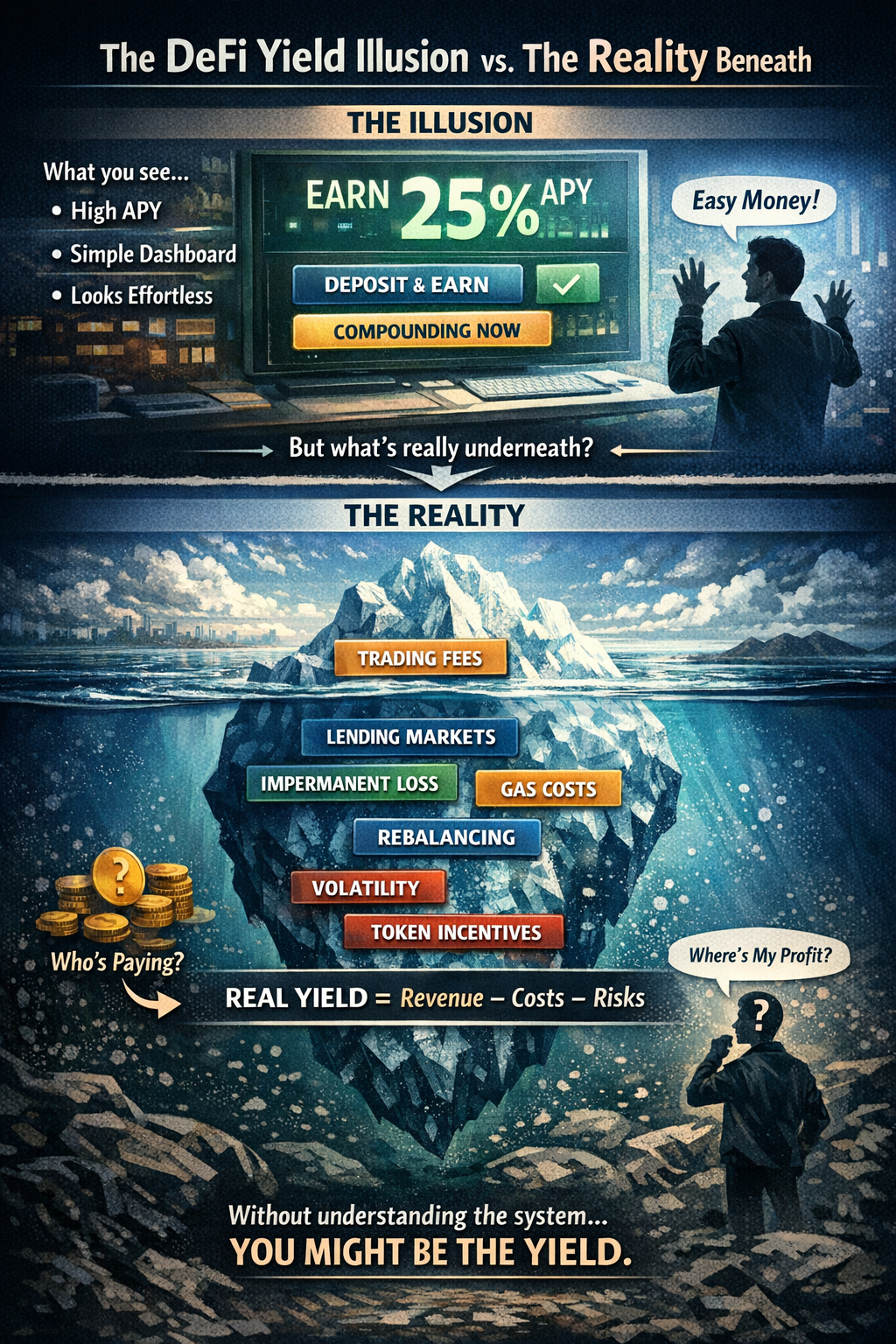
DeFi today feels deceptively simple.
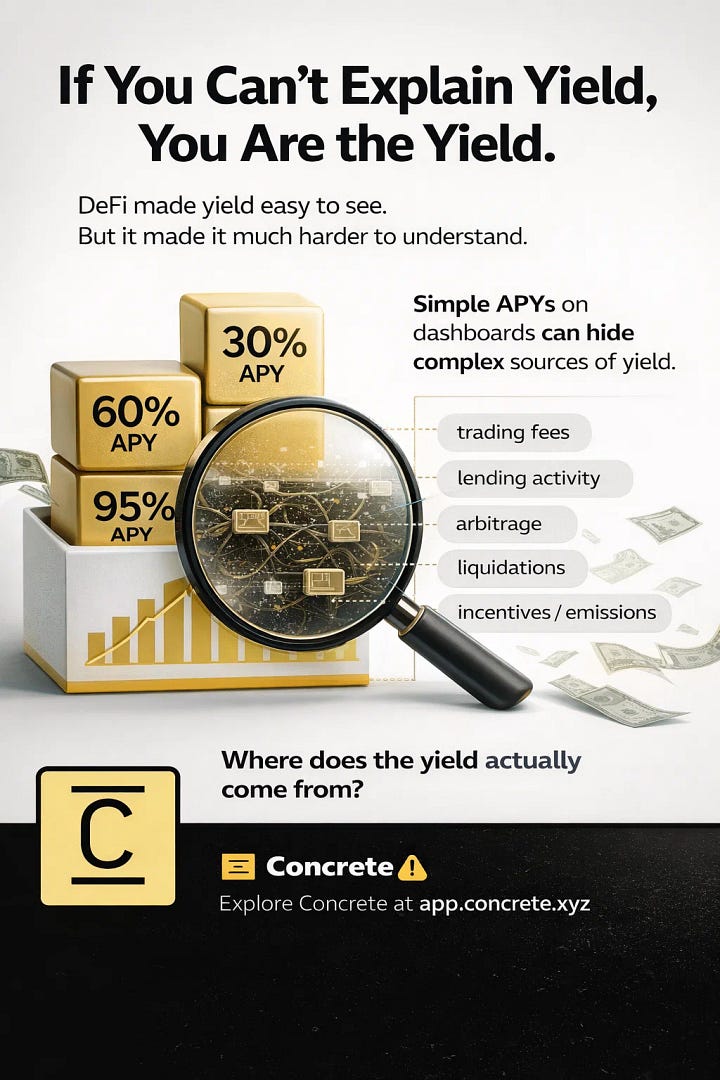
You open a dashboard. You see 20%, 50%, sometimes 100%+ APY. The flow is clean: deposit → earn → watch it compound in real time.
There’s almost no friction:
No explanation of strategy
No breakdown of risks
No clarity on where returns originate
So the mental model becomes:
“This protocol just generates yield.”But that’s the illusion.Yield looks simple on the surface.
Underneath, it’s a layered system of trades, incentives, risks, and costs.
The Gap: Displayed Yield vs Real Yield
That APY number? It’s rarely what you actually earn.
Here’s why:
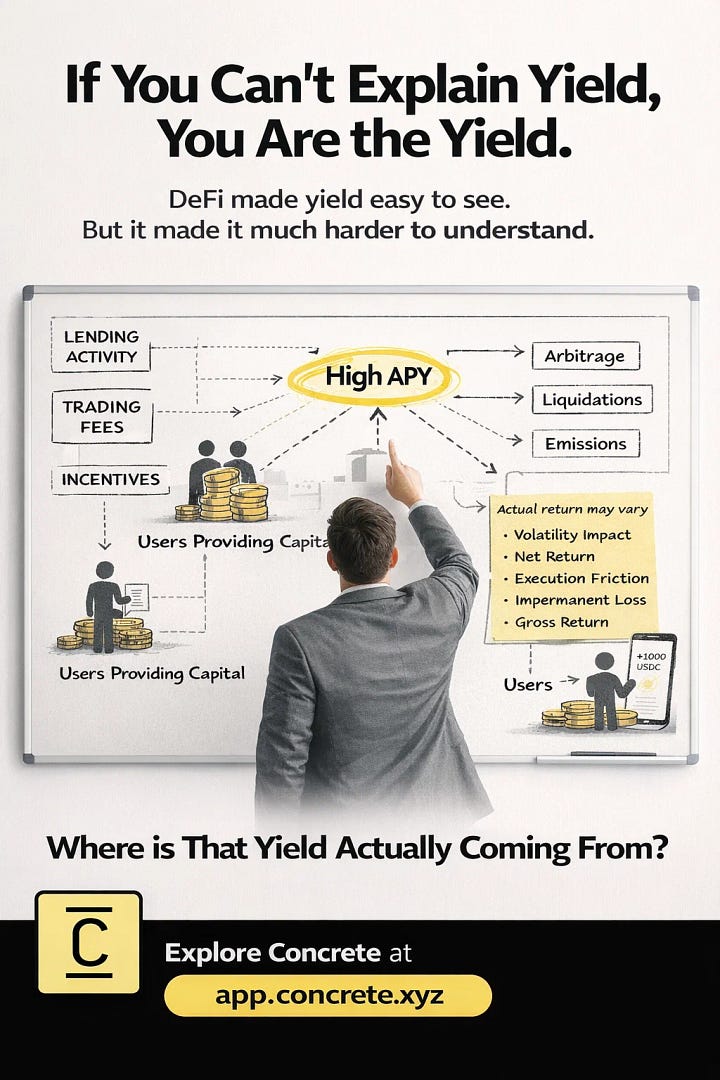
• Gross vs Net Return
What you see is usually gross yield:
-Before fees
-Before gas costs
-Before slippage
-Your net return is what’s left after all that friction.
• Rebalancing Costs
Strategies often rebalance positions:
Moving between pools
Adjusting exposure
Compounding rewards
Each action incurs:
Gas fees
Price impact
These silently eat into returns.Execution Friction
Displayed APY assumes perfect execution:
Instant compounding
No delays
Ideal pricing
Reality:
Transactions lag
Markets move
You get worse prices
• Volatility Impact
High APY often comes with volatile assets.
Example:
You earn 60% APY
But the token drops 40%
Your real outcome is very different from the dashboard.
👉 Result:
A “high APY” can compress dramatically once real-world factors are applied.
3. Where Yield Actually Comes From
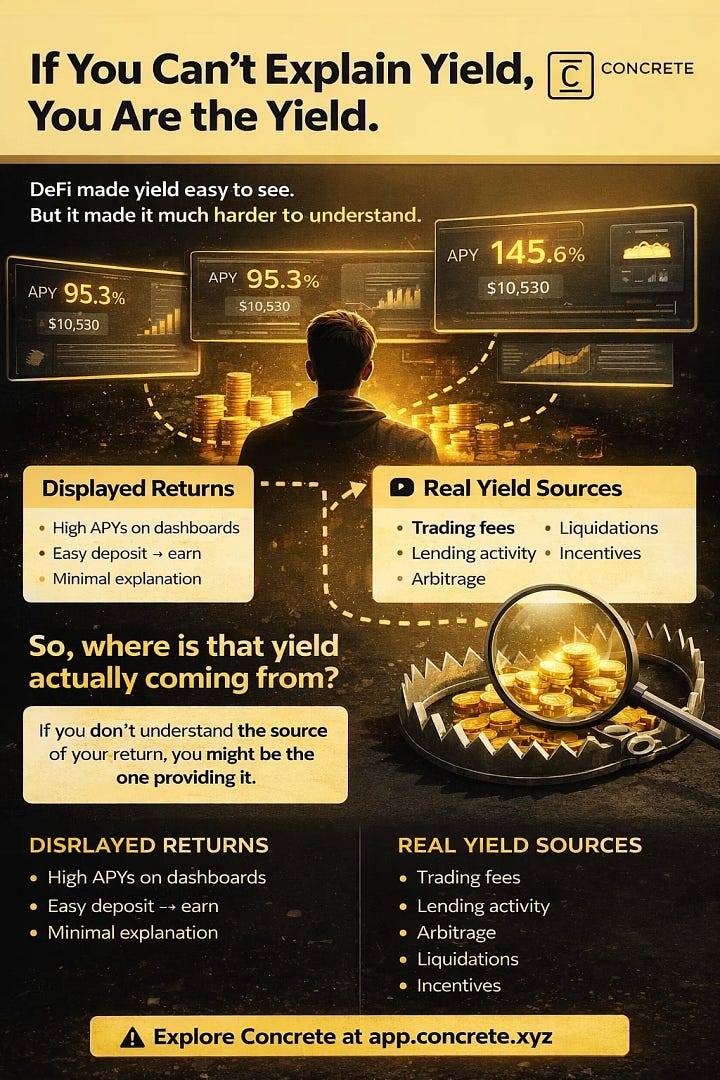
Yield is not magic. It always has a source.
Here are the real engines:
• Trading Fees
In AMMs (like Uniswap):
Traders pay fees
Liquidity providers earn a share
👉 Your yield = someone else’s trading costLending Activity
On platforms like Aave:
Borrowers pay interest
Lenders earn it
👉 Your yield = borrower demand for capital
• Arbitrage & Market Inefficiency
Bots exploit price differences across markets.
Protocols may:
Capture part of this value
Distribute it to users
👉 Your yield = inefficiency being monetizedLiquidity Provision
You provide assets so markets can function.
You earn:
Fees
But take on:
Impermanent loss
Price exposure
👉 Your yield = compensation for risk
• Incentives / Token Emissions
Protocols often subsidize yield:
Paying rewards in native tokens
👉 Your yield = inflation funded by the protocol itself
4. Hidden Value Transfer
Here’s the uncomfortable truth:
If you don’t understand the system, you may be the one subsidizing it.
This shows up in subtle ways:
• Providing Liquidity Without Understanding Risk
You earn fees…
But lose more through impermanent loss.
• Farming Incentives While Absorbing Downside
You collect rewards…
But the token value declines faster than your yield.Participating Without Modelling Outcomes
You follow APY…
But ignore:
Market conditions
Cost structure
Risk exposure
👉 In many cases:
Your “yield” is someone else extracting value—from you.
5. Why Outcomes Differ
Two users enter the same protocol.
They get completely different results.
Why?
• Retail Users
Chase highest APY
React to dashboards
Ignore structure
• Advanced Participants
Analyze yield sources
Factor in costs
Understand risk exposure
• Institutions
Model scenarios
Stress-test assumptions
Optimize execution
👉 Same system. Different outcomes.
The difference is understanding.
6. The Shift: From Yield Chasing to Yield Engineering
DeFi is evolving.Old mindset:
“Where is the highest APY?”
New mindset:
“What is the structure of this yield?”
Yield Engineering Means:
Modelling expected returns
Managing downside risk
Optimizing over time
Focusing on net, not headline yield
👉 It’s the difference between:
Gambling on returns
vs
Designing them
7. From Guessing to Structure: Vault Infrastructure
This is where vault systems come in.
Protocols like Yearn Finance introduced this idea:
What Vaults Do:
Automatically allocate capital
Run predefined strategies
Rebalance positions
Compound rewards efficientlyWhy It Matters:
They reduce:
Manual errors
Emotional decisions
Inefficient execution
👉 Instead of guessing: You gain structured exposure to yield strategies.
8. The Core Insight
At its core:
Yield is not just a number.
It is:
Revenue
− Costs
− Risk adjustments
If you understand that:
You stop chasing APY
You start questioning sources
You begin modelling outcomes
And that changes everything about how you approach DeFi.