The High-Risk Integrity Gap: Why Transparency is the New Competitive Advantage in 2026
--
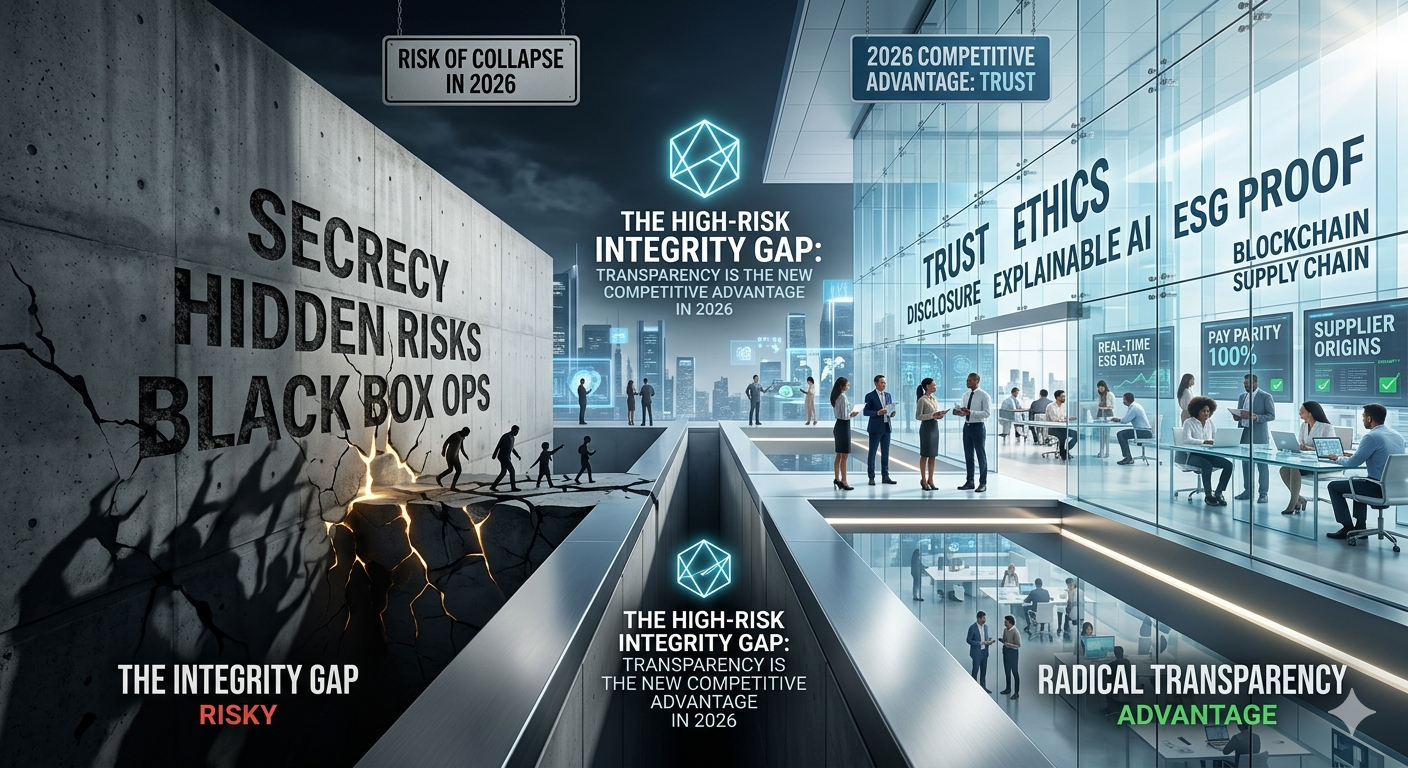
The corporate landscape of 2026 has officially moved past the era of “image management” and entered the age of radical accountability. For decades, businesses operated on a “need-to-know” basis, shielding internal processes, supply chain intricacies, and algorithmic logic behind a veil of corporate privacy. However, as we cross the midpoint of the decade, a widening chasm has emerged between companies that perform integrity and those that embody it. This “Integrity Gap” is no longer just a PR risk; it is a fundamental threat to market share, talent acquisition, and long-term viability. In a world where information is instantaneous and skepticism is the default setting for consumers, transparency has transformed from a moral “nice-to-have” into the ultimate competitive advantage.
The Erosion of the “Black Box” Business Model
Historically, the “Black Box” model allowed companies to focus solely on the end product while keeping the “how” and “why” obscured. In 2026, this model is failing. A hyper-connected global audience, empowered by decentralized verification tools and real-time data leaks, has dismantled the walls of the corporate boardroom. Today’s consumers — led by Gen Z and Alpha — don’t just buy what you sell; they buy into your ethics. When a company fails to disclose its carbon footprint accurately or hides the bias inherent in its AI-driven customer service, the backlash is swifter and more damaging than ever before. The secrecy that once protected proprietary secrets now signals a lack of integrity, driving customers toward competitors who open their books and their hearts.
The Rise of the Radical Disclosure Economy
We are now firmly entrenched in the Radical Disclosure Economy. In this environment, transparency acts as a trust-accelerator. In 2026, leading firms are proactively sharing data that was once considered sensitive: real-time pay gap metrics, granular supply chain origins via blockchain tracking, and even the “failure logs” of their R&D departments. This shift isn’t about being perfect; it’s about being honest. When a brand admits to a mistake before an investigative journalist finds it, they retain the narrative. By closing the integrity gap through proactive disclosure, these companies build a “Trust Buffer” that protects them during inevitable market fluctuations or operational hiccups.
Algorithmic Ethics: The New Frontier of Trust
As AI systems now manage everything from hiring loops to credit approvals, the “Transparency Focus” has shifted toward algorithmic accountability. The integrity gap is often widest here, where complex code dictates human outcomes. In 2026, a competitive edge is granted to companies that provide “Explainable AI” (XAI). Customers and regulators are no longer satisfied with “the computer said so.” Businesses that can clearly articulate the ethical guardrails, data sources, and logic behind their automated decisions are winning the loyalty of a tech-literate public. Transparency in code is becoming as vital as transparency in financial reporting.
The Internal Mirror: Talent and Culture
The integrity gap isn’t just an outward-facing problem; it is a recruitment crisis. The talent of 2026 is looking for “Psychological Safety,” which is rooted in organizational honesty. Employees who feel their leadership is hiding the truth about the company’s financial health, DEI progress, or environmental impact are the first to “quiet quit” or jump ship to a more transparent rival. Internal transparency — opening up the decision-making process to all levels of the hierarchy — fosters a sense of ownership. When workers see that the company’s public values align with its private actions, productivity increases and turnover plummets. In 2026, your culture is your brand, and you cannot have a healthy culture without a foundation of truth.
Supply Chain as a Glass House
Gone are the days when a company could claim ignorance about the labor practices of a third-tier supplier. In 2026, the supply chain is a glass house. Advanced satellite monitoring and IoT-enabled logistics mean that environmental degradation or human rights abuses are visible to anyone with a smartphone. Companies bridging the integrity gap are those investing in “Deep-Tier Transparency.” They treat their suppliers as partners in ethics, ensuring that every link in the chain adheres to the same standards. This level of oversight is expensive, but the cost of a “supply chain scandal” in 2026 — inclusive of viral boycotts and ESG divestment — is infinitely higher.
From Greenwashing to Green-Proving
The term “Greenwashing” has become a legal liability in 2026. Regulatory bodies have tightened the screws, requiring companies to provide verifiable evidence for every environmental claim. The competitive advantage now lies in “Green-Proving.” This means moving beyond vague promises of “net-zero by 2040” to quarterly, data-backed reports on actual emissions reductions. Integrity in the sustainability space is measured in megatonnes and liters, not in glossy brochures. Brands that embrace this rigor find themselves favored by the massive “Impact Investing” funds that now dominate the global markets.
The Cost of Silence: Why the Gap is High-Risk
Silence in 2026 is interpreted as complicity or guilt. When a social or ethical crisis hits, the window for a “measured response” has shrunk from days to minutes. Companies that haven’t practiced transparency as a muscle find themselves paralyzed, widening the integrity gap in real-time. This paralysis results in a “Trust Tax” — a higher cost of capital, lower customer lifetime value, and a tarnished reputation that can take decades to buff out. Conversely, transparent companies pay a “Trust Dividend,” enjoying faster recovery times and higher brand advocacy even when things go wrong.
Leadership in the Age of Authenticity
Closing the integrity gap starts at the top. The “C-Suite” of 2026 looks different; the most successful leaders are those who trade the “infallible executive” persona for one of “authentic vulnerability.” They engage in direct dialogue with stakeholders, admit when they don’t have the answers, and prioritize long-term ethical standing over short-term quarterly gains. This leadership style filters down through the organization, creating a standard where honesty is rewarded and obfuscation is penalized. In 2026, the most powerful thing a CEO can say is, “We missed the mark, and here is exactly how we are going to fix it.”
Conclusion: The Future belongs to the Fair
As we look toward the end of the decade, the line between “doing well” and “doing good” has blurred into a single path. The High-Risk Integrity Gap is the ultimate filter of the modern economy; it will weed out the opportunistic and the opaque, leaving behind a marketplace defined by clarity and conscience. Transparency is no longer a defensive strategy to avoid scandals; it is an offensive strategy to win the hearts, minds, and wallets of a more conscious global citizenry. In 2026, the most profitable thing a company can be is honest.
#Transparency2026 #CorporateEthics #TrustEconomy #RadicalIntegrity #BusinessTrends #ESG #AIethics #Leadership #Sustainability #FutureOfWork

![[D’s Market #188] Don’t Rewrite the Rules After Entry](https://cdn-images-1.medium.com/max/1672/1*NNMl-RRQx3L_iJLc-DX2Eg.png)