The Hidden Math of Global Trade: Who Pays for the Certificates?
 Ifeanyi Francis3 min read·Just now
--
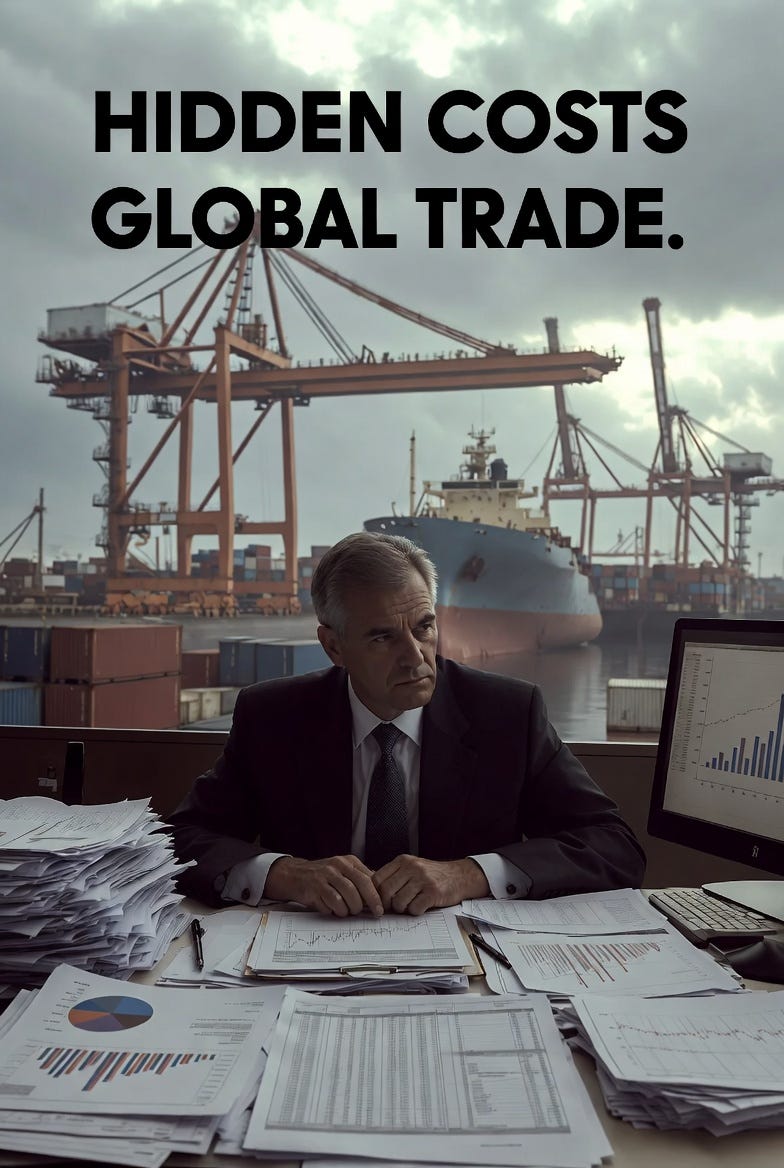
In the final stages of a commodity deal — whether it’s crude oil or sugar — the question often arises: “I’ve calculated my discount and my commission, but who pays for the Certificate of Origin (COO), the PSI inspections, and the Bill of Lading fees?”
If you are calculating your profit as a fixed, rigid number, you are setting yourself up for a loss. In international trade, you must account for the “shifting sands” of expenses using Tolerance Factors and Delivery Modes.
1. The Delivery Mode Dictates the Cost
Before you ask who pays for a document, you must look at your Incoterms.
If you are trading FOB (Free On Board), the rules explicitly state who is responsible for which costs. Generally, the price of the goods includes all costs required to get the product delivered to that specific mode.
- The Supplier’s Price: Usually incorporates the cost of the goods plus the basic documentation required to move them.
- The Intermediary’s Price: Must incorporate the “Advising Fees” from your bank, faxes, phone calls, and the costs of any extra inspections you’ve promised the buyer.
2. Using the “Tolerance Factor” as a Shield
One of the most powerful tools in your banking arsenal is the DLC Tolerance Level (usually +/- 5%). The price of commodities and the cost of logistics are rarely static. By including a 5% tolerance in your Letter of Credit (under UCP 600 rules), you allow the final invoice value to move forward or backward to cover minor debits like certificate fees or currency fluctuations.
If you lose 20 cents per MT on an unexpected fee, the tolerance factor allows you to recover it on the final invoice without breaching the terms of the credit.
3. Separation of the Deals: Supplier vs. Buyer
To be a successful Principal, you must view the transaction as two separate financial events.
- The Supplier’s Invoice to You: Let’s say the final cost is $100.77 per barrel, including the COO debit.
- Your Invoice to the Buyer: Your sell price was $104.00. However, every action is chargeable. If the buyer requires extra inspections or specialized documents, the final invoice value to the buyer might actually be $104.77.
The buyer isn’t just paying for “the oil”; they are paying for the delivered value of the oil. The Letter of Credit must be flexible enough to handle these individual line items.
4. The 10% Support Zone
As an intermediary, you cannot set your gains as a “fixed” number. You must create a “Support Zone.” If your supplier sells to you at $100 and you add a $5 margin, you have a 5% buffer. When you add the 5% banking tolerance, you now have a 10% support zone to handle:
- Currency fluctuations
- Bank transaction fees
- Shared commissions for intermediaries
- Late Delivery Discounts (LDD)
That “Fixed $4.00 profit” you calculated is unstable. It only becomes real once the final collection is applied and all debits are settled.
5. Stop Asking “What If” and Start Studying Procedures
Many traders get lost in “formulations” — the math of the deal. But math can be twisted forever. Instead, study Banking Procedures.
- Apply for a small business loan online and look at the “estimated” repayment vs. the “actual” repayment once fees are added. International trade works the same way. The quoted benchmark is the starting point; the final invoice is the reality.
Summary: Everything is Chargeable
In global trade, there is no such thing as a “free” document. Every single action — from a phone call between banks to a quality inspection — is payable by someone.
- If you want a safe deal, ensure your contract mirrors the expenses.
- Use Incoterms to define the responsibility.
- Use UCP 600 Tolerance to protect the profit.
By the time the ship sails, your skill in managing these “trivial” payments will be the difference between a successful trade and a financial headache.