Have you ever looked at a big apartment building, a luxury home, or farmland and wished you could own a small part of it?
Many people think this way, but the challenge is always the same. It takes a lot of money to get started. The process is slow. There is heavy paperwork. And access is limited to only a few people.
This is the exact problem real world asset tokenization development and platforms are solving today.
What is exciting is that this is not a future idea anymore. It is already happening. Big financial companies, startups, and everyday investors are all paying attention because it is changing how ownership works.
In this article, we will explain it in a simple way. What it is, how it works, and why interest is growing so quickly.
What is Real World Tokenization?
Real world asset tokenization simply means turning physical assets into digital shares.
Think of a house, land, or building. Instead of one person owning it, the ownership is split into many small parts. Each part represents a share of that asset.
These digital shares are called tokens.
So instead of needing a large amount of money to invest, people can buy a small share and still become part owners.
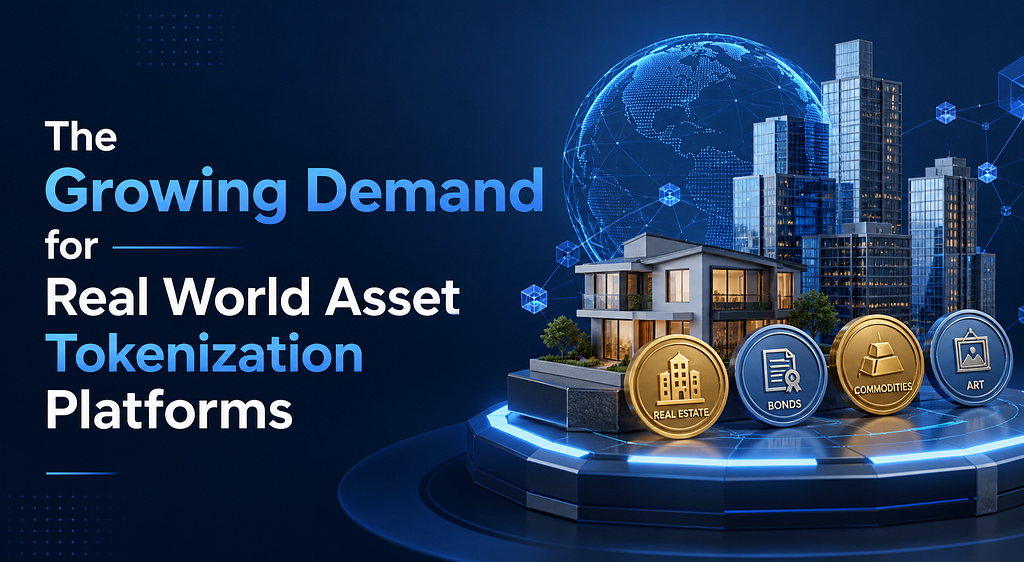
The asset can be anything valuable like property, gold, farmland, bonds, or even artwork.
It makes ownership more flexible and easier for more people to access.
How Asset Tokenization Works?
The process is quite simple to understand.
→ First, a real world asset is selected like a property or a piece of land. Then its value is checked and verified.
→ Next, digital tokens are created to represent ownership of that asset and stored on the blockchain.
→ After that, these tokens are offered to people who want to invest.
→ When someone buys a token, they own a small part of that asset.
→ All ownership records are stored digitally, which makes everything clear and easy to track.
→ If someone wants to sell their share later, they can do it more quickly compared to traditional methods.
→ It works like shared ownership, but in a modern and digital way.
Why Demand for RWA Tokenization Platforms Rising?
This is the really exciting part. The demand for tokenization platforms is not coming from just one group of people. It is coming from many directions at the same time.
The biggest banks in the world are getting in
BlackRock, one of the largest investment firms in the world, launched a tokenized fund and raised five hundred million dollars in just a few weeks.
Franklin Templeton has already put US government bonds on a blockchain. JPMorgan now processes billions of dollars in tokenized transactions every day.
When companies this large start moving in a direction, it usually means something important is happening.
A huge market is being predicted
Experts expect the tokenized asset market to reach around ten trillion dollars by 2030. This estimate comes from Boston Consulting Group, one of the most trusted research firms in global finance.
This shows that tokenization is not a small trend. It is becoming a major part of the future financial system.
Regular people are finally getting access
Earlier, investing in high value assets like commercial real estate required huge capital. Most people were completely excluded.
Now things are changing. With tokenization, even someone with a small amount of money can own a fraction of a property or other valuable asset and earn returns from it.
This shift is opening doors for everyday investors across countries like India, Nigeria, Brazil, and many more.
It is much faster than the old system
Buying and selling traditional assets like property or bonds usually takes days or even weeks. There are many steps involved like paperwork, approvals, and intermediaries.
With tokenized assets, the same process can happen in seconds. Everything is handled digitally and automatically. This removes delays and makes the system much smoother.
The decentralized finance world needed this
Decentralized finance, often called DeFi, is a system that works without traditional banks. However, most DeFi assets are cryptocurrencies, which can be very unstable in value.
Real world asset tokenization brings something different. It connects DeFi with real assets like gold, bonds, and real estate. These are more stable and reliable.
This combination is creating strong demand because it gives both stability and flexibility in one system.
Key Benefits of Real World Asset Tokenization Platforms
Lower Entry Cost
→ Investors can start with small amounts instead of needing large capital for high value assets like real estate or bonds
Fractional Ownership
→ Expensive assets are divided into smaller shares so more people can own a part of the same asset
Better Liquidity
→ Buying and selling parts of assets becomes easier compared to traditional investment methods
Faster Transactions
→ Digital systems reduce delays and remove many manual steps involved in traditional processes
Greater Transparency
→ Ownership records are clearly tracked, which builds trust and reduces confusion
Global Access
→ People from different countries can invest in the same assets without location barriers
Reduced Costs
→ Fewer intermediaries and less paperwork help reduce overall investment costs
Overall Impact
→ These benefits make investing more open, flexible, and efficient for everyday investors while improving the traditional financial system
Real-World Use Cases Powering Adoption
This is not something for the future. It is already happening in real life today.
🏢 Property and real estate
Big buildings and land are being split into small digital parts. This means you do not need a lot of money to invest. Even small investors can own a small share of property.
📈 Government bonds
Government bonds are now moving into digital systems. This makes them easier to buy and follow. Everything becomes more clear and simple for investors.
💼 Business funding
Small businesses are now raising money from people around the world. Investors can put in small amounts and still be part of the business and its growth.
🌿 Carbon credits
Environmental projects are also going digital. This helps track green projects better and makes sure everything is real and not fake through carbon credit trading platform development.
All these examples show one simple thing. Real world asset tokenization is already in use today. It is helping people invest in a way that is easier, more open, and more flexible than before.
Conclusion
Real world asset tokenization is not just a trend. It is already changing how people invest and own assets. Big companies are using it, and more everyday investors are getting involved too. The market is growing fast, and the whole system is becoming easier to use.
What we are seeing now is only the beginning. It is slowly changing how ownership works in property, finance, and other valuable things around the world.
So if someone starts building or working on platforms like this, there is a strong opportunity ahead. As more real world assets move into digital form, demand for these systems is likely to keep growing. It is still early, which means there is a good chance to bring in new ideas, build better solutions, and grow over time in a meaningful way.
The Growing Demand for Real World Asset Tokenization Platforms was originally published in Coinmonks on Medium, where people are continuing the conversation by highlighting and responding to this story.