--
The global economy feels a bit… stuck right now.
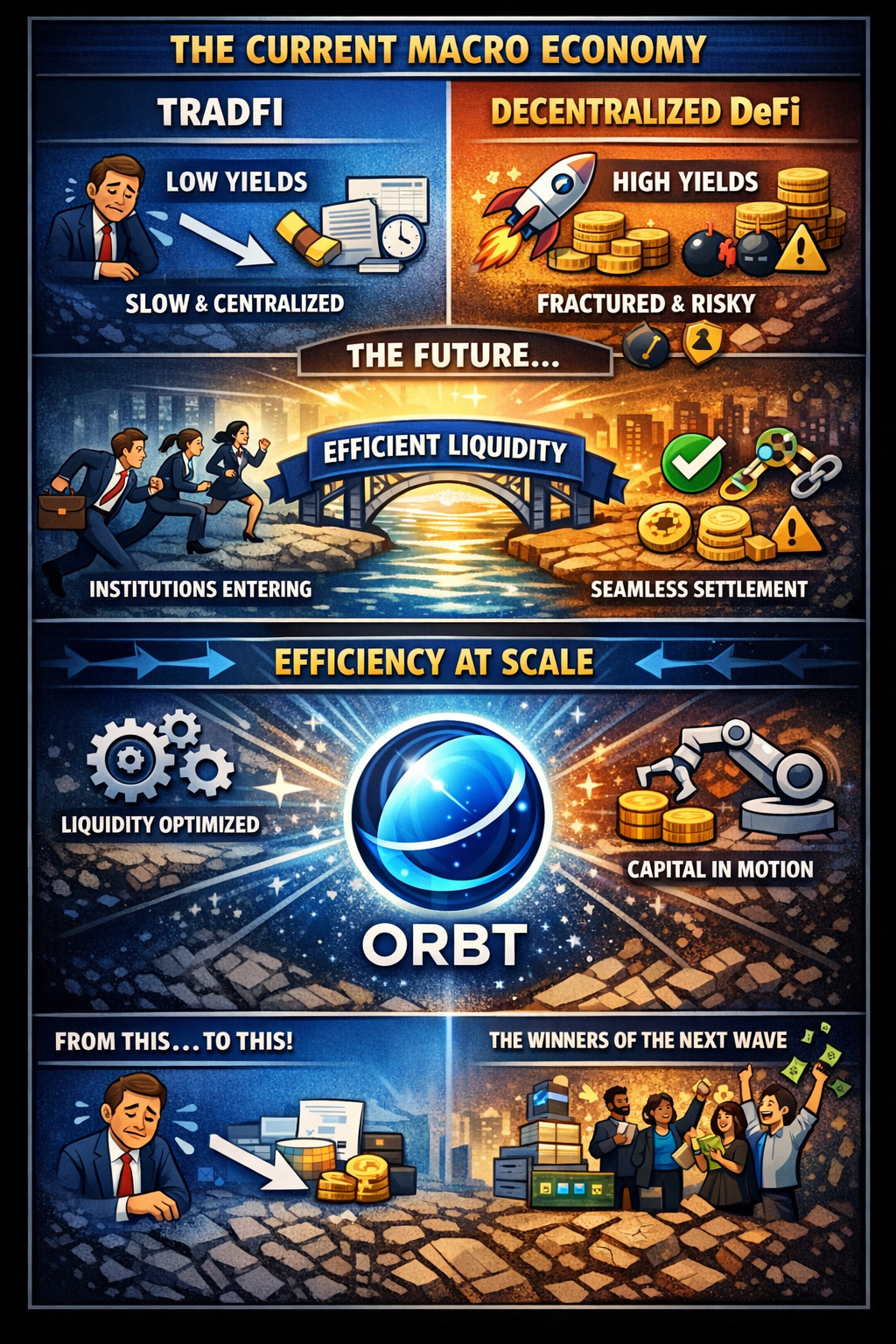
Interest rates are high in some places, but real returns (after inflation) are still not exciting. Savings don’t grow much, and traditional finance (TradFi) moves slowly, with layers of control in between you and your money.
That’s where DeFi starts to stand out.
THE CURRENT MACRO SITUATION (SIMPLE VIEW)
In today’s world:
✅ banks control how money moves
✅ yields are often low or capped
✅ access depends on location, status, or intermediaries
So even though the system is stable, it’s not always efficient or fair.
WHERE DeFi COMES IN
DeFi flips that model.
Instead of going through banks or institutions: 👉 you interact directly with protocols
✅ No middlemen.
✅ No waiting days for settlement.
✅ No gatekeeping.
And because of that:
✅ yields can be higher
✅ markets move faster
✅ access is global
BUT IT’S NOT PERFECT
DeFi also comes with risks:
✅ smart contract bugs
✅ volatile markets
✅ fragmented liquidity
✅ complex user experience
So while it’s powerful, it’s still evolving.
THE BIG SHIFT HAPPENING
DeFi is slowly becoming:
✅ easier to use
✅ more automated
✅ more connected across chains
Users no longer want to deal with technical steps.
They just want results: 👉 “Get me the best outcome.”
This is why intent-based systems are growing.
WHAT THIS MEANS FOR THE FUTURE
Over the next few years:
✅ More capital will move on-chain
✅ Institutions will enter (for yield + efficiency)
✅ Cross-chain activity will explode
✅ Infrastructure will matter more than apps
DeFi won’t replace TradFi overnight…
But it will complement and challenge it.
WHERE ORBT FITS IN
As all this grows, one problem becomes very clear:
👉 DeFi needs better liquidity coordination.
Right now:
✅ capital is scattered
✅ some places have too much
✅ others don’t have enough
This leads to:
✅ bad execution
✅ failed transactions
✅ inefficiency
ORBT’s ROLE
ORBT is built to solve that.
It acts as a unified liquidity layer, meaning:
✅ it gathers capital
✅ organizes it
✅ deploys it where it’s needed
So instead of liquidity being stuck in silos…
👉 it becomes usable across the entire system.
WHY ORBT COULD GROW STRONGLY
As DeFi adoption increases:
✅ more trades happen
✅ more assets move across chains
✅ more liquidity is needed at settlement
If ORBT becomes a key provider of that liquidity:
👉 it benefits from the activity of the entire ecosystem
Not just one app or one trend.
THE BIGGER PICTURE
TradFi = controlled, stable, but slow
DeFi = open, fast, but still maturing
The future will likely be a mix of both.
But in that future:
👉 infrastructure layers that make everything work smoothly
will capture the most value.
Final Thought
Most people focus on prices and trends.
But the real shift is deeper:
From who controls money
to how efficiently it moves
And protocols like ORBT are positioning themselves right at the center of that shift.