The Crypto Illusion: Why the U.S. Finally Opened the Gate for Stablecoins
 The Techtonic5 min read·Just now
--
For years, Washington treated the crypto market like a crime scene. Fraud, money laundering, financial chaos — the assumption was that tighter restrictions were only a matter of time.
Then something shifted.
The U.S. government didn’t crack down. It quietly started opening a door — not for all of crypto, but for one specific category: stablecoins. Digital assets pegged 1:1 to the U.S. dollar. The message from Washington wasn’t “we love crypto.” It was something far more calculated: “Follow our rules, and we’ll let you in.”
The reason has nothing to do with enthusiasm for blockchain. It has everything to do with the dollar hiding inside the technology.
“We have moved past paper bills and bank ledgers. We are now entering the era of the Dollar on the Blockchain — the next evolution of currency.”
Not Crypto. A Digital Dollar
To understand stablecoins, stop thinking of them as cryptocurrency. Think of them as a strategic American asset.
Here’s how it works. You hand $1 to an issuer. They park that cash in safe assets — typically U.S. short-term Treasury bills. In return, you receive a digital receipt worth exactly $1, which can move freely across the internet. That’s USDT. That’s USDC. The details vary slightly between issuers, but the structure is the same: a token backed by real-world dollar assets.
It’s not speculation. It’s a digitized dollar.
The Old System vs. The New
Moving dollars across borders at the speed of the internet
The real innovation isn’t the token itself. It’s what the token can do that a traditional bank transfer cannot.
International wire transfers are a headache most people know well — banking hours, compliance delays, intermediary fees, weekend holds. Send money on a Friday and the recipient might wait until Tuesday. The system wasn’t built for the speed of modern life.
Stablecoins move wallet to wallet on the blockchain. Gas fees and regulatory risks still exist, but the difference in speed and accessibility is significant. For people living in countries with unstable currencies, stablecoins aren’t a speculative bet — they’re a lifeline.
“For global freelancers and those in emerging markets, a stablecoin wallet is a digital dollar account right in the palm of their hand.”
The Reserves Are Everything
One thing worth understanding clearly: a stablecoin is not a bank deposit.
Bank deposits come with regulatory protection and insurance. A stablecoin is only as trustworthy as the issuer’s promise to redeem it for $1 — which means the reserves backing it are everything. The actual cash and Treasuries sitting behind each token are what hold the system together.
Washington understands this well. As stablecoins scale, issuers must buy more U.S. Treasury bills to back their tokens. More usage means more demand for U.S. debt. Private companies are voluntarily building the infrastructure to bring global users into the dollar ecosystem — and the U.S. government doesn’t have to spend a cent on any of it.
From Washington’s perspective, this is about as close to a perfect outcome as exists in financial policy.
The Rules of the Game
Two pieces of legislation are currently moving through Washington to formalize this shift.
The first is the GENIUS Act — short for Guiding and Establishing National Innovation for US Stablecoins. This isn’t a suppression bill. It’s a cultivation bill. Issuers must maintain 1:1 reserves, publish transparency reports, and comply with anti-money laundering regulations. The message is clear:
“Come into our stadium. But you play by our rules.”
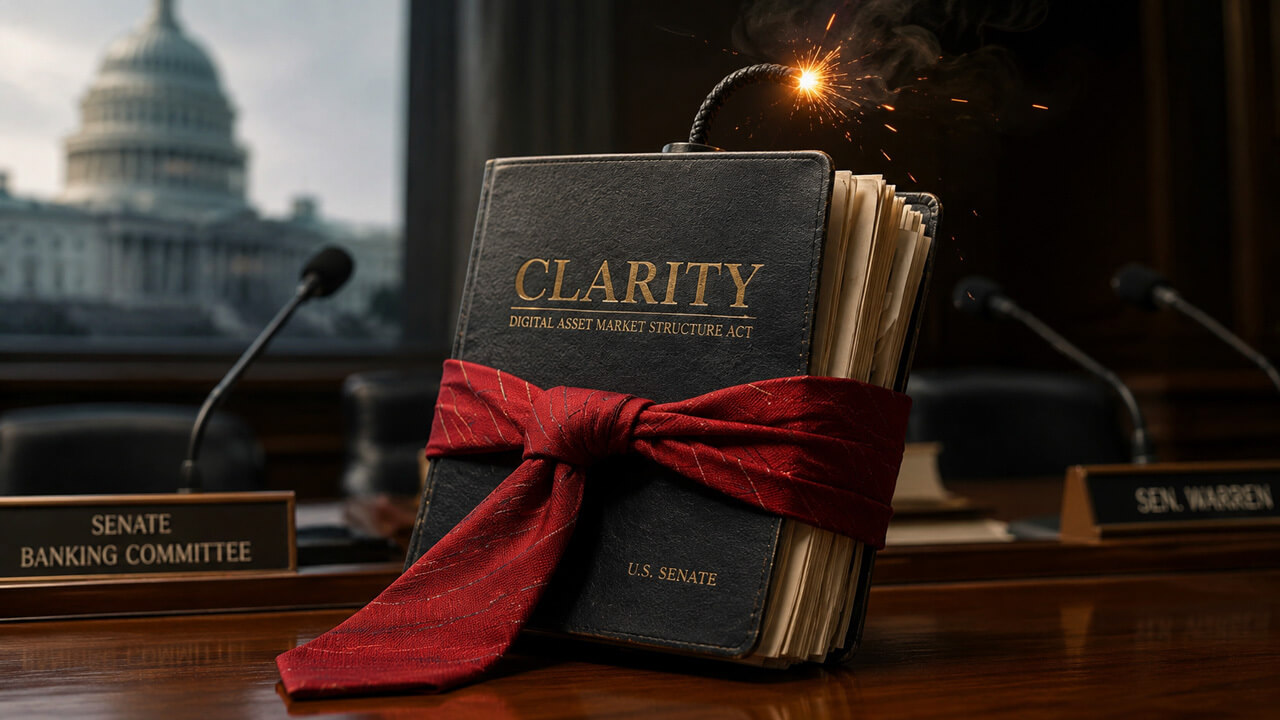
The second is the Clarity Act — essentially a traffic control bill that sorts out which digital assets are securities and which are commodities. If the GENIUS Act provides the safety gear for dollar tokens, the Clarity Act draws the lanes. It’s currently working its way through the Senate.
Together, these two bills represent the U.S. building a regulated framework for the digital dollar — on its own terms.
America’s Private Sector Play
Many countries are pursuing government-run digital currencies. China’s digital yuan is the most prominent example — state-issued, state-controlled, fully visible to authorities.
The U.S. is doing the opposite. There’s deep political resistance to any government-run digital cash, rooted in concerns about privacy and surveillance. So Washington’s counter-move is to let private companies — Tether, Circle, Coinbase — lead the innovation, while maintaining control through regulation from behind the scenes.
The result is a system that gives the U.S. two things it wants badly: global scalability, allowing anyone on earth to access dollars without a U.S. bank account, and financial influence, as stablecoin growth drives demand for U.S. Treasuries. Private profit motives are doing the work. The dollar’s reach expands. Washington wins without lifting a finger.
Why Banks Are Panicking
Traditional banks have been vocal about their concerns — framing their opposition as consumer protection.
What they’re actually worried about is their oxygen supply.
“Deposits are the oxygen of a bank. When that oxygen moves from a vault to a digital wallet, the bank loses its ability to breathe.”
Banks survive on deposits. Your paycheck sitting in a checking account is the raw material they use to issue loans and generate interest income. If people begin storing their digital dollars in exchange wallets or payment platforms instead, banks lose their primary funding source. The money hasn’t disappeared — it’s just changed its address. And the banks are watching their monopoly on that address quietly erode.
The New Gatekeepers
At its core, the stablecoin war is about one thing: who controls the bottleneck where money flows.
Throughout the history of capitalism, whoever owns the crossroads where value passes through has stayed wealthy the longest. Paper gave way to bank ledgers. Bank ledgers gave way to credit card networks. Now the question is who owns the next layer.
Will it be traditional banks defending what they have? Issuers like Tether or Circle? Or will platforms like Visa, Coinbase, or Amazon eventually become the new sentries at the gate?
“When looking at stablecoins, ignore the price charts. Follow the reserves, the liquidity, and the direction of the regulations.”
The dollar isn’t dying. It’s shape-shifting. And the companies that position themselves at the center of that shift stand to define the financial landscape for decades.
Curious about the real stories behind big tech, crypto, and everyday economics? 👉👉👉Subscribe to The Techtonic for your weekly dose of easy-to-read business trends.