The Chokepoints That Move Markets:
From Constantinople to Hormuz —
And Every Trade That Follows
 Capital Street Fx3 min read·Just now
--
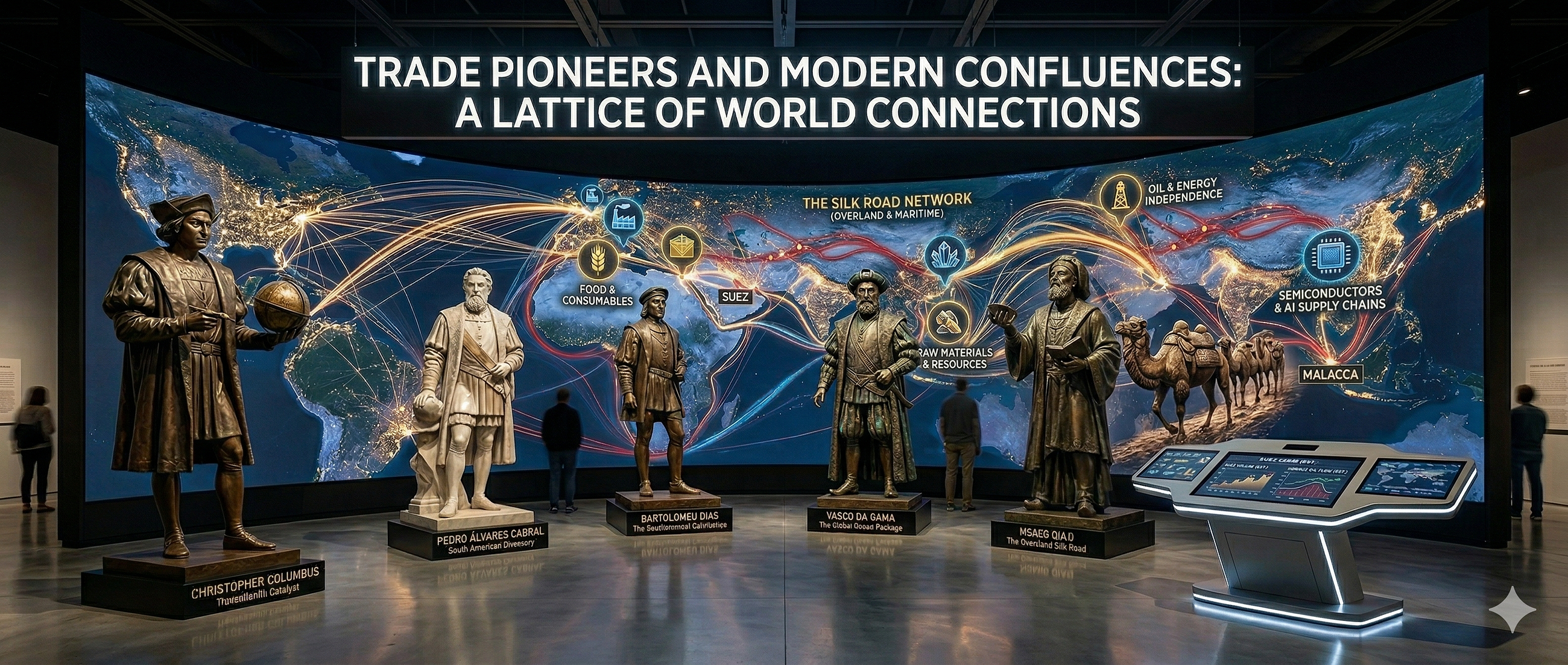
Trump threatened to erase an entire civilisation. Iran weaponised the world’s most critical strait. Pakistan brokered a two-week pause minutes before midnight. Brent crude crashed 17.6% in a single session — the steepest oil drop since Desert Storm 1991. Bitcoin surged to $72,700. Gold held $4,660 and refused to sell off. This is the complete history of every trade route that has ever moved civilisation — and the definitive analysis of what the full range of outcomes from the Islamabad negotiations means for every market — whether talks advance to a framework agreement, extend through serial ceasefires, or face difficulty. The peace is already breaking. Lebanon is burning. Iran’s 10 demands and the US stated objectives cover significant ground that the Islamabad talks will need to bridge. This article examines the complete history of trade route disruptions and their market consequences — and the full range of scenarios that now lie ahead as negotiations unfold.
At 8pm ET on April 7, 2026 — Day 38 of the war (28 February to 7 April 2026) — Trump announced a two-week ceasefire with Iran hours after threatening that “a whole civilization will die tonight.” Brent crude crashed 17.6% in a single session, the steepest single-day oil drop since Operation Desert Storm in 1991. Bitcoin surged to $72,700. $595 million in crypto shorts were liquidated in hours. The VIX collapsed to 20. Gold held $4,660 and refused to sell off. The relief was real. The peace is not. Iran retains control of Hormuz under a “coordination” framework. Lebanon is still burning. Iran’s 10 demands — including full US troop withdrawal from the region and the lifting of all sanctions — represent the Iranian delegation’s opening framework entering negotiations. The Islamabad talks beginning April 10 will begin the process of determining how much of this ground can be bridged. The ceasefire expires April 21. This article is both the complete history of how trade routes have always been weaponised by great powers — and the definitive forward-looking analysis of what happens when this fragile 14-day pause ends.
Part One — The Ancient ArchitectureBefore Ships. Before Money. There Were Routes.
Trade is the oldest human technology. Before writing, before mathematics, before organised religion — before almost everything that defines civilisation — there were people carrying things from one place to another and exchanging them for things they could not make themselves. The first archaeological evidence of long-distance trade dates to roughly 3,000 BCE: obsidian blades from the volcanic island of Melos found in mainland Greek burial sites, 100 miles away, in contexts that predate any known organised state. Nobody built those trade routes. They emerged spontaneously from the elementary human insight that some things exist in one place and not another, and that the gap between those places represents an opportunity. Every trade route in history — from the Silk Road to the Strait of Hormuz to the transpacific container lanes that deliver your smartphone — is, at its root, an elaboration of that same insight.
What separates ancient trade from modern trade is not intention but infrastructure. The ancient world built physical pathways through desert and mountain and sea because the alternative — producing everything locally — was economically impossible. Rome could not grow its own silk. Egypt could not mine its own tin. The Arabian Peninsula could not harvest its own spices. The compulsion to trade was not a commercial abstraction; it was survival, dressed in the language of commerce.
Read More: https://www.capitalstreetfx.com/daily-blog/trade-routes-history-obstructions-markets-trade-setups/