
The Biometric Bastion: A Deep Dive into the D’CENT Security Ecosystem for 2026
 Pro Trader Daily5 min read·Just now
--
In the third quarter of 2026, the “Golden Age of Crypto Security” has officially arrived. We are no longer in the era of clumsy paper backups and vulnerable hot wallets. As the total crypto market cap challenges new all-time highs and institutional adoption of “Agentic AI” trading becomes the norm, the stakes for self-custody have never been higher.
Among the pantheon of hardware security modules (HSMs), the D’CENT Biometric Cold Wallet has emerged as a frontrunner. But why is this specific device gaining such traction among high-net-worth investors and institutional traders? To understand its dominance, we must look beyond the sleek interface and into the “Secure Element” architecture that defines the modern standard for digital asset protection.
1. The Anatomy of an Air-Gapped Fortress
The primary vulnerability of any digital asset is its connection to a network. In 2026, sophisticated “bridge-drainer” attacks and “SIM-swap 2.0” exploits have rendered traditional software wallets nearly obsolete for long-term storage. The D’CENT wallet addresses this via a multi-layered hardware approach.
The Secure Element (EAL5+)
At the heart of the D’CENT ecosystem is a Bank-Grade EAL5+ (Evaluation Assurance Level) certified Secure Element. This is the same grade of security found in credit card chips and passports. Unlike general-purpose microchips found in cheaper hardware wallets, the EAL5+ chip is designed specifically to prevent side-channel attacks — physical hacking attempts where an adversary measures the device’s power consumption or electromagnetic leaks to “guess” the private keys.
Biometric Authentication: The Human Key
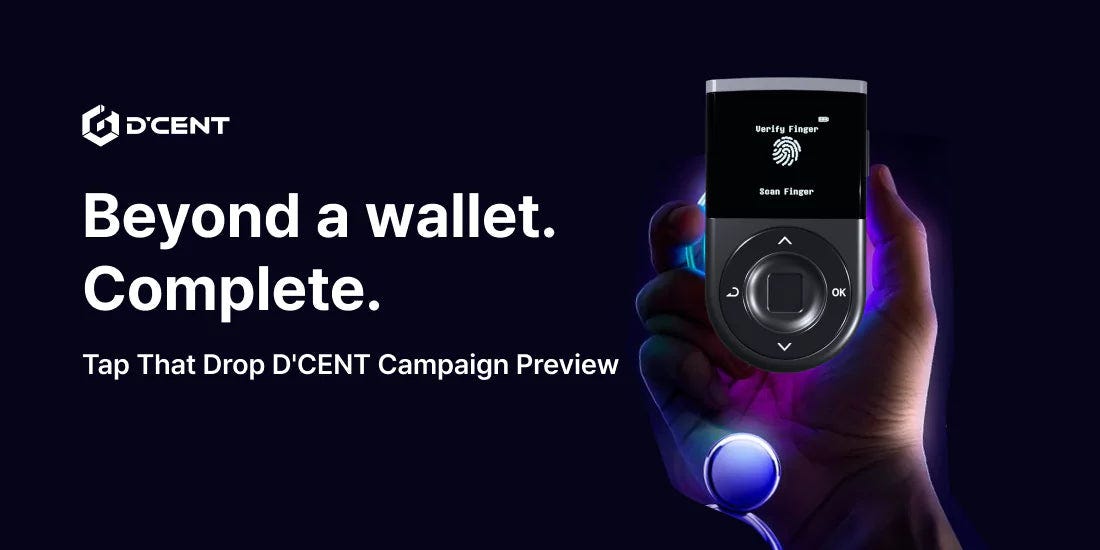
The standout feature of the D’CENT wallet is its integrated fingerprint sensor. In a world where seed phrases are often lost or stolen, biometrics add a layer of “Something You Are” to the security equation.
- Encrypted Biometric Data: It is a common misconception that biometric data is stored on a server. On the D’CENT device, your fingerprint is encrypted and stored locally within the Secure Element. It never touches the mobile app or the internet.
- Instant Verification: During a transaction, the device requires a physical fingerprint match before the private key can sign the outgoing data. This eliminates the risk of a “remote sign” attack where a hacker might gain access to your phone but cannot physically touch your wallet.
2. Institutional Validation: Why the “Smart Money” is Moving to D’CENT
The adoption of D’CENT is not merely a retail trend. We are seeing significant validation from high-credential sources across the fintech and cybersecurity sectors.
The BMM Testlabs Certification
In early 2026, BMM Testlabs, one of the world’s leading independent gaming and fintech testing laboratories, issued a renewed certification for the D’CENT firmware. Their audit focused on “Random Number Generation” (RNG) — the process by which your private keys are created. BMM’s findings confirmed that D’CENT’s entropy (randomness) levels are mathematically impossible to predict, even for quantum-assisted computers.
Integration with Major Protocols (Swell, EigenLayer, and Beyond)
As “Liquid Staking” and “Restaking” became the dominant DeFi themes of 2026, D’CENT was among the first to integrate native support for protocols like Swell and EigenLayer.
- The IMF Security Briefing (May 2026): In a recent briefing on “Systemic Risks in Decentralized Finance,” the International Monetary Fund (IMF) highlighted the importance of hardware-based signing for institutional stakers. They noted that “air-gapped biometric verification significantly reduces the correlated failure risk associated with cloud-based key management systems.”
3. The 2026 Setup: A Step-by-Step Security Protocol
Setting up a cold wallet in 2026 requires a more disciplined approach than in years past. Based on the latest technical documentation from ProTraderDaily, the D’CENT setup follows a “Zero-Trust” framework.
Step 1: The “Supply Chain” Check
Before even powering on the device, professional traders perform a physical audit. D’CENT utilizes tamper-evident holographic seals. If these seals show any sign of “VOID” patterns, the device is considered compromised.
Step 2: Seed Phrase Sovereignty
During the initial boot, the device generates a 24-word recovery seed. In 2026, the “Golden Rule” is: Never digitize your seed. * Do not take a photo.
- Do not store it in a password manager.
- Do not say it out loud near an “AI Home Assistant.”
- Instead, users are encouraged to use a Stainless Steel Seed Storage solution (like the D’CENT cold-fire plates) to protect against fire and flood.
Step 3: Firmware “Blind-Signing” Prevention
One of the greatest threats in 2026 is “Blind Signing” — where a malicious dApp tricks you into signing a transaction you can’t read. The D’CENT OLED screen is large enough to display the full transaction details, including the recipient’s address and the gas fees, directly on the device. Always verify the address on the device screen, not your phone screen.
4. Market Analysis: D’CENT vs. Ledger and Trezor
As we enter June 2026, the “Cold Wallet Wars” have reached a fever pitch. How does D’CENT hold up against the legacy giants?
- D’CENT vs. Ledger: While Ledger has a massive ecosystem, its “Ledger Recover” controversy of 2023–2024 left a permanent scar on privacy-focused users. D’CENT’s “Closed-Loop Biometrics” offers a middle ground for those who want ease of use without cloud-based key fragments.
- D’CENT vs. Trezor: Trezor remains the king of Open Source, but its lack of a built-in battery and Bluetooth (on most models) makes it less convenient for the “Mobile-First” investor of 2026. D’CENT’s Bluetooth implementation is strictly for communication; the private keys remain behind the air-gap of the Secure Element.
5. The Future: Post-Quantum Security and The “Agentic” Era
Looking toward the end of 2026 and into 2027, the challenge for hardware wallets will be Quantum Resistance. As researchers achieve new milestones in quantum computing, the elliptic curve cryptography (ECDSA) used by Bitcoin and Ethereum will eventually need an upgrade.
D’CENT has already signaled that its firmware is “Quantum-Ready,” meaning the Secure Element is capable of processing the larger key sizes required for post-quantum cryptographic signatures. This “future-proofing” is why institutional desks are increasingly selecting D’CENT for their long-term cold storage.
Conclusion: Reclaiming Your Digital Sovereignty
The lesson of the 2026 market is clear: Convenience is the enemy of security. While hot wallets are useful for daily “coffee-money” transactions, your primary wealth must reside in a fortress.
The D’CENT Biometric Cold Wallet represents the pinnacle of “Human-Centric Security.” By combining the unchangeable nature of your fingerprint with the mathematical certainty of the EAL5+ Secure Element, it provides a level of peace that a password simply cannot match.
In an era of AI-driven scams and geopolitical volatility, the most “unlocked” tip we can provide is this: Own your keys, or someone else will.
For the complete, illustrated guide on initializing your device and a comparison of the top 2026 hardware wallets, visit the full technical briefing at ProTraderDaily