The Architecture of Trust: Why Multi-Tenant SaaS Is Quietly Powering the Future of Fintech
Behind every seamless financial experience lies an invisible system designed not just for scale, but for trust, resilience, and shared progress.
 Prashant Thinks7 min read·Just now
--
A system you never see, but always feel
Most people never think about the infrastructure behind the apps they use to send money, track expenses, or invest for the future. They tap, swipe, and move on. The experience feels effortless, almost invisible.
But beneath that simplicity lies a carefully designed system that carries enormous responsibility. It must handle sensitive data, scale instantly, adapt to changing regulations, and still feel personal to each user.
This is where multi-tenant SaaS quietly steps in. Not as a buzzword, but as a foundational shift in how fintech products are built and delivered.
Why traditional systems could not keep up
Financial systems were not always designed for agility. Many legacy platforms were built in isolation, serving single institutions with rigid architectures. While they were reliable for their time, they struggled to evolve with growing user expectations.
As digital adoption accelerated, the cracks became more visible. Scaling required heavy infrastructure investments. Customization was slow and expensive. Updates were often disruptive. Innovation felt constrained by the very systems meant to support it.
This created a gap between what users expected and what systems could deliver. People wanted faster, smarter, more intuitive financial experiences. Businesses needed platforms that could adapt quickly without rebuilding from scratch.
Multi-tenant SaaS emerged as a response to this tension.
Understanding the shared foundation
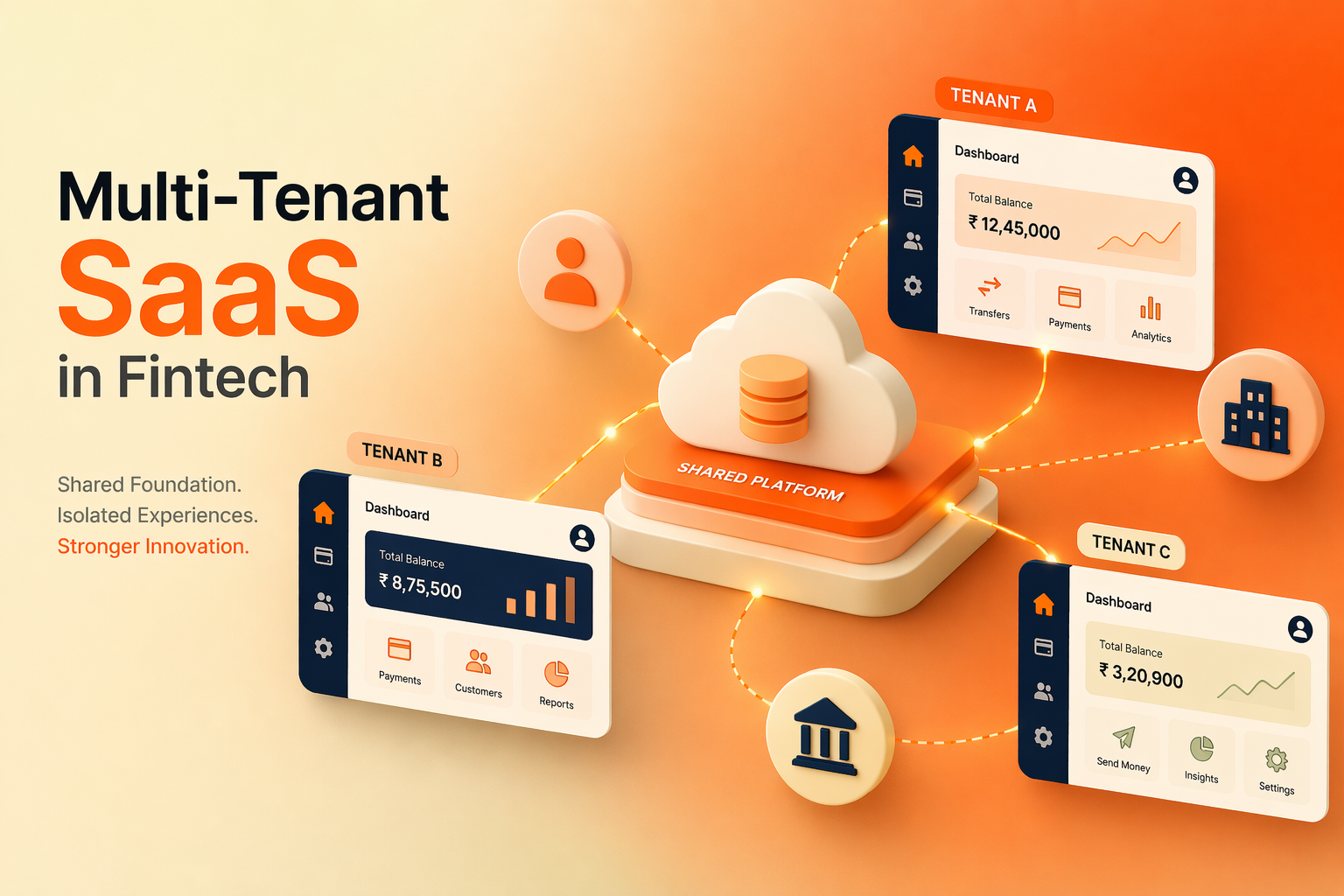
At its core, multi-tenant SaaS is built on a simple yet powerful idea. A single software instance serves multiple customers, each operating in a secure and isolated environment while sharing the same underlying infrastructure.
This shared model changes everything.
Instead of building separate systems for each client, organizations can leverage a common platform that evolves continuously. Updates are rolled out seamlessly. New features become instantly available. Infrastructure is optimized across all users.
But the real value goes beyond efficiency. It lies in how this model enables consistency without sacrificing individuality.
Each tenant can configure the system to match their needs, whether it is branding, workflows, or compliance requirements. The experience feels personalized, even though the foundation is shared.
Where scalability meets simplicity
One of the most transformative aspects of multi-tenant SaaS is its ability to scale without friction. Growth no longer demands proportional increases in infrastructure or operational complexity.
When a fintech platform gains new users or expands into new markets, the system adapts dynamically. Resources are allocated intelligently, ensuring performance remains stable even under increasing demand.
This elasticity is not just a technical advantage. It is a strategic one. It allows businesses to focus on innovation rather than maintenance, on user experience rather than infrastructure.
At the same time, simplicity becomes a defining feature. With centralized management, updates, security patches, and performance optimizations are handled at the platform level. This reduces overhead and ensures that all tenants benefit from continuous improvement.
Security in a shared environment
The idea of sharing infrastructure often raises an immediate question. Is it safe?
In fintech, where trust is everything, this question carries significant weight. Multi-tenant SaaS addresses this concern through robust isolation mechanisms, advanced encryption, and strict access controls.
Each tenant’s data is logically separated, ensuring that no unauthorized access occurs between environments. Security protocols are implemented at a level that individual organizations might struggle to achieve on their own.
In many ways, shared systems can be more secure than isolated ones. With centralized oversight, vulnerabilities can be identified and addressed more quickly. Security becomes a collective strength rather than an individual burden.
The human side of system design
While the technical benefits are clear, the deeper impact of multi-tenant SaaS lies in how it shapes human experiences.
For product teams, it removes barriers to experimentation. New ideas can be tested, refined, and deployed بسرعة without rebuilding core systems. This encourages a culture of continuous improvement.
For users, it translates into smoother, more reliable experiences. Features evolve faster. Interfaces become more intuitive. Services feel responsive to changing needs.
For businesses, it creates a sense of confidence. They are not just investing in a product, but in a platform that grows with them.
This alignment between technology and human needs is what makes the model truly powerful.
What users and businesses ultimately gain
The benefits of multi-tenant SaaS extend across multiple dimensions. Cost efficiency is one of the most visible. By sharing infrastructure, organizations reduce capital expenditure and operational costs.
Speed is another critical advantage. Deployment times shrink from months to weeks, sometimes even days. This agility allows businesses to respond quickly to market changes.
Consistency also plays a key role. With a unified platform, users experience the same level of performance and reliability, regardless of scale.
Perhaps most importantly, there is a sense of continuity. Updates happen seamlessly, without disrupting daily operations. Progress feels natural rather than forced.
The challenges that shape better systems
No model is without its complexities. Multi-tenant SaaS comes with its own set of challenges that require thoughtful design and execution.
Customization, for example, must be carefully managed. While flexibility is essential, excessive variation can complicate the system. Striking the right balance between standardization and personalization is crucial.
Performance isolation is another consideration. Ensuring that one tenant’s activity does not impact others requires sophisticated resource management.
There is also the challenge of perception. Some organizations remain hesitant to adopt shared systems, often due to concerns about control or security. Overcoming this requires not just technical solutions, but clear communication and trust-building.
These challenges, however, are not limitations. They are opportunities to refine and strengthen the model.
A mindset shaping the fintech ecosystem
The rise of multi-tenant SaaS reflects a broader shift in how the fintech ecosystem approaches innovation. It is no longer about building isolated solutions. It is about creating interconnected platforms that evolve together.
Decision-making becomes more data-informed, yet it must remain grounded in real-world impact. Innovation is driven not just by possibility, but by purpose.
There is also a growing recognition that scalability and sustainability must go hand in hand. Rapid growth is valuable, but only if the underlying systems can support it without compromise.
This mindset encourages collaboration over competition, shared learning over isolated progress. It redefines what it means to build in fintech.
Features that define modern multi-tenant platforms
Today’s multi-tenant SaaS platforms are designed with a focus on both capability and usability. They offer modular architectures that allow businesses to adopt features incrementally.
APIs play a central role, enabling seamless integration with other systems. This creates an ecosystem where different tools can work together harmoniously.
Data analytics is another key feature. Platforms provide insights that help businesses understand user behavior, optimize operations, and make informed decisions.
Automation continues to expand, reducing manual effort and improving efficiency. From onboarding processes to compliance checks, many tasks are streamlined through intelligent workflows.
These features are not just technical enhancements. They are enablers of better experiences.
Where the market is moving
The adoption of multi-tenant SaaS in fintech is accelerating, driven by the need for agility, efficiency, and innovation. As digital transformation continues, more organizations are recognizing the value of shared platforms.
Emerging technologies such as artificial intelligence and machine learning are further enhancing these systems. They enable deeper insights, smarter automation, and more personalized experiences.
Regulatory environments are also evolving, encouraging transparency and standardization. Multi-tenant platforms are well-positioned to adapt to these changes, providing a flexible yet compliant foundation.
The future points toward greater integration, where financial services become part of a broader digital ecosystem. Multi-tenant SaaS will play a central role in enabling this vision.
Real-world reflections
Consider a growing fintech startup entering multiple markets. Instead of building separate systems for each region, it leverages a multi-tenant platform to manage operations centrally while adapting to local requirements.
Or think about a financial institution modernizing its services. By adopting a shared platform, it can roll out new features quickly, improving user experience without overhauling its entire infrastructure.
Even established enterprises benefit from this model. It allows them to innovate without disrupting existing systems, creating a bridge between legacy and modern technology.
These scenarios highlight the versatility and practicality of multi-tenant SaaS.
A closing reflection on what truly matters
Technology often advances faster than our ability to fully understand its impact. But occasionally, a model emerges that quietly reshapes the landscape without demanding attention.
Multi-tenant SaaS is one of those models.
It does not announce itself loudly. It works in the background, enabling systems to scale, adapt, and evolve. It supports innovation while maintaining stability. It balances efficiency with personalization.
In the end, its greatest contribution is not technical. It is human.
It allows businesses to focus on what truly matters. It gives users experiences that feel seamless and reliable. It creates a foundation where progress feels natural, not forced.
And in a world where financial systems touch every aspect of life, that kind of quiet reliability is not just valuable. It is essential.
Be part of the conversation
If this perspective resonated with you, consider following the publication for more thoughtful explorations of fintech and technology. Applaud the story if it added value to your thinking. Share your insights in the comments and join a growing community of curious minds.
If you are passionate about fintech, SaaS, or innovation, you are invited to contribute your voice. Meaningful conversations shape better systems, and your perspective could be part of that journey.