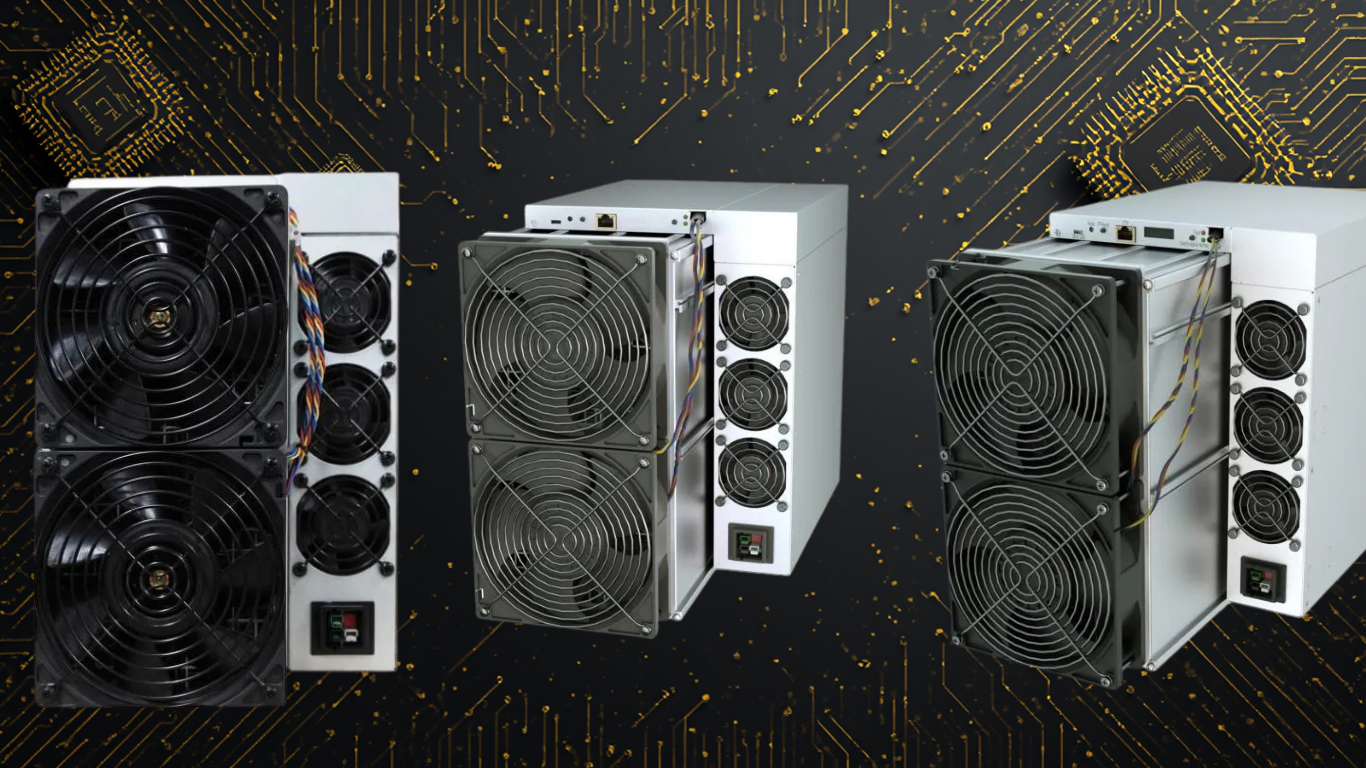
The Antminer S21 Evolution
 Altair Technology6 min read·Just now
--
Comparing Specs, Chip Counts, and the 140mm Form Factor Shift
The landscape of Bitcoin mining hardware evolves quickly, but the jump from Bitmain’s S19 series to the Antminer S21 lineup represents one of the most significant engineering shifts in years.
At Altair Technology, we focus on stocking some of the most efficient mining hardware available. As miners become more powerful, however, they also become physically larger and technically more complex.
In this guide, we’ll break down:
- The spec differences between the S19 and S21 series
- The internal ASIC chip architecture powering these machines
- The infrastructure changes caused by the move to a 140mm chassis
If you’re planning a mining deployment in 2026, understanding these changes is critical.
The Numbers: Comparing Modern Antminers
When evaluating ASIC miners, three metrics matter most:
- Hashrate (TH/s) — Total mining performance
- Power Draw (W) — Electrical consumption
- Efficiency (J/TH) — Energy required to produce one terahash
Here’s how several popular miners compare.
The efficiency improvement is substantial. The transition from 23 J/TH in the S19k Pro to 13.5 J/TH in the S21 XP represents a massive leap in operational performance.
The 140mm Shift: A New Form Factor Challenge
For nearly a decade, 120mm fans were the industry standard for air-cooled ASIC miners.
They shaped everything from:
- Rack dimensions
- Exhaust duct sizes
- Container airflow layouts
- Hot-aisle containment designs
But with the release of the S21+, S21 Pro, and S21 XP, Bitmain introduced a larger 140mm chassis.
While the standard S21 and the S19 lineup still use the 120mm format, the higher-performance S21 models require larger fans to move more air across increasingly dense hashboards.
The goal:
More airflow with less static pressure, improving cooling efficiency for high-density chips.
The Complications for Hosting Facilities
A 20mm difference might seem small, but in mining infrastructure it creates several real-world challenges.
1. Exhaust Shroud Compatibility
Most custom mining exhaust shrouds were designed around 120mm fans.
Moving to 140mm hardware means entirely new shroud designs.
2. Rack Density
Many mining racks were designed to fit 120mm-based miners side-by-side.
The larger S21 chassis can create issues such as:
- Reduced horizontal density
- Increased vertical clearance requirements
- Modified rack spacing
3. Airflow Management
Older container builds and smaller mining facilities may struggle with airflow because 140mm fans require larger exhaust openings to prevent backpressure.
Without proper ventilation adjustments, cooling efficiency can drop.
At Altair Technology, we see these infrastructure challenges frequently. Our goal is to help miners match the correct hardware with the right deployment environment, ensuring clean and scalable setups.
Under the Hood: ASIC Chip Architecture
Every Antminer in the S21 lineup contains three internal hashboards, but the performance differences come down to how the ASIC chips are distributed across them.
Let’s break down the architecture.
Antminer S21 XP
The S21 XP currently represents the pinnacle of air-cooled Bitcoin mining.
Each hashboard contains:
91 BM1370 ASIC chips
Each chip hashes at roughly ~1 TH/s, slightly lower than some previous high-clocked chips. However, the higher total chip count combined with lower operating voltage allows the machine to achieve exceptional efficiency.
This design enables the S21 XP to reach 13.5 J/TH, making it one of the most efficient air-cooled miners ever produced.
Antminer S21 Pro
The S21 Pro balances cost and performance.
Each hashboard contains:
65 BM1370BC chips
This lower chip density changes the thermal characteristics slightly and allows the miner to achieve 234 TH/s at 15 J/TH.
Antminer S21 (Standard)
The standard S21 uses the BM1368 ASIC chip, an earlier generation of silicon.
Each hashboard contains:
108 chips
This higher density inside the 120mm chassis is one reason these units tend to run louder than their 140mm counterparts.
Antminer S21+
The S21+ introduces a unique architecture.
Each hashboard contains:
55 BM1370BC chips
These chips are distributed across 11 voltage domains, which improves power stability and thermal distribution across the board.
Why Efficiency Matters More Than Ever
As Bitcoin network difficulty continues to rise, profitability increasingly depends on energy efficiency.
Your cost to mine Bitcoin ultimately comes down to:
How many watts are required to generate one terahash of hashing power.
Moving from 23 J/TH (S19k Pro) to 13.5 J/TH (S21 XP) represents nearly a 40% reduction in electricity cost for the same hashrate output.
Even though the new 140mm chassis introduces infrastructure challenges, the long-term ROI improvements are difficult to ignore.
Power Supply Evolution: APW12 vs APW17
The transition to the S21 series also brought a new generation of power supplies.
For years, the APW12 powered the majority of Bitmain miners.
Now the S21 lineup introduces the APW17, designed for the higher electrical demands of modern ASICs.
Why the Shift to APW17?
The APW17 isn’t simply a larger PSU.
It is engineered to handle:
- Higher current draw
- Wider voltage ranges
- Improved power stability
These requirements come from the BM1370 and BM1368 ASIC chips used in the S21 lineup.
One of the biggest changes is the power connector design. While the S19 series commonly uses P33-C13, many S21 models now utilize C20-to-P13 connectors to safely deliver power to 3600W+ mining hardware.
This change helps prevent connector bottlenecks and potential heat buildup at the plug level.
Which Antminer Is the Best?
The answer depends heavily on your existing infrastructure.
If your facility is already designed around 120mm hardware, then the Antminer S21 Standard or the highly reliable S19k Pro may offer the easiest integration.
However, if you are building new infrastructure, the Antminer S21 XP currently stands as the king of air-cooled mining, delivering industry-leading efficiency.
Whether you are deploying a single home miner or scaling a large mining operation, Altair Technology can help you choose the right hardware and integrate it cleanly into your setup.
If you’re comparing the Antminer S21 series or exploring other hardware options, feel free to schedule a free introductory consultation.
Frequently Asked Questions
Which Antminer models use the 140mm fan form factor?
The Antminer S21+, S21 Pro, and S21 XP all use the larger 140mm fan chassis.
The Standard S21 (200 TH/s) and the S19 series continue using the traditional 120mm format.
Can I use an APW12 power supply with the S21 XP?
No.
All S21 series miners (S21, S21+, S21 Pro, S21 XP) require the APW17 power supply, which supports the higher current demands and different connector standards used by the newer ASIC chips.
Why does the S21 XP have fewer chips than the Standard S21?
The S21 XP uses the BM1370 ASIC chip, which is significantly more efficient than the BM1368 chip found in the standard S21.
Because each chip is more efficient, Bitmain can achieve higher total hashrate with fewer chips, leading to the industry-leading 13.5 J/TH efficiency.
Will my existing 120mm exhaust shrouds fit the S21 Pro or XP?
No.
The wider chassis required for 140mm fans means that 120mm exhaust shrouds will not align properly and will not create an airtight seal.
Dedicated 140mm shrouds are required for proper airflow management.
If you’re planning a deployment and want help selecting the right miner or accessories, Altair Technology carries both 120mm and 140mm compatible hardware to support modern mining setups.