Tesla rolls out unsupervised robotaxis across entire Austin metro area
The expansion marks Tesla's shift from supervised test rides to a full-scale autonomous ride-hailing service, with no safety drivers behind the wheel.
Share
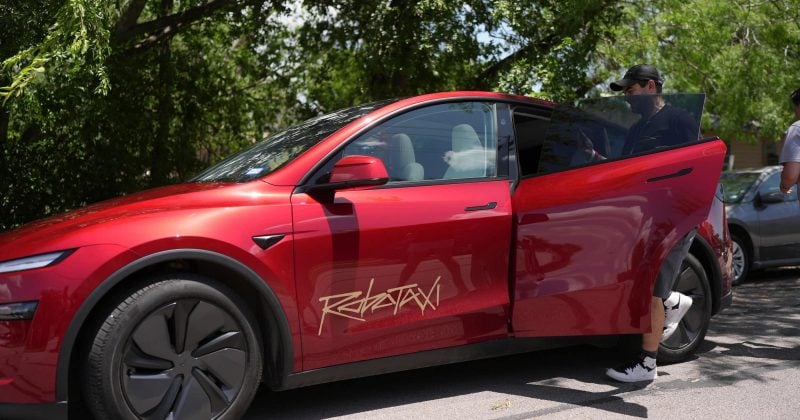
Add us on Google by Editorial Team Jun. 4, 2026Tesla’s robotaxis are now operating without safety drivers across the entire Austin Metro area. The rollout, which went live on June 3, represents the company’s most ambitious deployment of autonomous ride-hailing technology to date and a clear signal that Tesla is serious about pivoting from carmaker to transportation platform.
Think of it this way: a year ago, Tesla was running supervised robotaxi rides with a human babysitter in the driver’s seat. Six months ago, it tentatively let a handful of cars loose without one. Now, the entire Austin metro is fair game for unsupervised autonomous rides. That’s a progression that moved faster than most industry watchers expected.
From supervised to solo: a timeline
Tesla’s Austin robotaxi journey started on June 22, 2025, with supervised operations. A safety driver sat behind the wheel, ready to intervene if the car’s Full Self-Driving software got confused by a construction zone or an unusually aggressive pickup truck. Standard stuff for autonomous vehicle pilots.
Then came January 22, 2026. Tesla began offering limited unsupervised rides, meaning some vehicles in the fleet operated with empty driver seats. The cars in question are Model Y vehicles running Tesla’s FSD Unsupervised software, the same technology the company has been iterating on for years but now deployed in a commercial, revenue-generating context.
Ashok Elluswamy, Tesla’s VP of AI Software, has described the company’s approach as a systematic ramp. Gradually increasing the proportion of unsupervised vehicles in the fleet rather than flipping a switch overnight. The June 3 expansion to the full metro area suggests Tesla’s internal data gave it enough confidence to remove the geographic training wheels.
AdvertisementHere’s what’s notable about the regulatory picture: no safety-driver mandates or significant regulatory hurdles have been publicly reported in connection with this latest expansion. That’s a meaningful detail. Waymo and Cruise both faced months of regulatory friction during their own autonomous rollouts in San Francisco. Tesla, at least in Austin, appears to have navigated that process with less turbulence.
Why this matters beyond cars
Tesla selling cars is a hardware business. Tesla operating a robotaxi fleet is a software-and-services business. The margin profiles of those two models are wildly different.
When Tesla sells you a Model Y, it books revenue once. When Tesla operates that same Model Y as an autonomous taxi running 12-plus hours a day, it generates recurring revenue on every ride. The economics look more like Uber’s platform model, except Tesla doesn’t have to pay a driver. That’s the pitch Elon Musk has been making to investors for years, and Austin is the first city where it’s playing out at meaningful scale.
The supervised-to-unsupervised transition is also the key financial threshold. Safety drivers are expensive. Removing them is what turns a money-losing R&D exercise into a potentially profitable transportation service. Every unsupervised mile driven is a mile where Tesla captures the full fare without splitting it with a human operator.
For context, ride-hailing is an enormous market. Uber and Lyft collectively process billions of dollars in gross bookings annually. Tesla entering that arena with vehicles that don’t require driver compensation fundamentally changes the competitive math. The question has always been whether the technology could actually work safely at scale. Austin is Tesla’s answer, or at least the beginning of one.
What investors should be watching
The immediate thing to monitor is safety data. Autonomous vehicle companies live and die by their incident rates. One high-profile accident can freeze regulatory goodwill and public trust overnight. Cruise learned this the hard way in San Francisco in late 2023, when a single pedestrian-dragging incident led to a suspended permit and, eventually, a corporate restructuring. Tesla will need a clean safety record in Austin to justify expanding to additional cities.
Second, watch the fleet size and utilization metrics. Running unsupervised robotaxis across a metro area is one thing. Running enough of them to make meaningful revenue is another. Tesla hasn’t disclosed how many Model Y vehicles are currently in its Austin fleet, and that number will determine whether this is a proof of concept or a genuine business line.
Third, the competitive landscape is evolving quickly. Waymo already operates commercial robotaxi services in multiple US cities. Amazon-backed Zoox is testing in several markets. Tesla’s advantage is that it manufactures its own vehicles and develops its own AI software in-house, giving it vertical integration that competitors lack. The disadvantage is that Tesla’s vision-only approach to autonomy, relying on cameras rather than lidar, remains controversial among robotics engineers who believe sensor redundancy is essential for safety.
For investors in the broader tech and transportation space, the Austin expansion raises a strategic question: does Tesla’s robotaxi business eventually become more valuable than its car sales business? If the service scales to multiple cities and maintains strong unit economics, it could reshape how Wall Street values the company entirely. That repricing wouldn’t happen overnight, but the Austin deployment is the first real evidence that the model can work outside of controlled demos and investor presentations.
The risk, as always with Tesla, is execution. Scaling autonomous technology across diverse urban environments, each with its own weather patterns, road designs, and driving cultures, is exponentially harder than succeeding in one Sun Belt city. Austin’s wide roads, mild weather, and relatively predictable grid layout make it a favorable testing ground. Houston, Chicago, or New York City would be a very different story.
Disclosure: This article was edited by Editorial Team. For more information on how we create and review content, see our Editorial Policy.