Taiwan overtakes India as world’s fifth-largest stock market
A single chipmaker now accounts for nearly half of Taiwan's benchmark index, and its 49% year-to-date surge tells you everything about where global capital is flowing.
Share
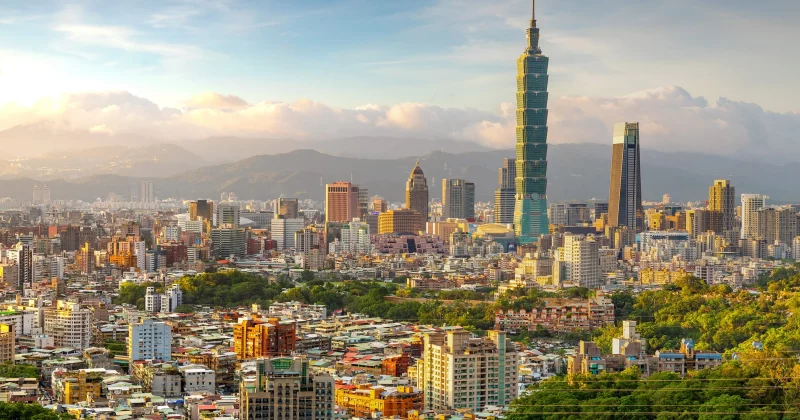
Add us on Google by Editorial Team May. 26, 2026Taiwan’s stock market capitalization hit $4.95 trillion, edging past India’s $4.92 trillion and claiming the number five spot in the global equity rankings. The shift is almost entirely the story of one company: Taiwan Semiconductor Manufacturing Company, the chipmaker whose AI-fueled rally has single-handedly redrawn the map of global markets.
The chipmaker’s market value sits somewhere between $1.8 trillion and $2.1 trillion, accounting for roughly 42% to 45% of Taiwan’s main equity benchmark. When TSMC rallied 49% year-to-date, Taiwan leapfrogged entire nations.
The global leaderboard, reshuffled
The current pecking order for global equity markets now reads: US, China, Japan, Hong Kong, Taiwan, then India. Taiwan overtook the UK, valued at around $4.13 trillion, in mid-April. It then passed Canada to claim sixth place later that same month. Surpassing India less than a month later completes a hat trick of overtakes.
AdvertisementIndia held the fifth spot for a meaningful stretch, buoyed by years of enthusiastic foreign investment. That story has hit some turbulence. Foreign portfolio investors have been pulling capital out, earnings growth in key sectors has slowed, and India’s economy has limited direct exposure to the AI supply chain that is currently driving returns in Taiwan.
TSMC and the AI gravity well
TSMC manufactures the most advanced semiconductors on the planet, the chips that power everything from Nvidia’s data center GPUs to Apple’s latest processors. As artificial intelligence workloads have exploded, so has demand for TSMC’s cutting-edge fabrication nodes. A 49% year-to-date gain for a company already worth between $1.8 and $2.1 trillion reflects something structural: the market is pricing in a world where AI hardware demand keeps compounding, and TSMC sits at the chokepoint of that supply chain.
The concentration risk is real. When a single stock represents over 40% of a national benchmark, any pause in AI spending or escalation of geopolitical tensions around the Taiwan Strait could reverse the market’s ranking just as quickly as it advanced.
What this means for investors
Microsoft, Google, Amazon, and Meta have all signaled massive spending plans for AI infrastructure. That money flows directly to chipmakers and, ultimately, to TSMC’s fabrication facilities.
India’s relative decline carries a lesson. Markets that lack deep integration into the AI supply chain are finding it harder to attract and retain global capital. Foreign portfolio outflows from India suggest that some allocators are rotating out of broad growth stories and into concentrated semiconductor bets.
Taiwan’s position in global markets is now so dominant that any escalation in cross-strait tensions would send shockwaves far beyond Taipei. A market worth nearly $5 trillion, concentrated in the single most strategically important company in the semiconductor industry, is both an extraordinary success story and a source of systemic risk that global investors can no longer ignore.
Disclosure: This article was edited by Editorial Team. For more information on how we create and review content, see our Editorial Policy.