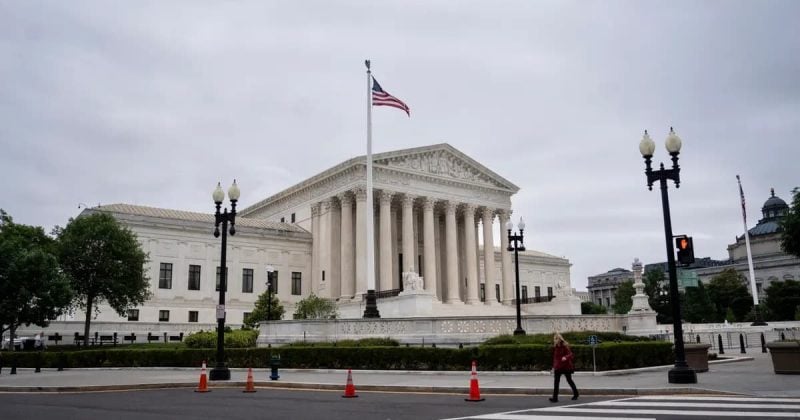
Supreme Court rules SEC can recover illegal gains without proof of investor loss
A unanimous 9-0 decision in Sripetch v. SEC removes a key hurdle for the agency's enforcement actions, with major implications for crypto and securities markets.
Share
Add us on Google by Editorial Team Jun. 5, 2026The Supreme Court just handed the SEC one of its most powerful enforcement wins in years. In a unanimous ruling on June 4, the Court declared that the agency can force securities law violators to hand over their illegal profits without first proving that any specific investor actually lost money.
What the Court actually decided
The case, Sripetch v. SEC, centered on Ongkaruck Sripetch, who was tied to a penny-stock fraud scheme. The Ninth Circuit had previously upheld an order requiring Sripetch to disgorge approximately $2 million in illicit profits. Sripetch challenged that order, arguing the SEC hadn’t demonstrated that investors suffered identifiable financial harm.
Justice Neil Gorsuch, writing for all nine justices, rejected that argument entirely. The opinion affirmed that disgorgement, the legal mechanism by which regulators strip ill-gotten gains from wrongdoers, does not require a showing of investor loss.
AdvertisementOral arguments were heard on April 20, and the decision came roughly six weeks later.
The ruling also resolves a circuit split that had been creating inconsistent outcomes across the country. The Ninth and First Circuits had sided with the SEC’s position, while the Second Circuit, in its earlier decision in SEC v. Govil, had imposed a higher bar requiring proof of victim harm. That conflict is now settled.
Why this matters beyond penny stocks
The SEC’s disgorgement power is one of the agency’s primary financial weapons. In fiscal year 2024 alone, the SEC collected over $6.1 billion in disgorgement and prejudgment interest.
The Trump administration actually defended the SEC in this case. Regardless of the political fights over how aggressively the SEC should regulate crypto or other emerging markets, both sides agreed that the agency should be able to recover illegal gains without jumping through an additional hoop that Congress never required.
What this means for crypto and digital asset markets
Previously, defendants in SEC actions could argue that the agency hadn’t proven anyone was actually harmed. That defense had some traction in the Second Circuit, which covers New York. That door is now closed everywhere.
For crypto projects that have conducted token sales later deemed to be unregistered securities offerings, the SEC doesn’t need to track down every token buyer and demonstrate individual losses. It can calculate the issuer’s profits and seek to recover them directly.
For institutional investors evaluating crypto exposure, the $6.1 billion the agency collected in fiscal year 2024 was achieved under the old, more burdensome framework. With this ruling in place, that number could look modest by comparison in future fiscal years.
Disclosure: This article was edited by Editorial Team. For more information on how we create and review content, see our Editorial Policy.