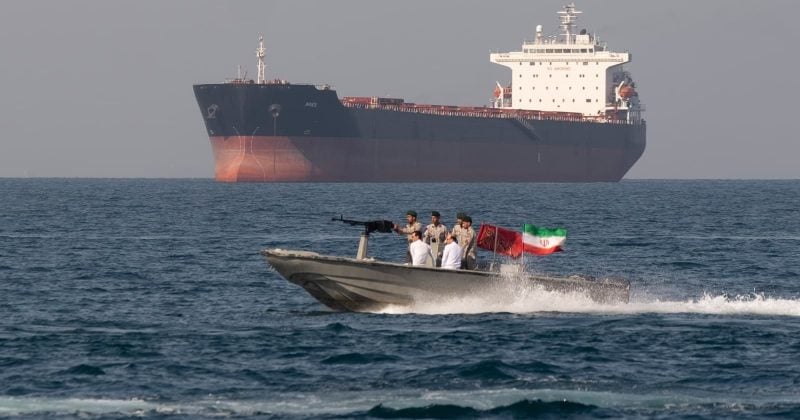
Suez Canal oil tanker crossings surge nearly 30% in April as Hormuz crisis reshapes global shipping
Geopolitical tensions in the Strait of Hormuz are pushing tanker traffic westward, with crypto payments emerging as part of the new transit landscape.
Share
Add us on Google by Editorial Team Jun. 10, 2026Oil tanker traffic through Egypt’s Suez Canal jumped by nearly a third in April, a dramatic rerouting driven by the ongoing crisis in the Strait of Hormuz that has upended global energy logistics.
Since late February, tanker traffic through the Strait of Hormuz has plummeted by roughly 70%. Vessels that would normally transit Hormuz are now steering toward the Suez Canal and Red Sea corridor instead.
AdvertisementWhy tankers are fleeing Hormuz
The Strait of Hormuz normally handles about a fifth of global oil consumption. When conflict-related risks between Iran and the US/Israel escalated earlier this year, that traffic collapsed. Oil tanker activity in the Red Sea surged 66% in March as vessels began bypassing Hormuz disruptions. By April, that wave had fully hit the Suez Canal, pushing crossings up nearly 30%.
The Suez Canal and the parallel SUMED pipeline were already processing approximately 4.9 million barrels of oil per day in the first half of 2025, before the crisis intensified.
Iran’s crypto toll gambit
Iran’s “Strait of Hormuz Management Plan,” formalized in late March, includes provisions for cryptocurrency payments on transit fees estimated at up to roughly $2 million per vessel. Iran is letting ships pay their passage in stablecoins and Bitcoin rather than traditional currencies. Iran faces significant sanctions pressure that limits its access to conventional banking rails. Accepting crypto sidesteps those constraints while also appealing to shipping operators who may prefer the speed and pseudonymity of blockchain-based payments during a period of intense geopolitical uncertainty.
What this means for energy markets and shipping
Maersk and CMA CGM, two of the largest container shipping firms on the planet, have modified their transit patterns through the Suez Canal in response to risks in both the Red Sea and Hormuz regions.
For crypto markets specifically, the Iran crypto toll development introduces a narrative worth watching. At $2 million per vessel across hundreds of transits, real liquidity is flowing through crypto rails for purely functional reasons. Iran’s adoption of Bitcoin and USDT for tolls is born from necessity, not enthusiasm — it is a sanctions workaround. The real story remains the physical rerouting of global oil, which has far larger implications for commodity prices, inflation expectations, and the energy sector broadly.
Disclosure: This article was edited by Editorial Team. For more information on how we create and review content, see our Editorial Policy.