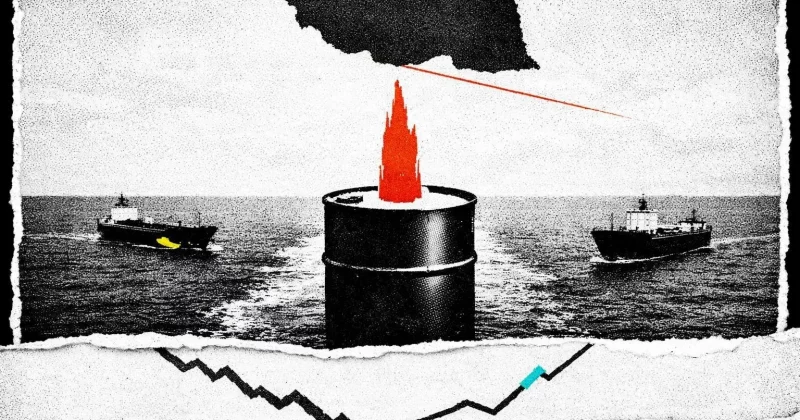
Stocks drop and oil spikes as renewed Middle East attacks rattle markets
Brent crude surges 5.8% to $114.44 per barrel while the S&P 500 and Dow Jones slide, dragging crypto into the crossfire.
Share
Add us on Google by Editorial Team May. 28, 2026The fragile ceasefire in the Middle East lasted about a month. Now markets are paying the price.
Renewed military escalations in May 2026 have sent Brent crude soaring 5.8% to $114.44 per barrel, while US equities slumped in tandem. The S&P 500 fell 0.4% and the Dow Jones Industrial Average dropped over 500 points in sessions following the latest hostilities. Bitcoin, trading near $66,000, found itself caught somewhere between safe haven narrative and risk asset reality.
Oil markets feel it first
The Strait of Hormuz sits at the center of this story. Roughly 20% of global oil shipments pass through that narrow waterway.
AdvertisementOil futures on the decentralized exchange Hyperliquid surged over 5% in parallel, showing that crypto-native trading venues are increasingly sensitive to the same macro forces driving traditional commodities.
Fluctuations of 2-6% in a single trading session have become common as the conflict timeline has unfolded. A fragile ceasefire established in early April 2026 had briefly calmed markets. But renewed threats and military actions in May effectively shattered any optimism that a lasting diplomatic resolution was on the horizon.
Equities buckle under geopolitical weight
The S&P 500’s 0.4% decline and the Dow shedding more than 500 points in a single session reflects genuine institutional caution driven by geopolitical catalysts.
Investor concerns center on supply chain risks and inflationary pressures. Higher energy costs ripple through virtually every sector of the economy, from manufacturing to transportation to food production.
What this means for crypto investors
Bitcoin trading near $66,000 tells a complicated story. BTC has shown some resilience by not cratering alongside equities, but it hasn’t rallied as a flight-to-safety asset either.
Analysts have pointed out that while rising oil prices increase electricity costs for mining operations, BTC price volatility caused by oil shocks matters more to miners than their power bills.
Oil futures activity on platforms like Hyperliquid adds another dimension worth watching. The fact that crypto-native traders are now actively trading oil derivatives means that energy market volatility can transmit directly into DeFi ecosystems without needing to route through traditional financial intermediaries first.
Disclosure: This article was edited by Editorial Team. For more information on how we create and review content, see our Editorial Policy.