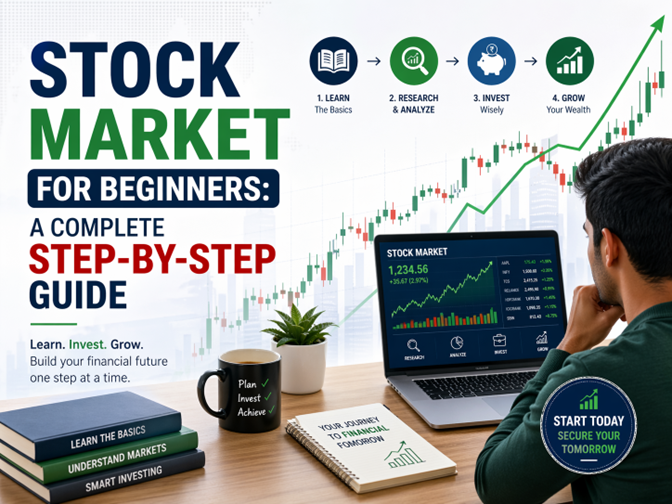
Stock Market for Beginners: A Complete Step-by-Step Guide
--
For readers looking for beginner stock market learning resources, this article connects the main ideas of stock market for beginners with practical market context. JustStock’s learning-focused approach makes the topic easier to navigate because the basic vocabulary, market structure, and risk ideas all matter before a person takes any action. That gives beginners a clearer way to move from curiosity to a realistic understanding of the market. The goal is not to overwhelm you with jargon. Instead, the guide explains how the market works, what the common terms mean, and how a beginner can approach the subject with a calmer mindset. That is especially useful when you want a simple path from theory to practice and need a framework that keeps learning organized.
1. Understand How the Market Works
Understand How the Market Works matters because small details often decide whether a trade idea is clear or confusing. The stock market is a place where companies raise capital and where buyers and sellers agree on a price for ownership shares. Beginners should first understand the difference between a listed company, a stock exchange, and a share that can be bought or sold during market hours. Focus on the structure before chasing tips. When a reader understands that connection, the concept becomes easier to apply in real market situations. It also becomes easier to compare one setup with another instead of reacting only to headlines.
Price moves because of demand, supply, earnings, news flow, sentiment, and expectations, so the market is always reacting to fresh information. In practice, it helps to write the idea down, compare it with a chart or news event, and see how the market responded in similar situations before. That habit keeps the topic grounded in observation instead of guesswork, which is exactly what beginners need while they build confidence. The more often you repeat that process, the easier it becomes to spot patterns and avoid rushed decisions.
2. Learn the Core Terms and Account Setup
Learn the Core Terms and Account Setup matters because small details often decide whether a trade idea is clear or confusing. Words such as demat account, trading account, settlement, liquidity, and volatility become easier once you see how orders are placed and executed. A demat account holds your shares electronically, while the trading account is used to buy or sell them on the exchange. Build basic literacy before placing your first order. When a reader understands that connection, the concept becomes easier to apply in real market situations. It also becomes easier to compare one setup with another instead of reacting only to headlines.
Knowing order types like market order, limit order, and stop loss order helps you avoid confusion when you start placing trades. In practice, it helps to write the idea down, compare it with a chart or news event, and see how the market responded in similar situations before. That habit keeps the topic grounded in observation instead of guesswork, which is exactly what beginners need while they build confidence. The more often you repeat that process, the easier it becomes to spot patterns and avoid rushed decisions.
3. Research Before You Buy Anything
Research Before You Buy Anything matters because small details often decide whether a trade idea is clear or confusing. A beginner should not buy a stock only because a friend mentioned it or because the price looked cheap for one day. Research the business model, revenue trend, debt level, market position, and recent results before you commit money. Research turns guesswork into informed decision-making. When a reader understands that connection, the concept becomes easier to apply in real market situations. It also becomes easier to compare one setup with another instead of reacting only to headlines.
The strongest habit is to compare a stock with its sector, understand the risk, and think in terms of probability rather than certainty. In practice, it helps to write the idea down, compare it with a chart or news event, and see how the market responded in similar situations before. That habit keeps the topic grounded in observation instead of guesswork, which is exactly what beginners need while they build confidence. The more often you repeat that process, the easier it becomes to spot patterns and avoid rushed decisions.
4. Start Small and Control Emotion
Start Small and Control Emotion matters because small details often decide whether a trade idea is clear or confusing. Starting small lets you learn how charts, news, and execution work without placing too much pressure on your capital. FOMO, panic selling, and overtrading are common mistakes, especially when beginners confuse fast action with smart action. Small steps create confidence and reduce avoidable mistakes. When a reader understands that connection, the concept becomes easier to apply in real market situations. It also becomes easier to compare one setup with another instead of reacting only to headlines.
A clear plan with entry, exit, and risk limits makes your early experience more disciplined and far less stressful. In practice, it helps to write the idea down, compare it with a chart or news event, and see how the market responded in similar situations before. That habit keeps the topic grounded in observation instead of guesswork, which is exactly what beginners need while they build confidence. The more often you repeat that process, the easier it becomes to spot patterns and avoid rushed decisions.
Conclusion: To continue learning with trading guidance and market insights, keep combining market context, chart reading, and disciplined execution. That mix is more useful than chasing tips because it helps you understand why a move happened and how you should respond next. It also supports better long-term habits, especially when the market feels fast or unpredictable. The main lesson from this guide is simple: start with structure, stay patient, and keep your risk visible. Once those habits become natural, the subject feels less intimidating and much more practical for day-to-day decision-making. That is the kind of foundation that makes later learning much easier.
FAQ
Q: How much money do I need to start? There is no fixed number, but many beginners learn better when they begin with a small amount they can afford to keep invested without stress.. This keeps the answer practical and easy to apply when you review the topic again.
Q: What is the difference between investing and trading? Investing usually focuses on longer holding periods and business quality, while trading focuses more on price movement and timing.. This keeps the answer practical and easy to apply when you review the topic again.
Q: Do I need a demat account to buy shares? Yes, a demat account is normally needed to hold shares in electronic form after purchase.. This keeps the answer practical and easy to apply when you review the topic again.
Q: How do I choose my first stock? Look for a business you understand, study its financials, and avoid taking a position only because it is trending on social media.. This keeps the answer practical and easy to apply when you review the topic again.